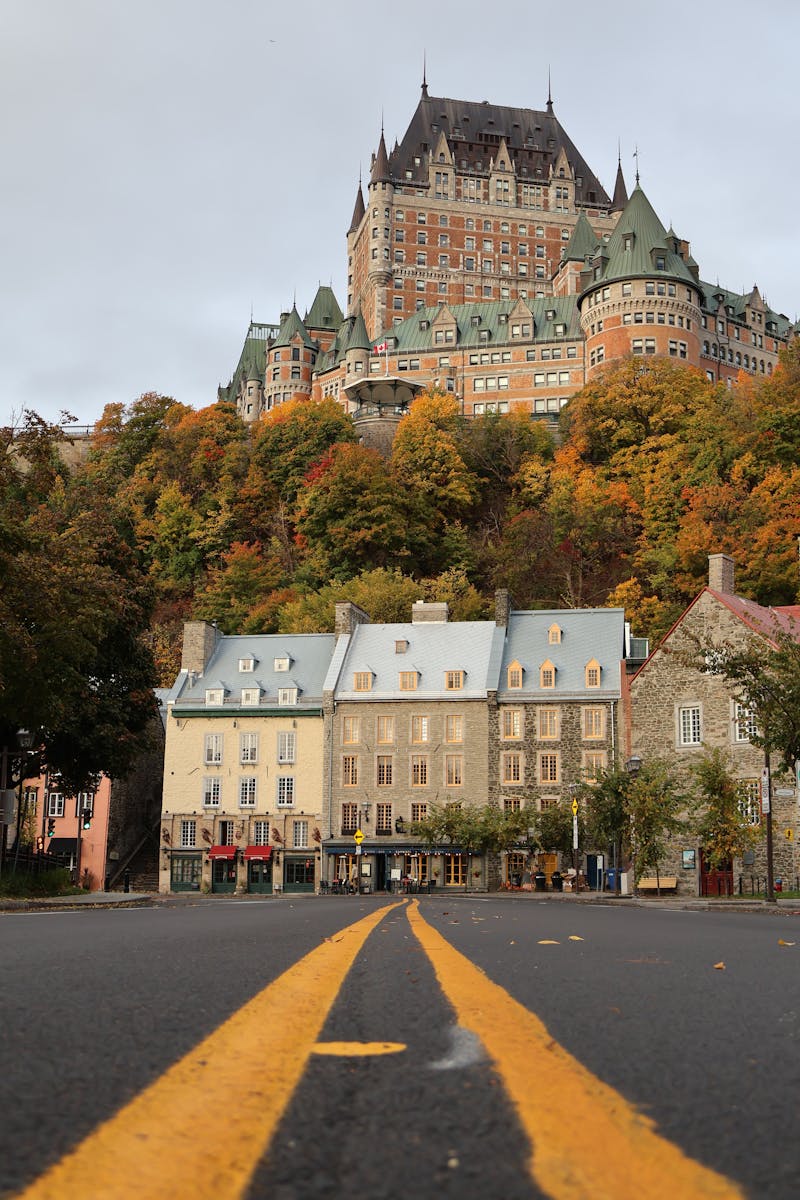
Standing majestically atop a cliff overlooking the St. Lawrence River, the Château Frontenac has been a defining symbol of Quebec City for over a century. With its distinctive château-style architecture, turrets, and dramatic roofline, this iconic hotel has captured the imagination of millions of visitors and photographers. Yet its importance transcends mere aesthetics. The Château Frontenac's story is woven into the fabric of Quebec's identity, Canadian railway history, and even the pivotal moments of World War II. Today, it stands as a testament to architectural vision, hospitality excellence, and historical significance.
A City Transformed: From Fort to Château
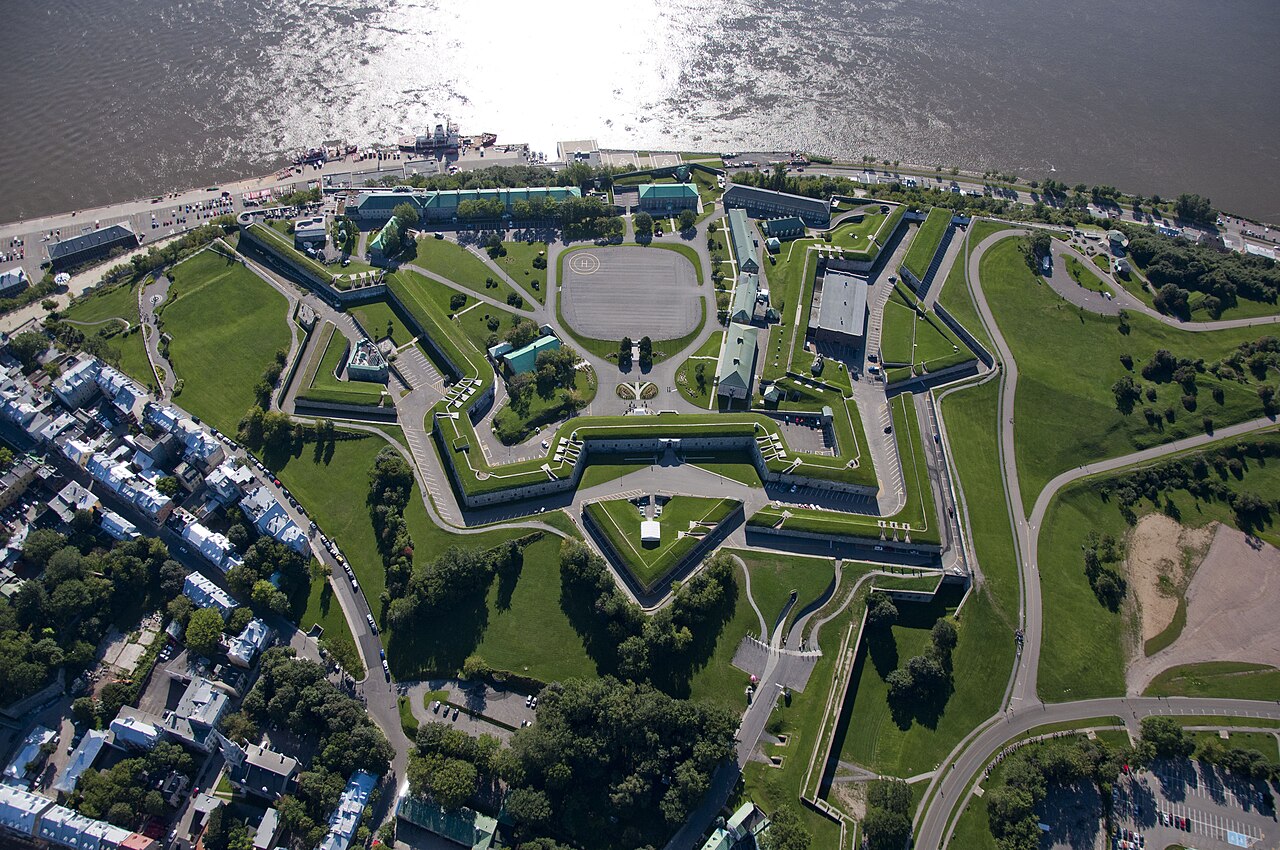
To truly understand the Château Frontenac, we must journey back to the foundations upon which it stands. Long before the grand hotel rose above Quebec City's skyline, this strategic promontory was the seat of power for French and British colonial governors. In 1620, Samuel de Champlain, the founder of Quebec City, recognized the site's defensive and symbolic importance and constructed a fort named Saint-Louis at the top of Cape Diamond. Six years later, he reinforced the fort and added a stone residence to create the colonial government's headquarters.
The first formal Château Saint-Louis was constructed by Governor Charles Huault de Montmagny and completed in 1648. This single-storey dwelling, measuring 26 by 7 meters, became far more than a residence; it was the cultural and political heart of the colony. Here, governors entertained visiting dignitaries, hosted lavish balls, and presided over performances that reflected New France's growing sophistication. The building embodied colonial power and ambition, though it was not destined to last forever.
By the 1680s, the original château had fallen into disrepair. Governor Frontenac, recognizing the need for a grander structure, ordered the construction of a new, fortified château in 1690. Completed in 1723, this second château boasted two storeys with lateral wings, making it roughly four times larger than its predecessor. It dominated the promontory for nearly a century until the Seven Years' War brought devastation. During the 1759 siege of Quebec, heavy shelling damaged the structure significantly. The British occupying forces demolished what could not be salvaged, and what remained stood as a ruin for decades. A fire in January 1834 finally destroyed the remains entirely, leaving the historic site vacant and awaiting a new chapter.
The Railway Hotel Era and Bruce Price's Vision
The latter decades of the nineteenth century witnessed a transformation in North American travel and hospitality. The Canadian Pacific Railway, having just completed its transcontinental line in 1885, recognized an extraordinary opportunity: luxury railway hotels could serve as anchors for leisure travel and generate substantial revenue. The company's visionary general manager, William Van Horne, sought to create a chain of opulent destinations that would entice wealthy travelers to embark on leisurely journeys across Canada.
In 1892, the Canadian Pacific Railway commissioned renowned American architect Bruce Price to design a grand hotel for Quebec City. Price, already celebrated for his designs of Montreal's Windsor Station and Viger Station, brought an ambitious vision to the project. Rather than defaulting to the prevailing Victorian architectural styles, Price proposed something bolder and more theatrical: a structure inspired by the medieval châteaux of France's Loire Valley. The design called for a horseshoe-shaped building with four unequal wings connected at obtuse angles, crowned by steeply pitched roofs, massive circular and polygonal towers, ornate gables, dormer windows, and tall chimneys that reached dramatically skyward.
Construction began in 1892, and the Château Frontenac officially opened its doors on December 18, 1893. The timing was extraordinary. The hotel arrived at the precise moment when Quebec City was establishing itself as a premier North American destination, and its distinctive silhouette immediately captured the imagination of visitors and residents alike. The structure was unlike anything previously built in Canada—a fantasy made stone, a tangible expression of the romance and grandeur associated with medieval European architecture.
Châteauesque: An Architectural Style Born in Canada
The Château Frontenac did not simply represent one architect's whimsical design; it launched an entire architectural movement in Canada. The style, known as Châteauesque or château style, drew heavily from the sixteenth and seventeenth-century châteaux of the Loire Valley in France, adapting their romantic, picturesque qualities for the North American context. What distinguished the Château Frontenac's approach was its emphasis on Gothic and medieval elements rather than Italianate influences, and its deliberately asymmetrical profile that conveyed both grandeur and organic growth over centuries.
The château style was, in many ways, perfect marketing. It communicated luxury, history, romance, and permanence—qualities that appealed profoundly to wealthy travelers in the Gilded Age. The picturesque eclecticism and rich polychromatic surfaces of the design reflected the most fashionable architectural tastes of the Victorian era. More importantly, the Château Frontenac became a template for subsequent Canadian railway hotels. The Canadian Pacific Railway and other railway companies would commission numerous châteauesque properties, including the Banff Springs Hotel and the Royal Alexandra Hotel, all drawing inspiration from Price's Quebec City masterpiece. The Château Frontenac stood as the purest and most iconic expression of this uniquely Canadian architectural tradition.
The Grand Hotel's First Decades: Guests and Glamour
From its opening, the Château Frontenac attracted an impressive clientele. Wealthy American and European travelers who had previously confined their visits to European destinations discovered in Quebec City a destination that rivaled any European resort. The hotel's reputation for refined hospitality and its commanding location overlooking the St. Lawrence River made it the destination for dignitaries, royalty, and celebrities seeking luxury combined with historical significance.
Early distinguished guests included Charles Lindbergh, the pioneering aviator who captured the world's imagination with his transatlantic flight. The hotel also welcomed members of European nobility and Canadian political leaders. When King George VI and Queen Elizabeth—who would become the legendary Queen Elizabeth, the Queen Mother—visited Canada in 1939, they chose the Château Frontenac as their residence in Quebec City. The visit underscored the hotel's status as the premier destination in the province. Later, when Queen Elizabeth II and Prince Philip undertook their first royal tour of Canada in 1952, they too stayed at the hotel, furthering its association with the British crown.
Over the decades, the guest registry expanded to include an extraordinary array of celebrities. Hollywood royalty such as Charlie Chaplin, James Cagney, Barbara Stanwyck, Jane Seymour, and Anthony Quinn all chose the Château Frontenac during their visits to Quebec City. Princess Grace of Monaco, during her presidency of the Queen's Ball at the Quebec Winter Carnival in 1969, occupied a suite at the hotel. Other notable visitors included Charles de Gaulle, Alfred Hitchcock, and various members of the British royal family. This constant parade of famous guests only enhanced the hotel's legendary status and its appeal to travelers from around the world.
World War II: The Quebec Conferences and the Wartime Summit
While the Château Frontenac had distinguished itself as a destination for the world's elite, its role in shaping history reached its apex during World War II. In August 1943, as the Allies planned the ultimate offensive against Nazi-occupied Europe, the Canadian government requisitioned the entire hotel for a summit of unprecedented importance. The First Quebec Conference, codenamed "Quadrant," brought together the leaders whose decisions would determine the course of the war: British Prime Minister Winston Churchill and American President Franklin Delano Roosevelt, hosted by Canadian Prime Minister William Lyon Mackenzie King.
The conference ran from August 10 to 24, 1943, and its strategic objectives were nothing less than the planning of Operation Overlord, the massive invasion of occupied France that would ultimately liberate Western Europe. The hotel was transformed into a secure command center. While Churchill and Roosevelt did not reside in the Château itself—they stayed at the Governor-General's summer residence in the Citadelle for additional security—the hotel served as the headquarters for the combined Allied military leadership. The Combined Chiefs of Staff and hundreds of members of the conference party occupied the Château Frontenac, turning it into a warren of meeting rooms, war rooms, and communication centers.
The discussions at the Château Frontenac centered on the timing and location of the invasion of Normandy. The Allies had agreed to initiate Operation Overlord, but critical questions remained: exactly when would it occur, and where would the landings take place? The decision-makers at the conference examined the strategic possibilities. Normandy, with its proximity to Paris and its ports, presented the ideal launching point for simultaneous threats against Cherbourg, the ports of Brittany further west, and an overland campaign into the heart of Europe. The beaches of Normandy were chosen as the landing site. Although an initial date of May 1, 1944, was discussed, the conference ultimately authorized June as the target month, reflecting the logistical and weather considerations that would ultimately determine the exact date: June 6, 1944.
The security surrounding the conference was extraordinary. The entire hotel was sealed off from the general public. Regular guests were evacuated, and every person within the premises was vetted and monitored. Armed guards patrolled constantly. Communication was restricted to secure channels. In one remarkable security lapse that occurred after the conference concluded, a Canadian Army sergeant discovered a leather portfolio containing nearly complete plans for Operation Overlord hidden under a mattress in the hotel. Rather than exposing the security breach, the officer quietly retrieved the documents and returned them, preventing a potential catastrophe that could have compromised the entire invasion.
Just one year later, in September 1944, with the Normandy beaches liberated and American forces racing eastward across France, the Château Frontenac once again hosted a wartime summit. The Second Quebec Conference, codenamed "Octagon," ran from September 11 to 16, 1944, and brought Churchill and Roosevelt back to Quebec City. By this time, the strategic landscape had shifted fundamentally. The discussions focused on the occupation and partition of defeated Germany, the implementation of the Morgenthau Plan to demilitarize German industry, continued Lend-Lease aid to Britain, and critically, the role the Soviet Union would play in the war against Japan following Germany's surrender. These conferences established the framework for the postwar world that would define geopolitics for decades to come.
Post-War Evolution and the Central Tower Addition
Following the war, the Château Frontenac resumed its role as a premier hotel, but its transformation was far from over. As tourism to Quebec City expanded and guest demands evolved, the hotel underwent successive renovations and expansions. One particularly significant addition came with the construction of the central tower, which was completed in 1924. This tower fundamentally transformed the hotel's silhouette and created the iconic skyline image that would become synonymous with Quebec City itself. The central tower rose dramatically above the original wings, creating a composition that appeared to grow organically from the cliff face, drawing the eye upward in a manner that conveyed both strength and grace.
The hotel's connection to the city was further strengthened by its proximity to the Dufferin Terrace, a promenade that had itself become iconic. The terrace was originally constructed in 1838 and underwent extensive expansion in 1879 under the direction of the Marquess of Dufferin, the then Governor General of Canada. The expanded terrace, stretching 430 meters along the riverfront, became the city's most frequented gathering place. In 1885, electric arc streetlights were installed along the Dufferin Terrace, making it the first public place in North America to receive this technological innovation. The terrace was eventually extended to 671 meters, running the full length of the Château Frontenac's north façade. The hotel and the terrace became inseparable in the public imagination, creating one of the world's most celebrated viewpoints overlooking the St. Lawrence River.
The Fairmont Era and Major Renovation
In 1989, the Château Frontenac became part of the Fairmont Hotel family, a leading luxury hospitality company. This transition brought increased investment and attention to the property. As the twenty-first century advanced, however, it became clear that the historic hotel required comprehensive modernization to meet contemporary guest expectations while preserving its historical character. The Canadian Pacific Railway Hotels recognized that a major renovation was necessary to ensure the Château Frontenac's relevance to a new generation of travelers.
Beginning in 2012 and completed in 2014, a monumental $75 million renovation project transformed the hotel. The project required eighteen months of intensive work and the collaboration of two internationally respected design firms: Wilson Associates and Rockwell Group. The scope was ambitious and comprehensive. The team completely renovated 350 of the hotel's 611 guest rooms, including the complete rebuilding of bathrooms and the installation of state-of-the-art glass-walled showers. The main lobby underwent a complete transformation, reflecting contemporary luxury aesthetics while honoring the hotel's historical legacy.
The renovation also included the expansion of Fairmont Gold floors—the hotel's premium suite offerings. Sixty rooms on the 12th, 14th, 15th, and 16th floors of the central tower were designated for the Fairmont Gold program, relocated from the original tower locations to provide extraordinary views of the city's architecture and the majestic St. Lawrence River. The hotel's banquet and conference facilities were expanded significantly, recognizing Quebec City's growing importance as a meeting destination. Three new restaurant concepts were introduced, transforming the dining experience while honoring the hotel's culinary traditions. An urban spa was added, providing guests with contemporary wellness amenities.
A Guinness Record and the World's Most Photographed Hotel
Among all the accolades and records the Château Frontenac has accumulated, one stands apart: in 2018, it earned recognition in the Guinness World Records as the most photographed hotel in the world. This distinction reflects not merely the hotel's architectural beauty, though that is undeniable, but also its cultural significance and its prominence in the visual imagination of travelers worldwide. The hotel's location atop a cliff overlooking the river, combined with its distinctive silhouette visible from numerous vantage points throughout the city, makes it an irresistible subject for photographers. Its presence in countless travel guides, postcards, social media posts, and professional photographs has made it perhaps the most recognized hotel globally.
The distinctive appearance that earned this record stems from Bruce Price's original vision and the additions that followed. The asymmetrical profile, the steeply pitched roofs with their dramatic angles, the towers that reach skyward with grace and authority, and the overall composition that seems to emerge organically from the cliff itself—all these elements combine to create an image of extraordinary power and beauty. The hotel is not the tallest building in the city, yet its cliff-top location makes it appear monumental. At different times of day, under varying light conditions, and from different seasonal perspectives, the Château Frontenac reveals new facets of beauty, making it endlessly fascinating to photographers and visitors.
Dining and Contemporary Experiences
Today, the Château Frontenac continues to evolve while honoring its heritage. One of the most celebrated additions during recent renovations has been Bar 1608, an elegantly designed establishment that takes its name from the year Quebec City was founded. The bar features a striking circular brass counter with a marble top as its glamorous centerpiece, illuminated by a hand-crafted chandelier. The space offers a tranquil, contemporary atmosphere while maintaining the timeless elegance befitting the hotel's historical character. Floor-to-ceiling windows provide breathtaking views of the St. Lawrence River and the surrounding city.
Bar 1608 serves exceptional regional charcuterie and cheeses along with gourmet light bites, drawing on Quebec's culinary traditions. The bar's expert mixologists craft innovative cocktails using premium spirits and fresh, local ingredients, creating drinks that are rooted in tradition while remaining boldly contemporary. The bar is open Monday through Friday from 4 p.m. to midnight, Saturday from 2 p.m. to midnight, and Sunday from 4 p.m. to midnight. Visitors from outside the hotel can take advantage of the valet service to access this remarkable destination. Sitting at the bar, watching the light dance across the St. Lawrence and gazing out at the rooftops of Old Quebec City, guests sense they are not merely in a hotel bar but in a place where history, architecture, and contemporary hospitality converge.
Visiting the Château Frontenac Today
The Château Frontenac remains one of Quebec City's most essential destinations, whether you stay overnight or simply visit for a day. Guided tours of the hotel provide fascinating insights into its architecture, history, and the colorful characters who have occupied its corridors. The lobby itself is an architectural marvel worth experiencing firsthand—the soaring spaces, the detailed craftsmanship, and the careful interplay of historical and contemporary design elements create an environment that is both welcoming and awe-inspiring.
The hotel's dining establishments range from casual to fine dining, each offering distinctive experiences. Whether enjoying a meal at one of the hotel's restaurants, taking afternoon tea in the lobby, sipping a craft cocktail at Bar 1608, or simply walking the Dufferin Terrace that runs the length of the hotel's north façade, visitors gain an appreciation for why this structure has captured the world's imagination.
For those staying at the hotel, the experience transcends ordinary hospitality. Guest rooms offer views of either the historic Old City or the St. Lawrence River—views that have inspired travelers for over a century. The modern amenities integrated throughout the hotel ensure comfort, while architectural details and furnishings evoke the hotel's storied past. Guests sleep in rooms where world leaders have strategized, where celebrities have rested between performances, where countless millions have paused during their lives to experience something extraordinary.
A Monument to Permanence and Vision
The Château Frontenac stands as a monument to architectural vision, historical significance, and the enduring power of hospitality. From Bruce Price's original conception in 1892 through the successive generations of innkeepers, architects, and visionaries who have stewarded the property, the Château Frontenac has remained true to its foundational purpose: to welcome the world's travelers and to create an experience of beauty and refinement. It rises above the site where governors once ruled a colony, where historical forces shaped a nation, where military leaders planned liberation, and where countless personal stories have unfolded.
In an era when hospitality is often reduced to transactional efficiency, the Château Frontenac reminds us that great hotels are more than repositories of beds and services—they are repositories of memory, culture, and human aspiration. They are places where the extraordinary becomes possible, where beauty is not an accessory but a fundamental commitment, and where history is not merely commemorated but lived.
Standing on the Dufferin Terrace, watching the light transform the river and the city, or stepping into the Château Frontenac's lobby and feeling the weight of its history, visitors from around the world understand why this hotel has earned its place as not merely a destination but as a symbol of Quebec City itself. It is a place where past and present converge, where architectural dreams are realized in stone and mortar, and where the generosity of place and hospitality continue to inspire and enchant all who encounter it. The Château Frontenac endures—a testament to the power of vision, the importance of preservation, and the eternal human desire for beauty and connection.