Few dishes tell the story of Quebec quite like poutine. From its humble origins as a rural snack in the 1950s to its current status as an international culinary icon, poutine represents far more than just a combination of fries, cheese curds, and gravy. It's a symbol of Quebec's distinct culture, a bridge between tradition and modernity, and a testament to how a simple comfort food can capture the heart of a nation and the world.
Today, visitors to Quebec City are drawn to legendary poutine establishments as much as they are to historic landmarks. The dish has transcended its working-class roots to earn respect in fine dining establishments and food festivals worldwide. Yet the journey to this exalted status is filled with competing origin stories, decades of social stigma, a gourmet revolution, and ultimately, the embrace of poutine as Quebec's most recognizable culinary export. This is the story of how a "damned mess" became a masterpiece.
The Battle for Bragging Rights: Origin Stories and Competing Claims
The origins of poutine are contested, with multiple towns and restaurants claiming to have invented Quebec's most famous dish. This "war of the curds," as some have called it, reveals as much about Quebec's regional identity as it does about the dish itself.
Warwick and Fernand Lachance's Le Lutin qui rit
The town of Warwick, located in Quebec's Centre-du-Québec region, is home to one of the most famous origin stories. In 1957, Fernand Lachance, owner of Café Ideal (later renamed Le Lutin qui rit), is credited by many as the first person to combine fries, cheese curds, and gravy into a single dish. According to the legend, a regular customer named Eddy Lainesse requested that cheese curds be added to his order of French fries. Lachance allegedly responded with the now-famous phrase: "Ça va te faire une maudite poutine!" – "That's going to make a damned mess!"
The name stuck, and poutine appeared on Le Lutin qui rit's menu in 1957. However, Lachance's original version lacked one critical ingredient. It wasn't until 1962 or 1963 that he added hot gravy to the dish, reportedly to keep the fries and curds warm on the plate and to contain the mess that the dish's name suggested. This warm gravy would become essential to the poutine experience, binding the ingredients together and preventing them from cooling too quickly.
Drummondville and Jean-Paul Roy's Le Roy Jucep
While Warwick celebrates Fernand Lachance, the town of Drummondville, just down the road, points to another pioneer: Jean-Paul Roy. At his drive-in restaurant, Le Roy Jucep, Roy began serving a combination of fries, cheese curds, and gravy in the late 1950s, with the dish appearing on the menu officially in 1964. The story goes that Roy originally named the dish "fromage-patate-sauce" – a literal but cumbersome description of fries, cheese, and sauce. This tongue-twister name was eventually abandoned for something shorter and catchier: poutine.
Jean-Paul Roy's claim to fame is significant because he may have been the first to serve all three essential ingredients together as a complete dish in his commercial establishment. By November 1998, Roy officially registered the trademark for poutine, cementing his role in poutine history. Some food historians, including Canadian food researcher Sylvain Charlebois, credit Roy as the true inventor, arguing that Le Roy Jucep was the first restaurant to consistently serve the complete, three-ingredient version of the dish.
The Festival and the Verdict
The rivalry between these two origin stories reflects something deeper in Quebec culture – a sense of place and pride tied to culinary traditions. The first poutine festival was held in Warwick in 1993, honoring Fernand Lachance and the town's claim to fame. However, as poutine's popularity grew, the festival relocated to the larger town of Victoriaville in 2014, making it more accessible to the thousands of poutine enthusiasts who now flock to celebrate the dish annually.
Today, both Warwick and Drummondville are recognized as birthplaces of poutine, each with legitimate claims supported by historical evidence and passionate local communities. Rather than declaring a clear winner, the culinary world has embraced both stories as part of poutine's rich heritage.
A Question of Etymology: Where Did the Name Come From?
The word "poutine" itself carries multiple theories and origins, reflecting the dish's somewhat mysterious birth. Unlike the dish's ingredients, which are straightforward – potatoes, cheese curds, and gravy – the etymology is delightfully complex.
The most popular theory suggests that "poutine" derives from a Québécois slang word meaning "mess" or "muddle," which perfectly captures Fernand Lachance's original reaction to the dish. This slang usage reflects the dish's humble, working-class origins and its appearance – a somewhat haphazard combination of components that somehow works beautifully together.
Another widely cited theory links the word to the English word "pudding," perhaps through a Québécois phonetic adaptation. Some food historians suggest that "poutine" may have been influenced by Provençal French words such as "poutingo," meaning a bad stew, or "poutité," meaning a hodgepodge or crushed mixture of foods – a fitting description for a dish that combines multiple elements into a unified whole.
More recent research indicates that "poutine" may have multiple layers of etymology, with contributions from both Québécois slang and historical French regional words. What's clear is that the name, whatever its exact origins, perfectly suits the dish – colorful, somewhat irreverent, and absolutely Quebec.
The Holy Trinity: Fries, Cheese Curds, and Gravy
Understanding poutine requires understanding the three ingredients that define it. Each plays a specific role, and each must be executed with care for the dish to truly shine.
The Foundation: Fresh-Cut Fries
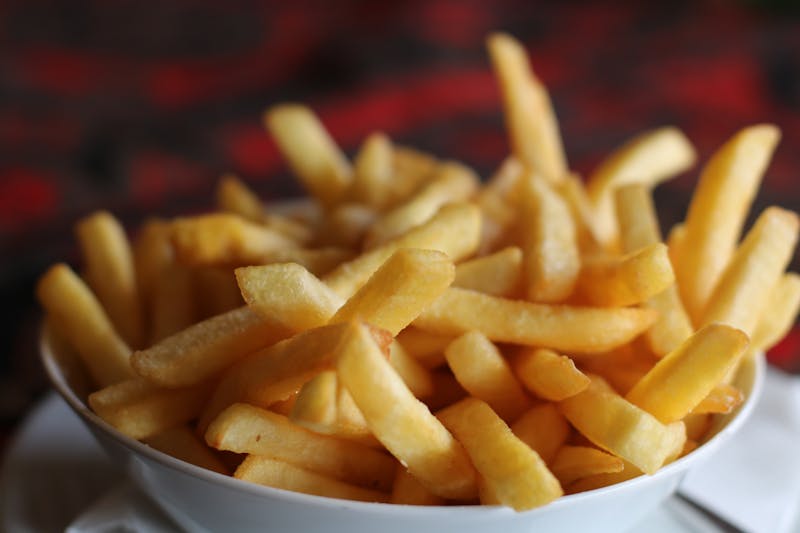
Poutine fries are not simply any fried potato. Traditionally, they are cut thick and double-fried – sometimes even triple-fried – to achieve the perfect balance: a crispy, golden exterior and a soft, pillowy interior. This double-fry technique allows the fries to be sturdy enough to support the weight of cheese curds and gravy without becoming soggy too quickly. The fries act as the structural foundation of the dish, and their quality significantly impacts the overall eating experience.
The best poutine restaurants use locally sourced potatoes and cut them fresh daily or several times throughout the day. The choice of potato variety matters too – longer varieties are traditional, chosen for their starch content and the quality of their texture when fried.
The Star: Fresh Cheese Curds
Cheese curds are the signature element that distinguishes poutine from other fried potato dishes around the world. These are young, unaged cheddar cheese curds – sometimes called "squeaky cheese" for their distinctive quality when bitten. That squeak, which occurs due to the friction between the curd and your teeth, is a sign of freshness and high moisture content. It's a textural element that modern cooks and food scientists have actually studied; the squeak comes from the physical structure of the curds and their moisture level.
Cheese curds lose their characteristic squeak as they age and dry out, so the best poutine restaurants source their curds fresh from local dairies, often using curds less than a day old. This emphasis on freshness reflects poutine's roots in the Centre-du-Québec region, where dairy farming and cheese curd production are central to the economy and culture. The curds should be firm but slightly yielding, maintaining their shape while offering a gentle resistance to the bite.
The Binder: Rich, Savory Gravy
The gravy is what transforms poutine from a simple combination of components into a unified dish. Traditionally, poutine gravy is a brown gravy – rich, savory, and deeply flavored. The best gravies are made from beef or chicken stock, thickened with a roux, and seasoned with salt, pepper, and sometimes herbs. Some establishments use duck fat in their gravy for added depth and richness, as evidenced by legendary Montreal restaurants like Au Pied de Cochon.
The gravy serves multiple purposes: it provides flavor, it binds the ingredients together, and it keeps the fries warm by slowing heat dissipation. Traditional poutine gravy should coat the fries and curds evenly, neither drowning them nor leaving them dry. The temperature of the gravy is also crucial – it should be hot enough to slightly melt the cheese curds but not so hot that it separates the curd's delicate structure.
From Peasant Food to Taboo: The Social Stigma Era
Despite its early popularity in rural Quebec, poutine spent decades as a dish carrying significant social baggage. In the 1970s and 1980s, poutine was widely perceived as unsophisticated "peasant food" or unhealthy junk food best consumed after a night of drinking. This social stigma was deeply rooted in class divisions.
Poutine's origins in working-class diners and late-night snack bars contributed to this perception. The dish was associated with blue-collar workers, teenagers, and people seeking quick, inexpensive meals. The food establishment – chefs, food critics, and fine dining establishments – largely ignored or dismissed poutine as beneath consideration. Interestingly, some Montreal chefs during this era would prepare poutine for their kitchen staff but would never dream of putting it on a restaurant menu.
This dismissal was shortsighted and reflected the class prejudices of the era. Poutine, for all its humble appearance, is actually a carefully balanced dish that requires skill and quality ingredients to execute well. The stigma persisted into the 1980s, but the seeds of change were already being planted.
The Mainstream Breakthrough: McDonald's, Burger King, and the 1990s
The transformation of poutine from working-class snack to mainstream sensation happened gradually through the 1980s and 1990s, driven largely by fast-food chains and the comfort food movement.
In 1983, Burger King introduced poutine to their Canadian menu, significantly expanding access to the dish beyond Quebec's traditional snack bars. This was a pivotal moment – a major international fast-food chain was legitimizing poutine by placing it alongside other menu items. However, the real turning point came in 1990 when McDonald's added poutine to their Quebec restaurants. McDonald's didn't just introduce poutine to a broader audience; they standardized it, made it accessible, and introduced it to people who might never have visited a traditional casse-croûte.
Following McDonald's success, Harvey's, a major Canadian burger chain, added poutine to their menu in 1992, further cementing the dish's place in mainstream Canadian food culture. By the mid-1990s, poutine had transformed from regional novelty to a dish recognizable across Canada and increasingly beyond.
The Gourmet Revolution: From Comfort Food to Fine Dining
While fast-food chains were democratizing poutine, something equally important was happening in Montreal's fine dining scene. In the early 2000s, a new wave of chefs began embracing comfort foods and elevating them to gourmet status. Poutine, with its humble roots and perfect balance of flavors and textures, became the perfect canvas for culinary innovation.
The most famous example is Martin Picard's Au Pied de Cochon, which opened in Montreal in 2001. Au Pied de Cochon became renowned for its decadent approach to Quebec cuisine, celebrating rather than apologizing for the province's culinary traditions. In 2002, Picard introduced his signature poutine au foie gras – a dish that shocked and delighted the culinary world.
This was not traditional poutine. Instead of simple cheese curds, Picard topped thick-cut fries with a rich, creamy foie gras sauce, served over fresh cheese curds and drizzled with a duck fat gravy that had been simmered for three days. The result was simultaneously luxurious and utterly recognizable as poutine – a perfect example of how traditional dishes can be elevated without losing their essential character.
Au Pied de Cochon's foie gras poutine became one of Montreal's most sought-after dishes, attracting international attention and demonstrating that poutine could compete with any dish in fine dining establishments. The success of this and similar gourmet poutine creations sparked a broader trend. Chefs across Canada and beyond began developing their own elevated versions – poutines with short rib braise, lobster, truffles, exotic cheeses, and innovative sauces.
This gourmet movement did something crucial: it completely reversed poutine's social status. The same dish that fine dining establishments had once scorned became a matter of pride, a way to celebrate Quebec's culinary heritage while demonstrating technical skill and creativity.
La Banquise: Montreal's Poutine Laboratory
While Au Pied de Cochon represented poutine's elevation to fine dining, La Banquise represented poutine's expansion through creative experimentation at the casual dining level. Founded in 1968 as a small dairy bar by firefighter Pierre Barsalou, La Banquise gradually transformed into what many consider the world's poutine capital.
Poutine appeared on La Banquise's menu in the early 1980s with just a couple of options – the classic and an Italian version. The response from customers was immediate and overwhelming. Customers returned again and again with requests for new variations, and La Banquise's owner and later his daughter Annie Barsalou embraced this demand enthusiastically.
What began as a small snack bar evolved into a poutine laboratory, constantly developing new combinations and testing customer reactions. By the 2000s and 2010s, La Banquise was operating with no fewer than 35 different poutines on their menu at any given time – ranging from the traditional to the absolutely wild. This approach demonstrated that poutine was infinitely adaptable while remaining fundamentally poutine.
La Banquise's success showed that there was a massive market for poutine innovation. The restaurant became a destination in its own right, attracting poutine pilgrims from across Quebec, Canada, and the world.
Poutine Week and Festivals: Celebrating Quebec's Dish
The rise of poutine's status also manifested in organized celebrations and competitions. La Poutine Week, which began in Montreal in 2013, has grown into Canada's biggest poutine festival and the world's largest celebration of the dish. The first year featured 30 restaurants; by 2026, over 500 restaurants across Canada participate in La Poutine Week, which takes place annually from February 1-7.
During La Poutine Week, participating restaurants create special, limited-edition poutines and compete for various awards including Favorite Poutine (decided by public voting), the Jury Prize, Health Prize, Most Original Poutine, and Most Outrageous Poutine. Each poutine sold during the week generates a one-dollar donation to Food Banks Canada, making the celebration both festive and charitable.
Beyond La Poutine Week, Quebec also hosts the Grand PoutineFest, a nomadic festival that travels to 21 cities across the province from April to October, creating a gourmet and family-friendly celebration of poutine, live music, and community. The Grand PoutineFest awards a "Championship Belt" to the best poutine of the festival, turning poutine competition into entertainment theater.
Additionally, Drummondville hosts the Festival de la Poutine, which features three evenings of concerts and poutine maker competitions, celebrating the town's connection to poutine history.
Global Expansion: From Quebec to the World
As poutine's status grew domestically, it also began spreading internationally, though with limited success compared to other fast foods. Canadian chains have led the expansion – Smoke's Poutinerie, Canada's largest poutine-centric chain, has opened locations in the United States including Berkeley, California and Tampa, Florida.
In the United States, poutine has found scattered success, particularly in areas with significant Canadian populations or in food-conscious cities. New York and New Jersey have developed their own version called "disco fries," which uses a similar concept but lacks the authentic cheese curds and traditional gravies of genuine poutine. In California, gourmet poutine vendors like The Kroft have gained followings in the Anaheim and Los Angeles areas.
European expansion has been slower but steady. In France, Canadian-themed bars and restaurants in Paris – such as Moose Head and The Great Canadian – serve poutine to curious diners. Poutine can be found in various forms across European cities including Berlin and London, typically in restaurants celebrating North American or Canadian cuisine.
Interestingly, poutine has also made unexpected appearances in Russia and Korea, where it's been embraced as an exotic North American delicacy. However, poutine has never achieved the same international ubiquity as other Canadian food exports, partly because it requires fresh, quality cheese curds – an ingredient that's difficult to source outside Quebec and lacks the shelf stability of other foods.
Quebec City's Best Poutine: Where to Find Excellence
For visitors to Quebec City seeking authentic poutine experiences, several establishments have earned stellar reputations for quality and creativity.
Chez Ashton: The Classic Standard
Chez Ashton is widely recognized as serving the best traditional poutine in Quebec City. The chain was founded in 1969 by Ashton Leblond, who began with a traveling snack cart before opening a full restaurant in 1979. Chez Ashton's poutine features fluffy fries, homemade gravy with perfect seasoning, and extra-fresh cheese curds that maintain their characteristic squeak. The restaurant's success lies in refusing to overcomplicate things – they focus on doing the basics perfectly, with high-quality ingredients sourced locally when possible. Multiple locations throughout Quebec City make Chez Ashton an accessible option for visitors seeking poutine excellence.
Le Chic Shack: Creative and Unconventional
Located next to the historic Château Frontenac in Old Quebec City, Le Chic Shack takes a completely different approach. This establishment specializes in unconventional poutines made with hand-smashed potatoes rather than traditionally cut fries. Their menu ranges from wild variations – including poutines topped with kimchi, maple syrup, and Indian-style plum chutney – to their signature poutine forestière, which features wild mushroom ragout and grated aged cheddar cheese.
Le Chic Shack is also known for excellent vegan poutine options, making it a destination for diners with dietary preferences. The prime location near Château Frontenac makes it convenient for tourists, and the creative approach appeals to adventurous eaters seeking something beyond traditional poutine.
Poutineville: Excess and Abundance
For those seeking poutine on an epic scale, Poutineville delivers. The restaurant offers some of the largest and most elaborately topped poutines in Quebec City, with their legendary "La Crise Cardiaque" (The Heart Attack) weighing over 15 pounds and piled high with chicken, bacon, hot dog sausages, ground beef, ham, onions, green peppers, mushrooms, tomatoes, multiple cheeses, and poutine sauce.
Poutineville offers over 40 items to choose from, including 11 varieties of cheese, four kinds of potatoes, and five kinds of sauces – all made with high-quality ingredients including Quebec cheese curds and farm-fresh, locally grown vegetables. This is poutine as an experience of abundance and customization, perfect for adventurous eaters and those seeking the ultimate poutine challenge.
How to Judge Great Poutine: The Qualities That Matter
Not all poutines are created equal. Understanding what makes great poutine helps visitors navigate Quebec City's offerings and appreciate why some establishments earn legendary status.
The Squeak Test: Cheese Curds
The most obvious indicator of quality is the cheese curds. Fresh curds should squeak distinctly when you bite into them – a sign of their moisture content and age. If the curds are soft and melt immediately without any squeak, they're too old. This squeaking quality is so fundamental that many poutine aficionados consider it non-negotiable. The curds should be substantial enough to maintain their form even when coated in warm gravy, yielding slightly to pressure but not dissolving into the sauce.
The Texture Test: Fries
Great poutine fries should be crispy on the outside – the result of careful deep frying – and fluffy and soft on the inside. They should be thick-cut, sturdy enough to hold up under the weight of cheese and gravy without becoming limp within seconds. The best poutine restaurants achieve this through double or triple frying, careful timing, and proper oil temperature control. Thin fries or soggy fries are immediate signs of lower quality.
The Balance Test: Overall Composition
The best poutine achieves a delicate balance where no single component overwhelms the others. The gravy should coat the fries and curds evenly without drowning them. The cheese curds should be distributed throughout rather than settling at the bottom of the container. The temperature should be such that the fries remain crispy on the exterior while the curds partially melt. This balance is harder to achieve than it might seem and separates truly great poutine from mediocre versions.
Poutine as Cultural Symbol: Quebec Identity in a Dish
Beyond its culinary qualities, poutine has become deeply embedded in Quebec's cultural identity. The dish represents something fundamental about Quebec – its working-class roots, its distinct culture, its tendency toward irreverence, and its ability to take simple ingredients and create something greater than the sum of its parts.
In the 1990s and 2000s, younger Quebecers began to reappropriate poutine as a symbol of Québécois pride. What earlier generations had viewed with embarrassment became a marker of cultural distinctiveness. Journalist Paul Wells captured this shift in a 1990 observation, noting that poutine had become "Québec in a bowl, a shorthand symbol for the province which finds its way into editorial cartoons, comic monologues, and anywhere somebody needs to evoke Québec and get a laugh at the same time."
Ironically, as poutine has spread beyond Quebec, it's often been labeled a "Canadian" dish, a designation that has created some friction. Montreal chef Chuck Hughes has been vocal about this, saying: "Poutine has become known as a Canadian dish, and it's totally NOT a Canadian dish. It's Québécois!" This tension reflects the ongoing negotiation between Quebec's distinct identity and its place within Canada – a negotiation that poutine embodies perfectly.
Today, poutine festivals, social media celebrations, and international recognition have solidified poutine's status as an internationally known symbol of Quebec. Tourist boards, travel writers, and food documentaries have made poutine a must-try experience for visitors to Quebec City, elevating it alongside other iconic cultural markers like French architecture and the St. Lawrence River.
The Economic Impact: Supporting Quebec's Food System
Beyond its cultural significance, poutine has become economically important to Quebec. The dish supports a complex supply chain including potato farmers across the province, dairy operations that produce cheese curds, gravy manufacturers, and thousands of restaurants and food service establishments.
The seasonal festivals alone – La Poutine Week, the Grand PoutineFest, and the Festival de la Poutine – generate significant tourism revenue and media attention. Restaurants participating in La Poutine Week have reported substantial increases in foot traffic and revenue during the festival week. The 2026 edition, with over 500 restaurants across Canada participating, represents a significant economic stimulus.
Additionally, poutine has become a tourism draw in its own right. Food tourists and casual visitors alike are drawn to Quebec specifically to experience authentic poutine at legendary establishments. This culinary tourism supports not just poutine restaurants but the broader Quebec City tourism economy, encouraging visitors to extend their stays and explore other aspects of the region's food and culture.
Conclusion: From Peasant Dish to Cultural Ambassador
Poutine's journey from a rural snack to an international symbol of Quebec is remarkable not because it's complicated, but because it's real. A simple combination of fries, cheese curds, and gravy – invented by someone who famously called it "a damned mess" – has become one of the world's most recognizable food items and one of Quebec's most important cultural ambassadors.
The dish's trajectory mirrors Quebec's own evolution: from a rural, working-class identity to a position of cultural confidence and international recognition. The social stigma that once surrounded poutine has been completely reversed, transforming it into a source of pride. Fine dining establishments now feature gourmet versions, while traditional casse-croûtes continue to serve authentic versions to devoted fans.
When you visit Quebec City and taste poutine at Chez Ashton, Le Chic Shack, or Poutineville, you're not just eating a meal. You're participating in a living piece of Quebec culture, experiencing a dish that emerged from the province's dairy farms and rural communities, overcame social prejudice, and ultimately claimed its place among the world's beloved comfort foods. That's quite an accomplishment for something that started as a late-night snack.
In poutine, Quebec found the perfect dish to express itself – humble, unpretentious, complex in its simplicity, and absolutely worth celebrating.