Old Quebec City is a place where centuries collapse into the present moment. Walking its narrow cobblestone streets, you could just as easily be strolling through the medieval quarters of Paris or the enchanting lanes of a Loire Valley village. Yet this is unmistakably North America—a UNESCO World Heritage site that stands as the only walled city north of Mexico and a testament to over four centuries of continuous European settlement. The Old City is not merely a museum piece preserved in amber; it is a living, breathing community where artisans display their work in open-air galleries, restaurants serve both traditional Québécois cuisine and contemporary fare, and locals navigate the same winding passages their ancestors walked. This comprehensive walking guide will lead you through the labyrinth of Old Quebec, revealing the stories, architecture, and character that make this destination one of the most captivating places to explore in North America.
A Brief History: Why Old Quebec Matters
To truly appreciate Old Quebec, you must understand its historical significance. In 1608, French explorer Samuel de Champlain established a permanent settlement at the foot of Cape Diamond, beginning what would become the cradle of French civilization in North America. That settlement, focused around what is now Place Royale, became the commercial and cultural heart of New France. The city grew organically around this core, developing into two distinct zones: the Upper Town (Haute-Ville) perched atop the cliff, which became the seat of religious and administrative power; and the Lower Town (Basse-Ville) nestled below, which served as the center of commerce and maritime activity.
The city that emerged from this geography is extraordinary not only for its age but for its architectural continuity. While much of North America was rebuilt repeatedly as populations and economies shifted, Quebec City preserved its 17th and 18th-century character through a combination of cultural pride, economic forces, and deliberate conservation efforts. When Quebec City was designated a UNESCO World Heritage site in 1985—the first such designation in North America—the international community formally recognized what residents had always known: this was a place of transcendent historical and cultural value.
Preparing for Your Walk: Essential Information
Before you set foot on the cobblestones, a few practical considerations will enhance your experience. The terrain in Old Quebec is challenging. The streets are genuinely steep, especially those connecting Upper and Lower Towns. The cobblestones, while charming, are uneven and can be treacherous in rain or snow. Comfortable walking shoes with good ankle support are not optional—they are essential. In winter, the city can be slippery; residents and regular visitors often wear shoes with specialized grips.
A complete walking tour of Old Quebec's main attractions typically requires three to four hours, depending on your pace and how thoroughly you explore. You can comfortably cover the essential highlights—Château Frontenac, Place Royale, Petit-Champlain, and Dufferin Terrace—in about two hours of solid walking. However, to truly savor the atmosphere, linger in cafés, explore side streets, and absorb the character of the neighborhoods, budget a full day or even two days.
The best time to walk is mid-morning or late afternoon, when the light is particularly flattering and the crowds are lighter. Summer months (May through October) bring the most visitors but also offer pleasant weather. Winter walking is spectacular but demands appropriate clothing and caution on icy slopes. Early spring and fall offer the sweet spot: mild weather, smaller crowds, and the city wearing a different character.
Starting at Dufferin Terrace: The Grand Panorama
Begin your walk at Dufferin Terrace, the magnificent wooden boardwalk stretching 425 meters along the cliff face. Whether you arrive by foot or via the historic funicular (in operation since 1879), your first experience of Dufferin Terrace will likely take your breath away. The terrace offers panoramic views of the St. Lawrence River, the Lower Town's rooftops, the South Shore communities, and Île d'Orléans beyond. On clear days, you can see for miles. This terrace was officially opened on June 28, 1879, and today it remains one of Quebec City's most beloved gathering places, where locals and tourists mingle, street performers entertain crowds, and photographers position themselves to capture that perfect shot of the Château Frontenac.
The Dufferin Terrace connects seamlessly to the Promenade des Gouverneurs, a scenic pathway that winds along the cliff face below the Citadelle, offering intimate views of the river and fortifications. If you have time, this extension adds another thirty minutes to your walk and provides a sense of how the city's defensive infrastructure integrated with its natural landscape. The promenade is particularly beautiful in summer when vegetation is lush, and in fall when the foliage blazes with color.
The Château Frontenac: Architecture and Accessibility
Rising majestically above Dufferin Terrace is the Château Frontenac, the iconic hotel that has defined Quebec City's skyline for over a century. Even if you are not staying at the hotel, you should enter the lobby. The soaring public spaces, the intricate architectural details, and the craftsmanship evident throughout the ground floor tell the story of a bygone era of hospitality and grandeur. The lobby is open to the public, and you can explore the beautiful interiors without being a guest. Bar 1608, located within the hotel, offers an elegant space to enjoy a cocktail or afternoon tea, and the views of the St. Lawrence River from the bar's windows are sublime.
The Château Frontenac's position on the cliff edge is not accidental—it was designed by Bruce Price to command the landscape, making the hotel visible from numerous vantage points throughout the city. In 2018, the hotel earned recognition in the Guinness World Records as the world's most photographed hotel, a distinction that reflects both its architectural beauty and its cultural significance.
Rue du Trésor: The Artists' Alley
From Dufferin Terrace, make your way to Rue du Trésor, a narrow side street that links the Château Frontenac with the Notre-Dame-de-Québec Basilica-Cathedral. This cobblestone alley is lined with artists who display and sell their watercolors, engravings, paintings, and reproductions. The street has become an open-air art gallery of remarkable character. The tradition began in the 1960s when a pair of artists began exhibiting their work here, and other artists soon followed. Today, from mid-May to mid-October, Rue du Trésor is filled with working artists, many of whom can be found sketching live portraits and caricatures of visitors. Even if you do not purchase art, the street is worth exploring for the atmosphere and the visual energy created by dozens of artists practicing their craft.
The name "Rue du Trésor" recalls history. During the French Regime, colonists came to this street to pay their taxes at the royal treasury once located here. Today it is a place where treasure of a different kind—artistic expression—is freely displayed for appreciation and sale.

Place d'Armes: The Historic Military Square
Proceeding from Rue du Trésor, you emerge at Place d'Armes, an open plaza that once served as a military training ground during the early days of the French colony. The square derives its name from the drills, parades, and military ceremonies held here by the French army until 1760, when the colony changed hands to the British. Military activities ceased when the Citadelle was constructed in the 1830s, and the square eventually became a public park around 1865.
Dominating Place d'Armes is the Cathedral of the Holy Trinity, a masterpiece of British colonial architecture. Built between 1800 and 1804 by military engineers Captain William Hall and Major William Robe, the cathedral's refined Palladian design adapts the style of St. Martin-in-the-Fields in London. King George III funded the construction and provided religious artifacts for worship, underscoring the cathedral's significance as a symbol of British presence in a Catholic city. The cathedral was designated a national historic site because of its architectural significance and its role in introducing British classicism to Quebec City. The interior, with its soaring spaces and delicate detailing, offers a peaceful refuge from the busy streets outside.
Descending to Lower Town: The Steep and Historic Route
From Place d'Armes, you can descend to Lower Town via several routes. The most dramatic is the Escalier Casse-Cou—literally "Breakneck Stairs"—the oldest stairway in Quebec City, first built in 1635. The current staircase, with its four ramps of iron and stone, was constructed by engineer Charles Baillairgé in 1893 to replace the dangerous wooden stairs that travelers had used for centuries. Originally called Escalier Champlain and later Escalier du Quêteux (Beggars' Stairs), the stairs earned their current name in the mid-19th century because of their alarming steepness. Today, 63 steps connect Côte de la Montagne in Upper Town to the corner of Rue du Petit-Champlain and Rue Sous-le-Fort in Lower Town.
Descending the Escalier Casse-Cou is a sensory experience. The stairs feel ancient, worn smooth by centuries of feet. The narrow passage between buildings creates a tunnel-like atmosphere. Locals pass tourists with practiced ease, while visitors carefully negotiate the steep pitch. At the bottom, you arrive at the beginning of the Petit-Champlain quarter, having made a dramatic transition from the colonial grandeur of Upper Town to the intimate, merchant-scale architecture of Lower Town.
Petit-Champlain: North America's Oldest Commercial District
Rue du Petit-Champlain is claimed to be the oldest commercial street in North America. The street is named after Samuel de Champlain, who founded Quebec City in 1608, and it has served as a commercial corridor since the earliest days of European settlement. Dating from the first colonization, Rue du Petit-Champlain witnessed firsthand the birth of New France and became the beating heart of commercial life in the Lower Town.
Today, the street is a postcard-perfect destination lined with one-of-a-kind boutiques, restaurants, and galleries. The cobblestone street is narrow, perhaps only fifteen feet wide in some sections, with colorful buildings rising on either side. Window displays feature everything from artisanal chocolates to Quebec crafts to contemporary art. The atmosphere is vibrant, particularly in summer when the narrow confines are packed with visitors, street musicians, and the aroma of food from dozens of restaurants and cafés.
The character of Petit-Champlain is thoroughly European in feel. Many visitors remark that walking this street, with its tightly packed buildings, European shop windows, and the visual density of the streetscape, evokes the feeling of walking through an old European city. The architecture is genuine 17th and 18th-century construction, though interiors have been modernized to accommodate contemporary retail and hospitality establishments.
The Funicular: A Historic Engineering Marvel
While exploring Petit-Champlain, notice the funicular railway that connects Lower Town to Dufferin Terrace. This inclined lift has been in operation since 1879, making it one of North America's oldest functioning funiculars. The funicular is a marvel of 19th-century engineering, using a cable system to haul small cars up and down the steep slope. Today it remains a delight for visitors and a practical transportation solution for residents and workers moving between Upper and Lower Towns. Taking the funicular provides a unique perspective of the city as you rise along the cliff face.
Place Royale: The Cradle of French Civilization
Walking westward from Petit-Champlain, you arrive at Place Royale, arguably the most historically significant square in all of Quebec. In 1608, French explorer Samuel de Champlain established the settlement that would become Quebec City on this exact site. The square is often referred to as "the cradle of French civilization in America," and this designation is not hyperbole. Place Royale was the commercial, cultural, and administrative heart of New France.
The square's name reflects its history. Originally known as Market Square (Place du Marché), by the 1620s it hosted the city's first market. After a devastating fire in 1682 destroyed the wooden structures that had characterized the early settlement, the square was rebuilt with stone buildings that established the architectural style visible today. In 1686, a bust of King Louis XIV was erected in the center of the square by Intendant Jean Bochart de Champigny, and the plaza was renamed Place Royale in honor of the French monarch. This name remains unchanged today, making it one of the few public squares in North America to maintain its original name for over three centuries.
The buildings surrounding Place Royale were largely built in the 17th and 18th centuries. Their designs reflect the practical concerns of merchants and administrators—ground-floor spaces for commercial activity, upper floors for residences or offices. The architectural harmony is remarkable. Though individual buildings vary in detail, they speak a common language of stone construction, sash windows, and sloped roofs adapted to Quebec's climate. The square fell into decline around 1860, and by 1950, it had become a poor, rundown neighborhood. A comprehensive rehabilitation project beginning in 1960 restored all the buildings, paving the square with period-appropriate cobblestones and establishing modern building codes that preserve the historic character. Today, Place Royale buzzes with galleries, museums, restaurants, and shops.
Notre-Dame-des-Victoires Church: Oldest Stone Church in Quebec
Dominating Place Royale is the Church of Notre-Dame-des-Victoires, one of the oldest churches in North America. Construction began in 1687 on the site of Champlain's habitation and was completed in 1723. The church's name reflects its history. Originally dedicated to l'Enfant Jésus, it received the name Notre-Dame-de-la-Victoire following the Battle of Quebec of 1690, when an English expedition commanded by William Phips was forced to retreat. In 1711, its name was changed again to Notre-Dame-des-Victoires after bad weather sank much of a British fleet commanded by Hovenden Walker that was bound for an attack on the city.
The church was devastated during the British bombardment preceding the Battle of the Plains of Abraham in 1759. The structure was largely destroyed, and a complete restoration, led by architect François Baillairgé, was finished in 1816. The church's white stone exterior and proportions create a serene, contemplative atmosphere that contrasts with the commercial energy of the surrounding square. The interior, with its barrel-vault ceiling and side chapels, reflects the baroque traditions of French religious architecture adapted to colonial conditions. A visit to the church interior provides a welcome respite and an opportunity to appreciate the craftsmanship and artistry of an earlier era.
The Fresque des Québécois: Public Art and History
At the foot of Soumande House on Rue Notre-Dame near Place Royale, you will find the Fresque des Québécois, a massive trompe-l'œil mural artwork covering 420 square meters. The monumental mural was inaugurated on October 17, 1999, and was created by twelve French and Québec artists working over a nine-week period. The fresco tells the story of Quebec City and incorporates characteristic architectural, geographical, and cultural elements specific to the capital.
The mural is extraordinary in its detail and ambition. It depicts the city's fortifications, the stairs connecting upper and lower towns, historic buildings including those of Place Royale, and approximately fifteen historical figures who shaped Quebec's destiny. The work captures the rhythm of seasons, the architectural heritage, and the diverse communities that comprise Quebec's population—from Amerindians to French settlers to British colonists to Irish immigrants to contemporary Quebeckers. The mural's popularity sparked a trend of similar trompe-l'œil artworks throughout the city, transforming murals into a distinctive element of Quebec's visual landscape.
Rue Saint-Paul and the Antiques District
Walking eastward from Place Royale along the riverside, you enter Rue Saint-Paul, a short stretch—perhaps four or five blocks—but remarkably dense with antique shops and vintage stores. The 400-meter stretch of Rue Saint-Paul (and the connecting Rue Saint-Pierre) holds no less than eight antique stores, each with distinct personality and specialized inventory. One might specialize in silver and glass, another in carved wood and religious reliquaries, a third in Québécois folk art and painted furniture. Inside these shops, you will find oil paintings, brass candlesticks, ornately bound leather books, vintage cameras, porcelain figurines, old tools, medals, and occasional oddities.
Walking this district is a treasure hunt for those inclined toward history and craftsmanship. The antique dealers are knowledgeable and often passionate about their wares. A clever walking strategy is to do a loop: start at Saint-Paul, drift through shops, cross to Saint-Pierre, linger, and cross back, ensuring you explore every storefront. The area has been beautifully restored, with 18th-century buildings now serving as galleries and shops. The ambiance is decidedly more sophisticated and quieter than the tourist-filled Petit-Champlain, making it ideal for a more contemplative exploration.
Rue Saint-Jean: Shopping and Local Flavor
From the Lower Town, you can make your way back up to Upper Town via various routes, including the Escalier Casse-Cou or the funicular. Once in Upper Town, Rue Saint-Jean offers a compelling alternative to the more tourist-focused streets. This is one of Quebec City's oldest commercial stretches and the main shopping avenue. Over barely one kilometer, you can find everything: bookstores specializing in used and rare volumes, record dealers with passionate followings, fine bakeries, chocolate shops, health food counters, cafés, and gelateria.
The street was laid out by surveyor Jean Bourdon around 1650 as the route from his Saint-Jean fief to the center of town. In the 19th century, merchants settled in droves, establishing shops that doubled as their residences, lending the street its special charm. Over time, the street became so successful that it had to be widened to accommodate the volume of commerce and traffic. Today, Rue Saint-Jean is known for its festive atmosphere, particularly in summer when portions convert to pedestrian-only status. Local restaurants such as Casse Crepe Breton and L'Entrecôte Saint-Jean are beloved institutions, while bookstores and record dealers attract fervent customers. Though perpetually crowded with tourists, if you arrive around 9 a.m., you will enjoy quieter shopping and a chance to observe how locals navigate the street.
The Citadelle and Promenade des Gouverneurs
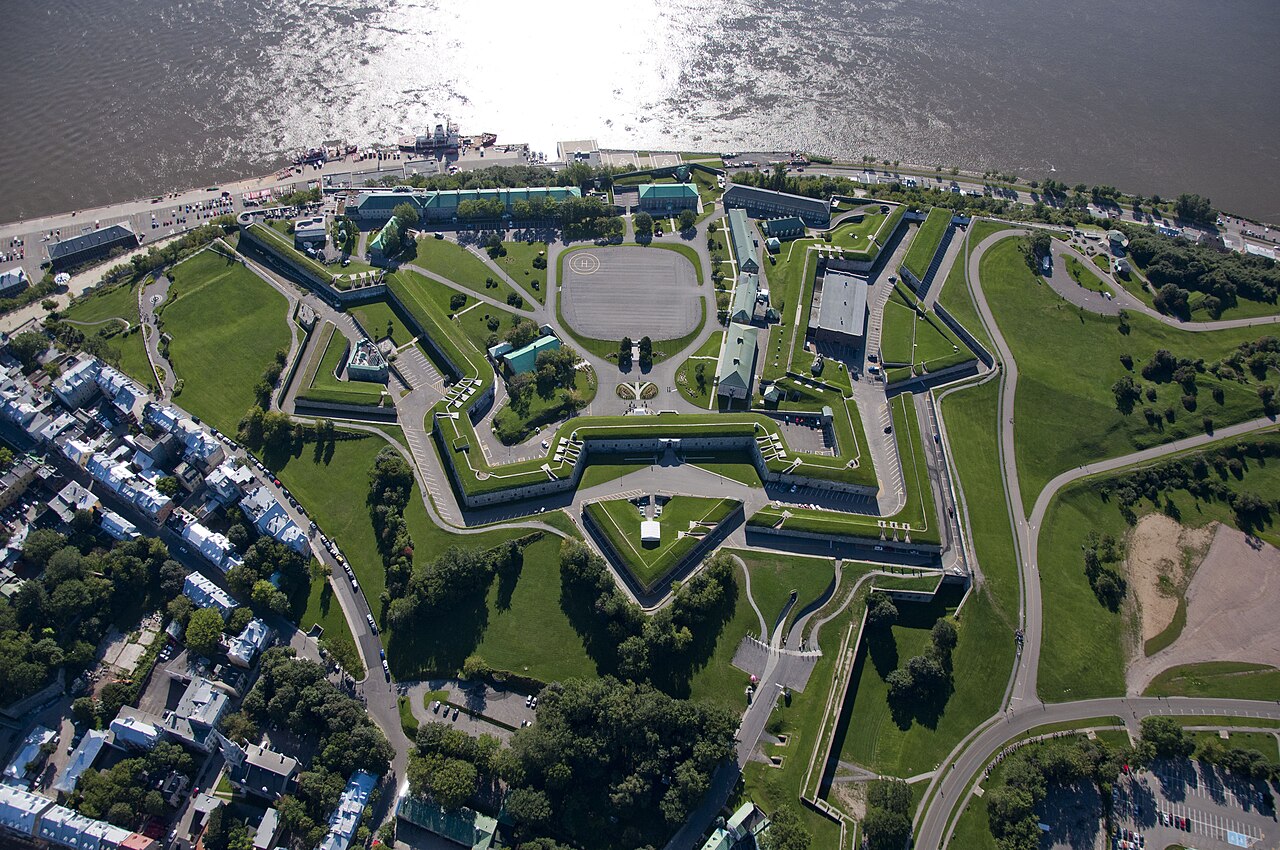
If you have additional time and energy, the Citadelle—the star-shaped fortress constructed after the American attack of 1775-76—offers commanding views and insights into Quebec's military history. The Promenade des Gouverneurs, a suspended pathway below the fortress on the cliff face, provides panoramic clifftop views of the city and river. The Citadelle can be explored on a guided tour, which covers the history of the fortress and its role in Quebec's defensive strategy. The location provides a perspective on how dramatically the city is shaped by its geography, with the river providing natural defense and the elevated promontory allowing for military oversight of approaches from all directions.
The Port of Quebec and Waterfront Walking
For those interested in maritime history and the river, the Old Port (Vieux-Port) area offers waterfront walking along the St. Lawrence River. The Promenade Samuel-De Champlain, a scenic pathway following the riverbank for approximately 3 kilometers, provides flat, well-maintained walking suitable for all fitness levels. The path affords views of the river's breadth and the South Shore communities beyond. The Old Port Market (Marché du Vieux-Port), operating since 1840, offers fresh produce, local cheeses, artisanal products, and a sensory experience of Quebec's gastronomic traditions.
Timing, Pacing, and Strategic Walking
A comprehensive walk of Old Quebec's major attractions requires strategic planning. If you have three to four hours, prioritize: Château Frontenac and Dufferin Terrace, Rue du Trésor, Place d'Armes, the Escalier Casse-Cou descent, Petit-Champlain, Place Royale, and Notre-Dame-des-Victoires Church. This itinerary covers approximately 2.5 kilometers of walking and encompasses the most iconic sites.
If you have a full day, add Rue Saint-Paul's antiques district, the Promenade des Gouverneurs from Dufferin Terrace, Rue Saint-Jean for shopping, and the waterfront areas along the Old Port. A second day allows exploration of the Citadelle, more leisurely café visits, and discovery of the secondary streets and alleyways that give the Old City its intricate character.
Remember that the cobblestone streets, while beautiful, are challenging. The steep slopes connecting Upper and Lower Towns make this city a workout. Build in rest time. Sit at a café table. Watch the light change on the stone façades. Let the atmosphere of the place settle upon you.
Practical Considerations for Walking Old Quebec
Wear comfortable, supportive walking shoes with good traction. The cobblestones are uneven, and the slopes are genuine. In summer, bring sun protection; the narrow streets can be cooler than surrounding areas, but the sun reflects intensely off stone facades. In winter, bring appropriate cold-weather gear and consider shoes with enhanced grip. Rain is a consideration during spring and fall; the cobblestones become slippery, and the narrow streets can be treacherous.
Plan your walk around mealtimes. The restaurants and cafés of Old Quebec are not merely places to refuel; they are destinations in themselves. A simple crêpe from a side-street vendor or a proper meal at a restaurant overlooking the river is part of the experience. Many restaurants operate during specific hours, typically closing between lunch and dinner service, so timing matters.
Carry a light bag or backpack rather than shopping bags if you plan to purchase items. The streets are crowded, and carrying numerous shopping bags will slow your pace and limit your mobility on stairs. Most shops can hold purchases or arrange delivery if you are staying in the area.
The Experience of Walking Old Quebec
Walking Old Quebec is ultimately about more than checking off landmarks. It is about experiencing a place where history is not confined to museums but is embedded in the stones themselves, in the proportions of buildings, in the width of streets designed for pedestrian traffic and pack animals rather than automobiles, in the authentic humanity of a living community. You will hear French spoken as the primary language—a reminder that you are in a deeply French place. You will encounter other travelers from around the world, creating an international atmosphere. You will taste regional specialties. You will feel the winter wind cutting through narrow street canyons or the summer sun warming the stone.
This is a place that has been continuously inhabited for over four hundred years, and that continuity shapes its character. The commercial districts that flourished in the 17th century still function as commercial zones. The residential neighborhoods where families established homes remain residential. The religious structures that served spiritual needs for centuries still fulfill that function. Old Quebec has not been transformed into a theme park or an artificial recreation of historical atmosphere; it is a place where history and contemporary life coexist in a complicated, genuine, and ultimately moving way.
Conclusion: Why Old Quebec Endures
Old Quebec City stands as a unique destination in North America—a place where the architectural and cultural continuity of European settlement has been preserved and celebrated. Walking its streets, you are literally walking the paths that colonial administrators, merchants, and residents walked four centuries ago. The buildings that line the streets were constructed in the 17th and 18th centuries by craftspeople whose names are often lost to history but whose work endures. The stones of the Escalier Casse-Cou have been worn smooth by countless feet making the journey between Upper and Lower Towns. The squares that hosted markets in the 1600s host markets still.
This walking guide provides a framework, but the true experience of Old Quebec emerges from your own pace, your own curiosity, and your willingness to wander. Take a wrong turn. Discover a side street you did not expect. Sit on a bench and watch the light and shadow play across a medieval façade. Linger in a café and listen to the French spoken around you. Climb the stairs that your predecessors climbed. Breathe the air that carries the salt of the river and the urban energy of a living city. In these small acts of attention and presence, you will discover not merely a historical site but a place of genuine beauty and human significance that speaks to something deep within us—our need for beauty, for history, for connection to the past, and for places where the complicated, contradictory journey of human civilization is written in stone.