Quebec City is a living museum of North American architecture, a place where centuries of human ambition, adaptation, and artistic vision have been inscribed in stone, timber, and slate. Walking through its streets is not merely sightseeing—it is an immersion in the architectural narrative of a continent. From the narrow, steeply roofed houses of French colonial design to the soaring glass pavilions of contemporary art museums, Quebec City's built environment tells the story of how people have sought to shelter themselves, express their beliefs, assert their power, and create beauty across nearly four hundred years of history. This comprehensive guide explores the architectural treasures that make Quebec City one of North America's most visually distinctive destinations.
The UNESCO World Heritage District and the Fortification Walls
In December 1985, the United Nations Educational, Scientific and Cultural Organisation (UNESCO) voted to inscribe the Historic District of Old Québec on its World Heritage list, recognizing the district as having "outstanding universal value." This designation placed Quebec City alongside such legendary cities as Cairo, Damascus, Rome, and Florence—an affirmation of its importance as one of the world's great urban centers. What made Old Quebec exceptional enough to earn this honor? The answer lies in a unique architectural achievement: Quebec City is the only city north of Mexico to retain intact fortification walls that still fully encircle the historic core.
These ramparts, stretching approximately 4.6 kilometers around the city, represent a remarkable feat of defensive engineering and urban planning. Built initially by the French in the 17th and 18th centuries, the walls were reconstructed and reinforced by the British beginning in 1745, and further improved during the 1820s and 1830s. The ramparts withstood multiple sieges—the French siege of 1760 and the American siege of 1775—transforming them from theoretical fortifications into proven instruments of defense. These walls, together with their numerous bastions, gates, and defensive works, create a defined boundary that visually and physically separates Old Quebec from the modern city beyond, preserving a genuine colonial urban environment.
The Fortifications of Quebec were designated a National Historic Site of Canada in 1948, and in 1985 they became part of the UNESCO World Heritage designation. Walking the ramparts today, visitors encounter not merely historical artifacts but genuine architectural experiences. The walls frame views of the river and city, creating perspectives that would be impossible to achieve in a modern urban environment. The gates—including Porte Saint-Jean, Porte Saint-Louis, and Porte Prescott—mark thresholds between eras, between the preserved and the modern. These fortifications represent an exceptional preservation of colonial military architecture and urban design, a tangible reminder of how effectively thoughtful architectural planning can protect and sustain a place across centuries.
French Colonial Architecture: The Roots of a Distinctive Tradition
The architectural character of Quebec City's oldest quarters was shaped decisively by French colonial building traditions of the 17th and 18th centuries. These houses, which occur throughout the Old City and particularly in the Lower Town, were adapted from the architectural vernacular of Normandy and other northern regions of France, ingeniously modified to withstand Quebec's harsh winters and heavy snowfall. The distinctive features that characterize French colonial houses—steeply pitched roofs that shed snow efficiently, thick stone walls for insulation, prominent chimneys, and compact footprints that minimized heat loss—were solutions to genuine environmental challenges.
These two- and three-storey stone structures, with their characteristic dormer windows, gabled roofs, and large chimneys that rise dramatically above the roofline, create streetscapes that transport visitors to 17th-century France. Yet these houses are not historical museum pieces frozen in time; they have evolved continuously. Initially constructed almost entirely of timber, these structures presented constant fire hazards in the crowded urban core. Only in the second half of the 18th century, as population growth increased demand for residential space, did masonry work become common for enlarging wooden houses. The characteristic shallow, elongated shape of many Quebec stone houses reflects this laterally added expansion, creating distinctive architectural compositions that seem to have grown organically block by block, generation by generation.
The roofs deserve particular attention in any analysis of French colonial architecture. The extreme pitch—sometimes nearly approaching the height of the walls themselves—served the practical purpose of shedding snow and rain but created distinctive silhouettes that define Old Quebec's visual character. This roofing tradition, developed through centuries of experience in northern France, was precisely calibrated to the climate of New France. Combined with the dormer windows, these roofs allowed additional living space in the upper storeys while maintaining structural integrity and weather protection. The result is architecture of remarkable pragmatism that achieves aesthetic distinction through honest response to environmental necessity.
Religious Architecture: Spiritual Expression in Stone and Light
Quebec City's religious architecture expresses both the spiritual aspirations and the organizational power of the Catholic Church during the colonial period. The Basilique-Cathédrale Notre-Dame de Québec stands as the spiritual heart of the city, originally erected in 1647 and becoming the first parish church north of Spanish colonial territories in 1664. It achieved cathedral status in 1674 as the seat of Bishop François de Laval, and was elevated to basilica by Pope Pius IX in 1874. The exterior presents a richly detailed Neoclassical façade with prominent geometric massing, a copper-clad gabled roof, two towers of distinct design, and stone construction that conveys both permanence and refinement.
The interior of the Basilique-Cathédrale reveals a treasury of artistic and spiritual achievement. The most striking feature is the imposing gold-leaf canopy overhanging the choir, supported by sculpted angels that seem to lift the space toward heaven. The sanctuary lamp was a gift from King Louis XIV himself, a tangible connection to the French monarchy's role in colonial religious life. Stained glass imported from Munich and Paris illuminates the interior, while a magnificent organ from the House of Casavant—a legendary Canadian organ-building firm—provides acoustic grandeur.
Another remarkable religious structure is the Cathedral of the Holy Trinity, the first Anglican cathedral built outside the British Isles. Completed between 1800 and 1804 in neoclassic Palladian style and modeled after London's St Martin-in-the-Fields, it presents an austere elegance that contrasts with the exuberant Catholicism of the Basilique-Cathédrale. Its sober façade features a triangular pediment supported by four columns that frame three arches, each with a door surmounted by a window. This design conveys Protestant restraint and architectural sophistication, asserting Anglican presence in the heart of Catholic Quebec through architectural clarity rather than ornamental display.
The oldest stone church in North America still standing in its original walls is Notre-Dame-des-Victoires, located in Place Royale in the Lower Town. Construction began in 1688 on the ruins of Samuel de Champlain's first habitation, addressing the practical problem that downtown parishioners struggled to reach the uptown parish church during winter months. The church acquired its distinctive name because the inhabitants credited prayers to the Virgin Mary with repelling an attack by Admiral Phips's fleet, and renamed the church accordingly in her honor. This structure, intimate in scale but significant in architectural and spiritual presence, remains one of Quebec City's most cherished heritage buildings.
Place Royale and the Genesis of French Urban Planning
Place Royale, the historic marketplace of the Lower Town, represents the genesis of European urban settlement in North America. Originally known as Place du Marché during the French regime, it became Place Royale in 1686 when Intendant Jean Bochart de Champigny erected a bust of King Louis XIV at the square's center. This public square served as the commercial and social heart of the colony, where merchants conducted business, townspeople gathered for markets and celebrations, and urban life unfolded according to the rhythms of trade and colonial administration.
The buildings surrounding Place Royale represent some of Quebec City's finest examples of 18th-century urban commercial architecture. The facades, proportions, and street-facing openings reflect centuries of European experience in creating functional commercial spaces that were simultaneously architecturally refined. The square itself, with its intimate human scale and coherent building masses, demonstrates a sophisticated understanding of urban design. Even centuries later, the square conveys the sense of being a genuinely European plaza transplanted to the North American wilderness—a deliberate expression of colonial aspirations to recreate and impose European urban culture in the New World.
The Petit Champlain Quarter: Colonial Commerce Preserved
The Petit Champlain quarter, located immediately adjacent to Place Royale, claims the distinction of being the oldest commercial district in North America. Built in 1688 on the site where Samuel de Champlain's first outpost once stood, this narrow cobblestone street preserves the commercial and residential fabric of colonial Quebec City with remarkable authenticity. The two- and three-storey plastered stone homes with dormer windows, gabled roofs, large chimneys, and firewalls rising above the rooftops create streetscapes that seem to transplant visitors directly to 17th-century France.
Rue du Petit-Champlain represents a postcard-perfect streetscape, one of the oldest commercial streets surviving in North America. In the 1970s, the district underwent significant restoration using an innovative approach that maintained the original appearance of buildings while reusing as many original elements as possible. This pioneering preservation work effectively founded the first eco-district in Quebec City, achieving recognition in 2011 as a winner of the Great Places in Canada competition in the Neighbourhood category. The restoration demonstrated that heritage preservation could be economically viable, culturally meaningful, and environmentally responsible—a model that has influenced preservation efforts across North America.
Château Style Architecture: A Uniquely Canadian Innovation
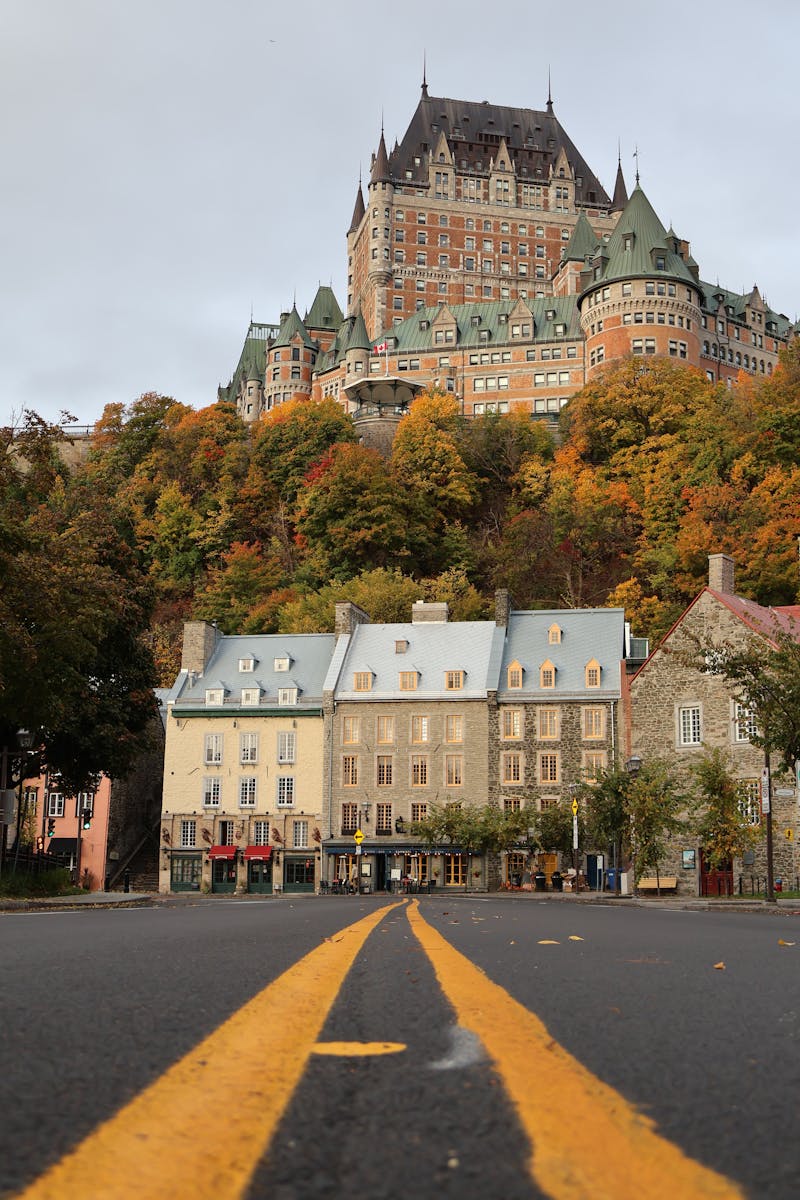
While French colonial architecture provided the historical foundation of Quebec City's built environment, the nineteenth century witnessed the emergence of a distinctive new architectural tradition: the château style. This architectural movement, which emerged from the romantic eclecticism of the Victorian era, drew heavily from the sixteenth and seventeenth-century châteaux of France's Loire Valley, adapting their picturesque qualities and Gothic elements for the North American context. The style emphasized asymmetrical profiles, steeply pitched roofs, towers and turrets, ornamental gables, and dramatically expressive forms that conveyed both grandeur and a sense of organic historical accumulation.
The Château Frontenac, designed by renowned American architect Bruce Price and constructed between 1892 and 1893, became the purest and most iconic expression of this architectural tradition. Built as a luxury railway hotel for the Canadian Pacific Railway on a dramatic cliff site overlooking the St. Lawrence River, the Château Frontenac launched a revolution in Canadian architectural practice. Its distinctive silhouette—with multiple unequal wings, central tower, steep roofs, and ornamental chimneys—immediately captured the imagination of visitors and served as a template for subsequent Canadian railway hotels.
The Gare du Palais, constructed in 1915-1917, applied the château style to transportation architecture. Designed by architect Harry Edward Prindle, the station features brick and stone construction with a vaulted and glazed entrance hall that reflects the dominant château aesthetic while remaining functionally oriented toward its purpose as a passenger terminus. The architectural coherence between the Château Frontenac overlooking the station and the château-style railway station itself created a unified visual expression of the railway company's ambitions and resources.
Art Deco Modernity: The Édifice Price
The construction of the Édifice Price between 1929 and 1931 represents a decisive moment in Quebec City's architectural evolution—the emergence of modernist design within the constraints of a UNESCO-protected historic district. Designed by renowned architects George Allen Ross and Robert Henry MacClure as the headquarters for Price Brothers Limited, a major pulp and paper company, the building is an architectural tour de force of Art Deco design, comparable in sophistication to the Empire State Building in New York City.
The Édifice Price is remarkable for multiple reasons. First, it is the only skyscraper ever constructed within the walls of Old Quebec. Second, its construction sparked significant controversy among preservationists and city officials who feared the modern tower's intrusion upon the colonial-era skyline and architectural harmony of the district. Third, the building's architectural details reveal extraordinary craftsmanship: discrete motifs are carved in the stone cladding—palm leaves, stylized flowers, and Aboriginal heads—while the interior features an impressive entranceway with bronze doors opening onto a luxurious hall embellished with gold leaf and bas-reliefs illustrating the paper-making process. The construction commenced precisely on October 29, 1929, the day of New York City's famous stock market crash, a symbolic moment in history.
The Édifice Price resolved a fundamental tension in historic preservation: can modernist architecture coexist with historic fabric? The building demonstrates that thoughtful contemporary design, employing quality materials and respecting the surrounding urban context, can enhance rather than diminish a historic district. In 2001, it became the official residence of the Premier of Quebec, securing its status as a building of cultural and political significance. Today, the Édifice Price stands as a testament to the possibility of architectural innovation within heritage conservation.
Civic and Parliamentary Architecture: Expressions of Democratic Will
The Hôtel du Parlement, constructed between 1877 and 1886, expresses Quebec's aspirations toward parliamentary democracy through architectural grandeur. Designed by architect Eugène-Étienne Taché in the Second Empire style—inspired by the Louvre and representing a sophisticated European architectural language—the building comprises four wings arranged around a central square courtyard, approximately 100 meters on each side. Inside and outside, it is adorned with allegorical figures, statues, coats of arms, and mottos that celebrate Quebec's history and values.
The two side wings feature towers dedicated to Samuel de Champlain and Paul Chomedey de Maisonneuve, the founders of Quebec City and Montreal respectively. The central tower, named for Jacques Cartier, rises 52 meters above the parliamentary courtyard. The building's decorative program expresses a comprehensive vision of Quebec identity, rooted in explorers and founders, celebrated through architectural symbolism. The National Assembly first met at the Hôtel du Parlement on March 27, 1884, even though the building was not fully completed until April 8, 1886—a testament to the meticulous attention paid to architectural perfection.
Military Architecture: The Citadelle of Quebec
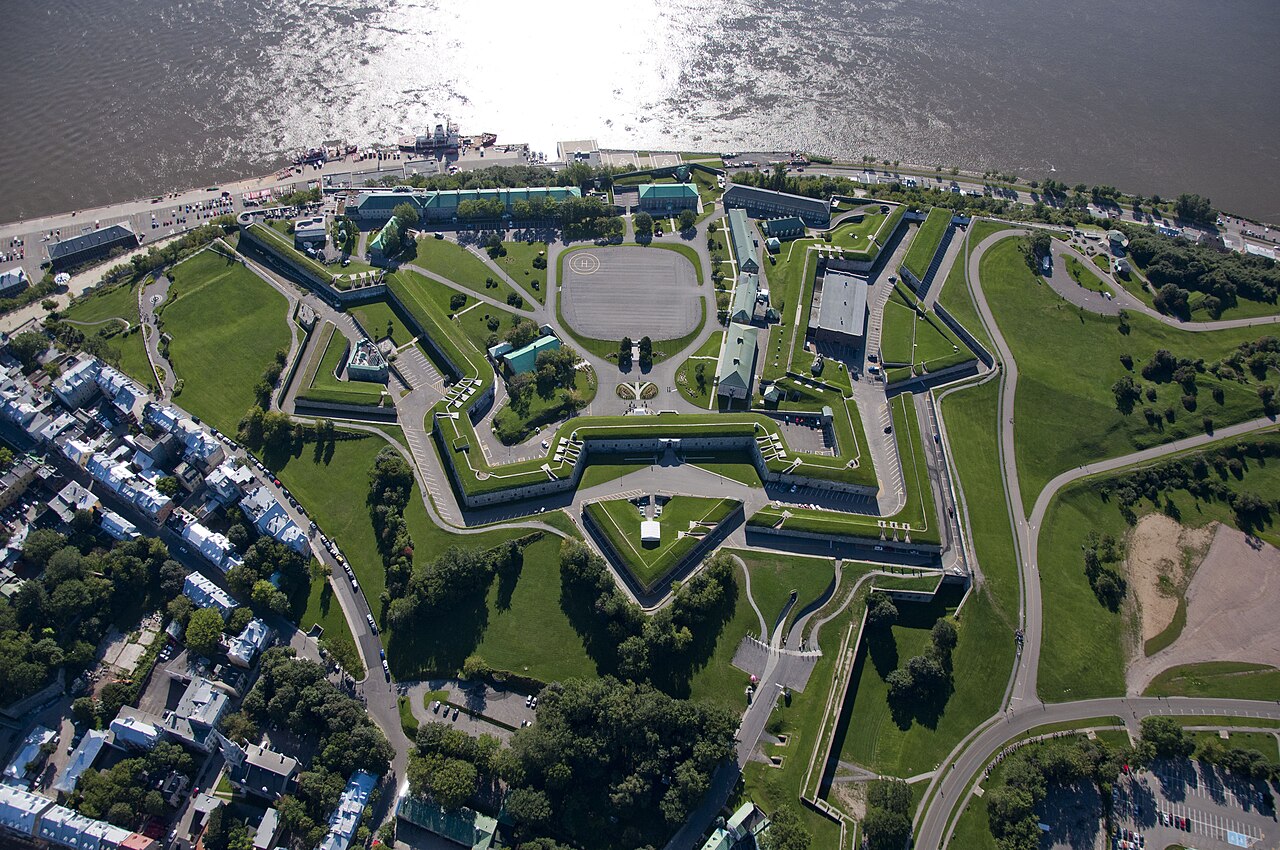
Crowning Cap Diamant, the highest natural point in Quebec City, the Citadelle of Quebec represents one of the finest examples of military architecture inspired by the French engineer Sébastien Le Prestre de Vauban. Built from 1820 to 1850 to secure Quebec City against potential American attack, the uneven star-shaped citadel comprises four bastions and three straight curtain walls, all constructed from locally quarried grey sandstone. The fortress contains 24 permanent masonry structures, mostly two storeys or less, with predominantly rectilinear designs and hipped roofs.
Two buildings predate the British-era construction: the Cap Diamant Redoubt (1693) and the powder magazine (1750), surviving remnants of the French Regime. The Citadelle, which crowns a 100-meter escarpment above the river, earned the city the title "Gibraltar of North America." Today it functions as both a National Historic Site of Canada and a living military installation for the Canadian Armed Forces, as well as an official residence for Canada's governor general. This dual function—historical preservation and contemporary administrative use—demonstrates how heritage buildings can serve multiple purposes simultaneously.
The Terrasse Dufferin and Nineteenth-Century Promenade Design
The Terrasse Dufferin, a boardwalk wrapping around the Château Frontenac toward the Citadelle and overlooking the St. Lawrence River, represents a distinctive achievement in public space design. Initially constructed in 1838 as Durham Terrace and measuring 85 meters, it was enlarged to 430 meters in 1854 and remodeled in 1878-1879 under the direction of the Marquess of Dufferin, Canada's Governor General, whose name it now bears. The terrace was eventually extended to 671 meters, running the full length of the Château Frontenac's north façade.
The Terrasse Dufferin features characteristic Victorian-era design elements: a wooden boardwalk, ornate railings, and period lamp posts that frame views of the St. Lawrence River and the surrounding landscape. In 1885, electric arc streetlights were installed along the terrace, making it the first public place in North America to receive this technological innovation—a moment that marks the intersection of heritage preservation and technological progress. Six stands with distinctive green and white roofs were named after important historical figures: Frontenac, Plessis, Dufferin, Victoria, Lorne, and Princess Louise. Beneath sections of the terrace lie the remains of Saint Louis Forts and Château Saint-Louis, the former residence of French and British Governors, creating a palimpsest of historical layers accessible through archaeological awareness.
Historic Houses and Urban Domestic Architecture
Beyond the grand public buildings and fortifications, Quebec City's architectural heritage is expressed in the intimate scale of its historic houses. The Maison Jacquet, built in 1675-76, claims the distinction of being the oldest surviving building in Quebec City. This significant residence housed Philippe Aubert de Gaspé, author of "Les Anciens Canadiens," from 1815 to 1824. Today it houses a restaurant bearing the author's book title, creating a continuity between historical use and contemporary commercial vitality.
The Maison Chevalier, originally constructed in 1752 as the home and business of Jean-Baptiste Chevalier, represents a complex of three distinct historic houses: the Chesnay house, the Frérot house, and the Chevalier house proper. Heavily damaged during the 1759 British bombardment, the building was rebuilt shortly thereafter and subsequently converted to an inn renamed the London Coffee House. The Quebec government acquired the entire block in 1957 and undertook a six-year restoration project. Today, managed by the Musée de la civilisation, the Maison Chevalier offers exhibitions and cultural activities, preserving the building through active contemporary use rather than static preservation.
Contemporary Architecture and Heritage Integration
Quebec City's architectural narrative continues to evolve in the twenty-first century. The Pierre Lassonde Pavilion at the Musée national des beaux-arts du Québec, designed by the Office for Metropolitan Architecture (OMA) and completed in 2016, demonstrates how contemporary design can enhance rather than diminish historic districts. The 14,900-square-meter pavilion employs glass and steel extensively, creating transparency between the museum and the general public. A spectacular 20-meter cantilever announces the main entrance, supported by a hybrid steel truss system that accommodates galleries completely uninterrupted by support columns.
The pavilion features a majestic glass lobby, a monumental spiral staircase, and a cantilevered staircase in the treetops, all designed to blend architectural heritage with contemporary expression. The building increases exhibition space by 90 percent and showcases collections from 1960 to the present, providing space for decorative arts, design, and Inuit art. This contemporary addition demonstrates that heritage preservation is not incompatible with architectural innovation; rather, thoughtful contemporary design can expand the cultural and aesthetic possibilities of historic places.
Preservation Efforts and Heritage Consciousness
The designation of Old Quebec as a UNESCO World Heritage Site in 1985 transformed preservation from a local initiative into a global responsibility. The historic district was initially established as a protected area by the Quebec government in 1963, part of a coordinated project to protect and enhance the old city. Preservation rules required that vestiges of the French Regime be preserved in a manner that highlighted Quebec's role as the cradle of French civilization in North America.
Contemporary preservation efforts recognize that heritage is not static but evolving. Modern architecture has been officially included in Quebec's directory of cultural property since 2005, acknowledging that tomorrow's heritage is being created today. Successful heritage conservation combines respect for historical authenticity with thoughtful contemporary interventions—as demonstrated by the Petit Champlain restoration, the Édifice Price integration, and the Pierre Lassonde Pavilion addition. These projects reveal that heritage preservation can be economically viable, culturally enriching, and architecturally innovative when approached with intelligence and commitment.
Walking Through the Centuries
Quebec City's architecture tells a comprehensive story of how people have sought to build meaningful environments across nearly four centuries of North American history. From the practical vernacular solutions of French colonial housing to the romantic grandeur of château-style hotels, from the austere spirituality of Protestant cathedrals to the bold modernism of Art Deco skyscrapers, the city's built environment expresses the aspirations, struggles, and creative energy of successive generations.
The fortification walls that encircle Old Quebec—the only intact walled city north of Mexico—represent a unique achievement in North American urban preservation. They create a distinct boundary between the historic core and the modern city beyond, making Old Quebec a genuinely European urban experience in the New World. Walking these streets, visitors encounter not merely historical artifacts but genuine expressions of how people have chosen to live, work, worship, govern themselves, and create beauty.
The combination of UNESCO World Heritage designation, careful stewardship, and thoughtful integration of contemporary design has allowed Quebec City to preserve its extraordinary architectural heritage while remaining a living, evolving city. The Château Frontenac rises above the ramparts, the spires of the Basilique-Cathédrale pierce the sky, the copper roofs of the Citadelle glow in the afternoon light, and narrow cobblestone streets lined with centuries-old houses invite exploration and discovery. These buildings and streets, preserved across generations, offer contemporary visitors the rare privilege of experiencing the North American past not through museums and interpretations but through genuine architectural encounter.
To walk through Quebec City is to walk through the architecture of four centuries—to touch stones laid by French colonists, to climb staircases where governors once walked, to stand in places where merchants conducted business and where citizens gathered to celebrate and mourn. This architectural heritage is not a museum frozen in time but a living context for contemporary life, creating spaces where history and present converge, where the extraordinary becomes ordinary, and where beauty—achieved through stone, timber, glass, and the accumulated wisdom of generations—remains the permanent gift of those who built Quebec City.