As spring awakens across Quebec and temperatures begin their delicate dance between freezing nights and warming days, something magical happens in the maple forests. The sap starts to flow. Families bundle up and head to cabanes à sucre – sugar shacks – where they experience a tradition as old as Quebec itself. There, gathered around long communal tables, visitors indulge in one of the province's most beloved experiences: a feast of maple-soaked foods, live Québécois music, and the unmistakable sweetness of boiled maple syrup.
The sugar shack is far more than a restaurant or tourist attraction. It represents a living connection to Quebec's heritage, a celebration of the land's bounty, and a moment of collective joy that has defined spring in French Canada for centuries. From Indigenous peoples who first discovered how to tap maple trees, to French settlers who refined the process, to modern agritourists seeking authentic cultural experiences, the sugar shack tradition has endured and evolved while remaining fundamentally unchanged in spirit. Today, Quebec produces an astounding 72% of the world's maple syrup, and the sugar shack remains the most authentic way to experience the province's maple culture firsthand.
The Indigenous Roots: Ancient Knowledge and Sacred Trees
Long before European colonists arrived in North America, Indigenous peoples of the Eastern Woodlands discovered the treasure hidden within sugar maple trees. The Abenaki, Haudenosaunee, and Mi'kmaq nations understood that when the first warm days of spring followed cold nights, the trees released a sweet, flowing sap that could be collected and transformed into precious nutrition and trade goods.
The earliest European accounts of maple syrup production come from the early 17th century. André Thevet documented Jacques Cartier's 1557 voyage and described Indigenous peoples' methods of collecting maple sap. In 1606, Marc Lescarbot recorded observations of the Mi'kmaq "distilling" maple sap, describing a process that would have used birch-bark containers and hot stones to boil the liquid until it thickened into syrup or sugar.
This Indigenous knowledge was essential to early European survival and settlement in Quebec. The ability to produce a shelf-stable sweetener in a region far removed from Caribbean sugar plantations made maple syrup invaluable. French settlers learned directly from Indigenous peoples how to tap trees using stone tools to carve V-shaped notches in the bark, and how to collect sap in birch-bark containers. The process remained fundamentally unchanged for generations – a testament to the sophistication of Indigenous agricultural knowledge.
When French settlers brought iron cauldrons from Europe, they revolutionized the process. Iron was superior to stone for boiling large quantities of sap, allowing for more efficient production and the ability to create different grades and forms of maple products. However, the core knowledge – tapping trees, collecting sap, and boiling it into syrup – remained rooted in Indigenous tradition.
The Evolution: From Necessity to Tradition
Maple sugar production became increasingly organized during the 18th and 19th centuries as European settlement expanded. What had begun as a seasonal activity for survival became a commercial enterprise and a celebrated cultural moment. The first sugar shacks, known as cabanes à sucre, were constructed in the mid-19th century as simple wooden structures built in the sugar bush to house the boiling operations and provide shelter to workers.
By the late 1800s, sugar shacks had evolved into gathering places where entire families and communities would come during the sugaring-off season. The practice of consuming fresh maple taffy poured on clean snow – tire sur la neige – became a central element of the experience. Children would roll the warm taffy around wooden sticks to create lollipops, a tradition that persists today and delights visitors of all ages.
The sugaring-off season itself became a social event marking the passage from winter to spring. In Quebec's rural communities, sugar shacks provided one of the first opportunities for social gathering after the long, isolating winter months. They were places where neighbors reunited, where romance blossomed, where community bonds were renewed through shared meals and music. This social function remains central to the sugar shack experience even in the modern era.
In 1966, the Federation of Quebec Maple Syrup Producers was founded to help producers bring their product to market. This organization, now known as Producteurs et productrices acéricoles du Québec (PPAQ), would eventually manage over 7,300 producers and establish Quebec's position as the global maple syrup leader. Today, Quebec accounts for approximately 90% of Canadian maple syrup production and roughly 72% of the entire world's maple syrup supply – a staggering global dominance in a single commodity.

Understanding the Maple Harvest: The Science of Sugaring-Off
The magic of maple syrup production depends entirely on a specific meteorological condition that occurs only in certain climates. Sugar maple trees require cold winters and warm spring days with the precise temperature oscillation that allows them to produce abundant sap. Quebec's climate is nearly perfect for this – cold nights in the 20-degree Fahrenheit range followed by sunny days warming toward 40 degrees Fahrenheit create ideal conditions.
This is why the sugaring-off season occurs in late February through early May, with the busiest period running from March through the end of April. During these months, the combination of freezing nights and warming days forces sap to flow through the trees with remarkable force. The physiology is elegant: freezing causes sap to rise in the tree, and warming days cause water in the tree to expand, creating pressure that forces sap out through any opening, including the taps that sugar makers have carefully placed.
The tapping process involves drilling carefully into the trunk of a mature sugar maple tree and inserting a spile – a small tube that directs the sap into a collection vessel. Modern operations use tubing systems where sap flows downhill through plastic lines into holding tanks, but the principle remains identical to methods used centuries ago. A single tree can be tapped multiple times – many healthy mature trees support three or four taps simultaneously – and the sap flows continuously throughout the season as long as temperature conditions remain ideal.
The transformation of sap into syrup is a remarkable feat of chemistry and patience. Raw maple sap is approximately 2-3% sugar by volume. Creating maple syrup requires concentrating this sap by removing approximately 97% of its water content. On average, it takes 40 gallons of sap to produce just one gallon of finished maple syrup – a ratio that explains both the value of the product and the enormous amounts of sap that must be processed during the brief season.
The boiling process happens in large, carefully designed evaporator pans. Fresh sap enters continuously at the back of the pan where a float valve maintains consistent depth. As heat from the fire below causes water to evaporate, the sap flows steadily toward the front of the pan, becoming progressively more concentrated and sweeter. The operator must carefully control temperature and timing – let it boil too long and the syrup crystallizes into sugar; stop too soon and it never reaches the proper consistency.
The Grades of Maple Syrup: A Spectrum of Flavor
All maple syrup is made through the exact same process and contains the same amount of sugar content. What differs is color and flavor, determined primarily by when the sap was collected during the season. As temperatures warm and the season progresses, the flavor profile of the syrup changes dramatically.
Golden maple syrup, harvested at the very beginning of the season, has a light golden color and a delicate, subtle maple flavor. Early-season sap contains minimal bacterial activity, allowing the inherent sweetness to dominate. Golden syrup is prized by those who prefer a gentle maple taste and works beautifully as a drizzle over desserts or in beverages.
Amber syrup, collected during the middle of the season, develops a richer, more pronounced maple flavor and an attractive medium-brown color. This grade represents the sweet spot for many traditionalists – it delivers authentic maple taste without overwhelming delicate dishes. Amber syrup is ideal as a finishing sauce for vegetables, in salad vinaigrettes, and drizzled over breakfast foods.
Dark syrup appears as temperatures warm further and bacterial activity in the sap increases. These bacteria convert some of the sucrose into fructose and glucose, which caramelize more readily during boiling, creating a deeper, more robust flavor. Dark syrup has become increasingly popular with consumers seeking more intense maple character. This grade excels in cooking, baking, and creating sauces where a strong maple flavor stands up to other ingredients.
Very Dark syrup, also called Strong Taste, comes from the end of the season when temperatures are warmest. It features the most dramatic color – a deep amber-brown – and the strongest, most caramelized maple flavor. This syrup is prized by serious maple aficionados and works beautifully in savory applications where robust maple flavor is desired.
The Traditional Sugar Shack Meal: A Feast of Traditions
Visiting a sugar shack is not simply dining – it is participating in a multi-course ritual that has remained largely consistent for generations. Visitors arrive hungry and leave entirely satisfied, having experienced foods specifically designed to showcase maple syrup while indulging in hearty, traditional Québécois cuisine.
The meal typically begins with soupe aux pois – a thick, creamy yellow pea soup traditionally boiled with ham hock. This comforting soup warms cold visitors who have just arrived from the spring air and primes the palate for the maple-forward courses to come. The soup is filling enough to be substantial, yet light enough to leave room for the courses ahead.
The main course features several components served family-style, allowing diners to sample multiple dishes. The centerpiece is typically maple-glazed ham, slow-cooked until tender and repeatedly basted with pure maple syrup until it develops a sticky, caramelized glaze. The maple glaze provides a sweet contrast to the savory pork, and the meat itself is usually excellent quality – either a whole ham or thick-cut slices prepared with careful attention to retain moisture.
Accompanying the ham are fèves au lard – baked beans slow-cooked with salt pork, molasses, and maple syrup. The beans develop a rich, dark color and a complex sweetness that balances salt, smoke, and maple. These beans are distinctly Québécois and have been part of the cuisine for centuries, though the maple syrup component became more prominent as maple production increased.
Another critical element is oreilles de crisse – deep-fried salted fatback that emerges from the oil crispy and crackling, with an intensely savory pork flavor. The name, which literally translates to "ears of Christ," derives from Québécois French slang and originally referred to the ear-like shape of the crisped pieces. The contrast between the salty, fatty crispness of oreilles de crisse and the sweet maple dishes demonstrates the sophistication of traditional sugar shack cuisine. This dish embodies the resourcefulness of early Québécois culture – nothing from the pig went to waste, and the fat that might have been discarded becomes a delicacy through skilled preparation.
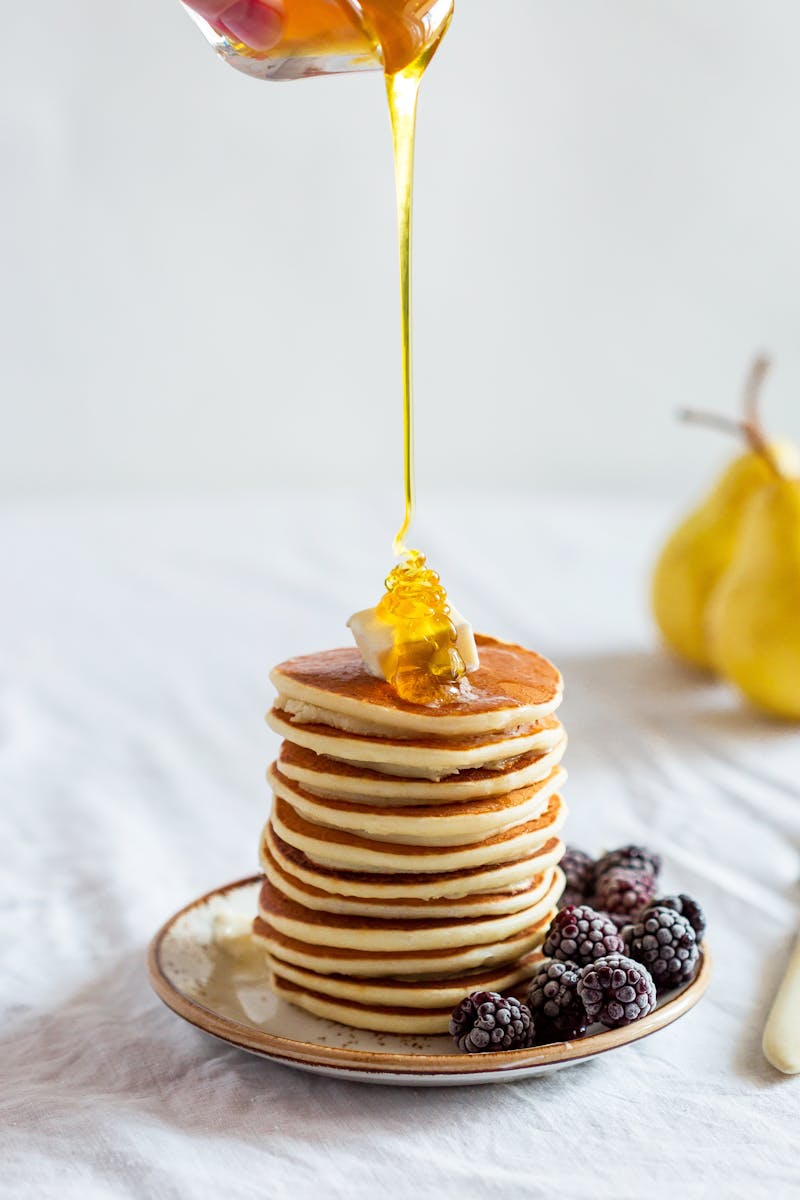
The meal also includes pancakes, waffles, or French toast served warm and topped generously with hot maple syrup. These items appear sometimes as part of the main course and sometimes as a separate course, emphasizing the maple syrup itself as a primary ingredient rather than merely a condiment.
Pickled vegetables and fresh bread round out the main course components. Pickled onions and beets provide brightness and acidity to balance the richness of the other dishes. Fresh, warm bread – often including traditional pain de ménage (home bread) – allows diners to soak up sauces and complete their plates.
Tire sur la Neige: The Iconic Maple Taffy Tradition
The most magical moment of any sugar shack visit is tire sur la neige – maple taffy on snow. This tradition represents the essence of the sugar shack experience: a moment of pure joy, community participation, and direct engagement with the maple product.
The process begins in the sugar house where maple syrup is boiled to a specific temperature – slightly higher than the temperature at which it becomes syrup, creating a thick taffy consistency. Simultaneously, workers bring in fresh, clean, packed snow and lay it in long, shallow troughs, sometimes on wooden boards or metal surfaces.
When the taffy reaches the perfect temperature, it is poured in neat strips directly onto the cold snow. For approximately 15 seconds, the taffy cools and begins to set while remaining flexible. Then comes the interactive element – diners take wooden popsicle sticks and carefully roll the warm taffy around the stick, creating a chewy, sticky, warm-yet-cold maple lollipop.
Pulling the taffy from the snow and rolling it onto a stick requires technique. Roll too quickly and the taffy breaks apart. Roll too slowly and it hardens. Get it right and you create a perfect maple candy that provides the sweet, chewy satisfaction that makes this experience so memorable. Children and adults alike find this tradition enchanting – there's something primal about creating candy by hand, using snow as a cooling mechanism, then immediately tasting the result while it's still warm.
Tire sur la neige typically concludes the meal, serving as both dessert and entertainment. The experience is simultaneously nostalgic – connecting modern visitors to traditions their ancestors practiced – and immediate – the taffy must be eaten fresh, creating an urgency and presence impossible to achieve with traditional desserts.
The Music and Entertainment: Québécois Folk Traditions
Sugar shacks are not silent dining establishments. They are vibrant cultural spaces where Québécois folk music fills the air, encouraging dancing, community participation, and celebration. Traditional music and entertainment are as integral to the sugar shack experience as the food itself.
Most sugar shacks feature live performances of traditional Québécois music played on fiddles, accordions, and spoons. The fiddle is the iconic instrument of French-Canadian music, often accompanied by podorythmie – a rhythmic foot-tapping technique that adds percussive accompaniment. The spoon, played as a percussion instrument by striking it against the leg or hand, contributes additional rhythmic texture.
The musical repertoire centers on traditional reels and square dances that get diners on their feet. Songs like "Reel du pendu" and "La Bastringue" are staples that have entertained Quebec families for generations. The music style known as rigodon, which emerged in the 1920s with influences from French, English, and Irish folk traditions, features prominently at many sugar shacks. Famous performers and groups in this tradition include the legendary La Famille Soucy, virtuoso violinist Jean Carignan, modern traditionalists De Temps Antan, and the exuberant La Bottine Souriante.
The interactive nature of sugar shack entertainment distinguishes it from typical restaurant dining. Musicians actively encourage participation. Simple square dances unfold in the dining areas with musicians calling out instructions. The atmosphere celebrates community, joy, and the blending of food, music, and cultural tradition. For many visitors, the sugar shack experience crystallizes around a moment of dancing to live folk music while surrounded by extended family or friends, creating memories as sweet as the maple syrup itself.
Sugar Shacks Near Quebec City: Where to Experience the Tradition
For visitors to Quebec City seeking an authentic sugar shack experience, several establishments have earned stellar reputations for preserving tradition while providing accessible, memorable visits.
Érablière le Chemin du Roy: History and Accessibility
Located just ten minutes from downtown Quebec City in Saint-Augustin-de-Desmaures, Érablière le Chemin du Roy offers convenient access to authentic sugar shack traditions. The facility accommodates up to 200 guests and features the full sugar shack experience: hearty, all-you-can-eat traditional meals, live folk singers and entertainment, sleigh rides through the surrounding woods, and opportunities to observe the maple syrup-making process.
The sugar factory itself was built around 1925 and carries significant Quebec sports history – it was acquired in 1989 by hockey legend Guy Lafleur before being sold to new owners in 1991 who transformed it into a recreational and tourist maple grove. Today, Érablière le Chemin du Roy operates year-round, with peak season running from March through April during the sugaring-off season. The facility sells maple products and souvenirs, allowing visitors to bring home the flavors of their experience. Contact them at 1-877-876-5085 for reservations.
Érablière du Lac-Beauport: Comprehensive Experience
Located 20 kilometers north of Quebec City in the Laurentian Mountains, Érablière du Lac-Beauport provides a more extensive sugar shack experience with multiple dining halls. The facility includes two main halls accommodating 200 and 120 guests respectively, plus a mobile sugar shack for special events. This establishment offers live Québécois folk music, traditional sugar shack meals, and guided tours of their maple museum where visitors learn the complete maple syrup production process.
The facility also features Le Trappeur, a Quebec wildlife interpretation center with exhibits showcasing the animals and ecosystems of Quebec's forests. This educational component complements the culinary and musical aspects of the sugar shack experience, providing context for understanding maple production within its natural environment. Érablière du Lac-Beauport operates year-round upon reservation and welcomes both individual visitors and large groups. Phone 418-849-0066 for reservations and information.
Modern Sugar Shacks: Evolution and Innovation
Contemporary sugar shacks range from rustic, traditional operations to sophisticated agritourism destinations, yet they all preserve the essential elements that define the experience. The spectrum reflects how sugar shacks have adapted to modern preferences while maintaining cultural authenticity.
Some sugar shacks have embraced farm-to-table philosophy and farm-stay experiences, allowing visitors to spend an entire day or weekend engaging with maple production. Others have developed gourmet approaches to traditional meals, sourcing premium ingredients and presenting dishes with contemporary plating while honoring traditional flavor profiles.
Modern sugar shacks have also expanded their seasonal offerings. While traditional operations ran only during the March-April sugaring-off season, many now remain open year-round with adapted menus. Winter sugar shacks offer the same meals with outdoor activities like snowshoeing and cross-country skiing, while summer and fall operations highlight local ingredients alongside smaller portions of maple products.
Dietary adaptation has become increasingly important. Many contemporary sugar shacks offer vegetarian versions of traditional dishes – vegetarian cretons (a Quebec pâté), meat-free sausages, bacon-free baked beans, and tofu scrambled with maple syrup – without compromising flavor or tradition. These adaptations ensure that visitors with various dietary preferences can still participate fully in the sugar shack experience.
The business model has evolved too. Where earlier sugar shacks were primarily operated by maple producers as a direct-to-consumer sales channel, many are now sophisticated hospitality operations with trained staff, modern facilities, and professional management. This evolution has made the experience more reliable and accessible while raising some concerns among purists about authenticity. The best sugar shacks manage this balance successfully, maintaining cultural and culinary integrity while providing professional service standards.
Planning Your Sugar Shack Visit
Visiting a sugar shack near Quebec City requires minimal planning but benefits from advance reservation and thoughtful preparation. The season runs from late February through April, with the busiest and best period being March and early April when sap flow is most abundant and weather allows optimal conditions for the full experience including outdoor activities.
Reservations are strongly recommended, particularly for larger groups. Many sugar shacks accept walk-ins during peak season but may reach capacity. Most operations require advance notice for groups of more than four or five people. Menus are typically fixed – individual menu selection is not an option at traditional sugar shacks – so confirm in advance if you have dietary restrictions or preferences.
Dress appropriately for spring weather. Even as the calendar says spring is arriving, Quebec's weather remains unpredictable. Bring layers that can be removed indoors and comfortable outdoor shoes for potential sleigh rides or woodland walks. Hand warmers are useful for enjoying outdoor portions of the experience, and sun protection is important during the increasingly strong spring sun.
Arrive hungry. Sugar shack meals are substantial affairs designed to satisfy working people who spent the day outdoors. The all-you-can-eat format encourages generous portions and multiple servings. Many visitors eat more than expected in the excitement of the experience and the abundance of available food.
Plan for several hours. Sugar shack visits typically include a meal (allowing 60-90 minutes), entertainment and audience participation (30-60 minutes), and often activities like tire sur la neige, facility tours, or outdoor activities (30-60 minutes). Most sugar shacks recommend allowing three to four hours for a complete visit.
The Cultural Significance: A Seasonal Anchor in Quebec Identity
Beyond its gastronomic and experiential aspects, the sugar shack holds profound significance in Quebec culture. It represents continuity with the past – a living connection to Indigenous knowledge, French colonial heritage, and rural agricultural traditions. In a modern world of convenience and disconnection from food sources, the sugar shack offers direct engagement with traditional food production and community celebration.
For Quebec families, sugar shack season is a spring ritual as significant as Christmas or summer vacations. Parents introduce children to the experience, creating memories and traditions that span generations. The sugar shack becomes a place where extended family gathers, where grandparents share stories of sugar shacks they attended as children, where the community reasserts bonds after winter separation.
The Federation of Quebec Maple Syrup Producers, managing over 7,300 maple producers, recognizes the sugar shack's role as cultural ambassador. As Quebec's single most important agricultural product by export value, maple syrup depends partly on domestic consumption and tourism revenue to sustain its economic viability. Sugar shacks create direct consumer connections to the product and generate revenue that supports the broader maple industry.
Internationally, sugar shacks have become iconic symbols of Quebec and Canada. Food tourists from across the globe include a sugar shack visit on their Quebec itineraries. Travel writers and food media consistently feature sugar shacks as must-do experiences. This cultural export role elevates the sugar shack from local tradition to global significance, yet without diminishing its essential authenticity.
The Future of Sugar Shacks: Tradition and Innovation
Quebec's sugar shacks face challenges that will shape their future evolution. Climate change affects maple sap production, with some experts warning that changing freeze-thaw patterns could reduce yields in regions where conditions have historically been ideal. Meanwhile, the industry must attract younger generations to maintain family operations and ensure the continuation of traditional knowledge.
Simultaneously, sugar shacks represent an increasingly valuable agritourism and cultural heritage resource. Investment in quality experiences, educational components, and professional hospitality management is expanding the sector's appeal and economic impact. Modern sugar shacks can communicate maple production knowledge to visitors unfamiliar with agricultural processes, building appreciation for farming as a livelihood and for local food systems.
The industry is also exploring value-added products. While traditional maple syrup remains central, sugar shacks increasingly offer maple cream, maple sugar candies, maple-infused spirits, and artisanal products created during and outside the sugaring-off season. These products extend revenue beyond the three-month peak season and provide opportunities for year-round operations.
Yet the essential character of the sugar shack experience – gathering around a table, consuming traditional food, experiencing live music and community, tasting fresh maple taffy from snow – remains fundamentally unchanged. Sugar shacks succeed by honoring this tradition while making thoughtful, culturally-sensitive adaptations that ensure relevance and accessibility for contemporary visitors.
Conclusion: The Sweetness Beyond Sugar
A visit to a Quebec sugar shack is more than a meal – it is a time-travel experience connecting modern visitors to centuries of Quebec heritage. From Indigenous peoples who first learned to harvest maple sap, to French settlers who refined the process, to contemporary families celebrating spring's arrival, the sugar shack represents continuity in an age of constant change.
When you sit at a long communal table in a cabin surrounded by the sounds of fiddle and accordion, when you taste ham glazed with pure maple syrup produced in the forest just outside the door, when you pull warm maple taffy from fresh spring snow and feel it transform from liquid to chewy candy between your fingers – you are participating in traditions that connect you to Quebec's soul.
Quebec produces 72% of the world's maple syrup, making the province a global force in this ancient agricultural product. Yet the most valuable product Quebec offers is not syrup or sugar exported worldwide, but the experience of the sugar shack itself – an authentic engagement with agricultural heritage, cultural tradition, and the joy of community gathering that transcends language and borders.
As spring arrives and the sap begins to flow, sugar shacks throughout Quebec and especially near Quebec City open their doors to welcome visitors and locals alike. They invite you to sit at the table, to taste deeply, to celebrate the season's turning, and to connect with traditions that have defined Quebec for generations. That is the true sweetness of the sugar shack.