When winter descends upon Quebec City, transforming its historic architecture and cobblestone streets under blankets of pristine snow, the city becomes something extraordinary – a photographer's paradise where every corner frames a postcard-perfect composition. From the iconic turrets of Château Frontenac reflected in ice-glazed rivers to the twinkling lights adorning Rue du Petit-Champlain, Quebec City in winter offers unparalleled photographic opportunities that rival any European winter destination. Yet capturing the true magic of Quebec City's winter landscape requires more than simply pointing a camera at beautiful scenes. It demands understanding the unique technical challenges of cold-weather photography, knowing the best times to shoot for optimal light, discovering the most photogenic locations beyond the obvious tourist spots, and mastering the techniques that transform good winter photos into stunning visual stories that evoke the enchantment of Quebec's coldest season.
This comprehensive guide draws on research from professional winter photographers, local tourism experts, and photography specialists to provide you with everything you need to capture Quebec City's winter magic. Whether you're a seasoned photographer equipped with professional gear or an enthusiast with a smartphone, you'll discover the locations, techniques, and insider knowledge needed to create images that truly capture the spirit and beauty of Quebec City transformed by winter's touch. From the golden hour timing specific to Quebec's latitude to the specialized techniques for photographing ice formations, from drone regulations to hidden viewpoints known to local photographers, this guide unlocks the secrets to winter photography excellence in North America's most photogenic winter city.
The Golden Hour and Blue Hour: Timing Your Quebec Winter Shoots
Understanding light is the foundation of exceptional photography, and winter in Quebec City offers unique timing considerations that differ from other seasons. The golden hour – that magical period when the sun sits low on the horizon, casting warm, soft light across the landscape – occurs at specific times determined by your latitude and the season. During Quebec City winters, golden hour in the morning typically occurs from approximately 6:33 AM to 7:31 AM, while evening golden hour stretches from around 6:16 PM to 7:15 PM. These windows are longer during winter months compared to summer, providing extended opportunities to capture warm, flattering light on snowy landscapes.
The blue hour, that ethereal period when the sun sits just below the horizon and the sky adopts a deep, rich blue tone, offers equally compelling opportunities for winter photography. In Quebec City during winter, blue hour occurs in the morning from about 6:21 AM to 6:33 AM and in the evening from approximately 7:15 PM to 7:26 PM. The blue hour is especially valuable for architectural and cityscape photography, as the warm lights of buildings and street lamps create compelling contrasts against the deep blue sky. Photographing Château Frontenac during blue hour, with its lights illuminated against the twilight sky, creates images of uncommon beauty and visual impact.
The duration of these magic hours varies throughout the winter season, with longer durations in December and progressively shorter periods as you move toward spring. Successful winter photographers plan their shoots around these timing windows, often waking before dawn to be in position as morning golden hour approaches, or planning evening shoots to conclude during blue hour. Mobile apps and websites that calculate exact golden hour and blue hour times for Quebec City can help you plan your photography sessions with precision, ensuring you're shooting during optimal light conditions.
Winter's lower sun angle also means that even midday light, which can be harsh and flat during summer months, becomes more directional and interesting in winter. The sun's path across the sky creates longer shadows and more dramatic contrast, adding dimension and visual interest to winter landscapes and architectural details that might appear unremarkable under summer's overhead illumination.
Château Frontenac: Capturing the Icon from Every Angle
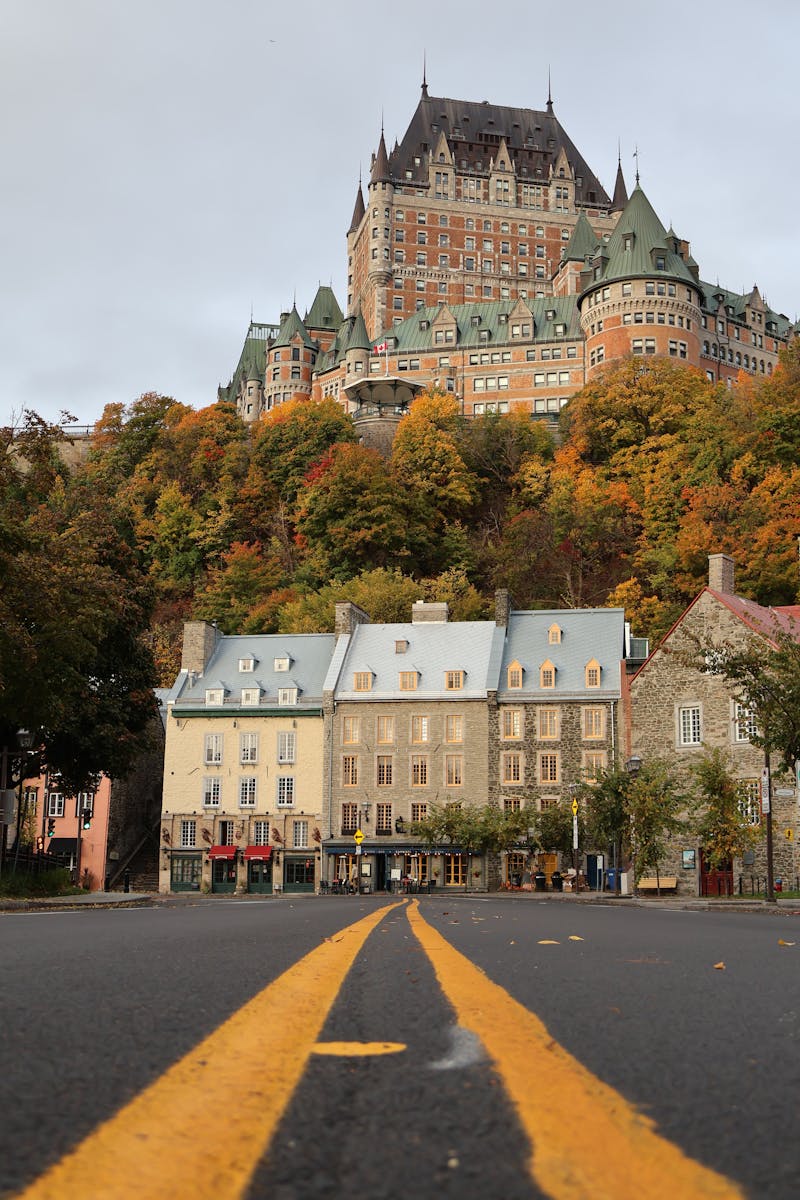
The Château Frontenac, that magnificent château-style hotel with its distinctive green-roofed turrets, stands as Quebec City's most recognizable landmark and perhaps North America's most photographed hotel. Covered in snow and frost, with smoke rising from its chimneys and lights glowing warmly in its windows, the Château Frontenac becomes the quintessential winter image of Quebec City. However, photographing this iconic structure effectively requires understanding the various angles and perspectives that reveal different aspects of its architectural majesty.
The most classic and widely reproduced angle captures the Château Frontenac from Dufferin Terrace, the historic wooden boardwalk that stretches before the hotel. From this vantage point, photographers can frame the hotel's most dramatic facade with the St. Lawrence River in the background. During golden hour, warm light illuminates the château's stonework and turrets, while in winter, snow-covered roofs and icicles hanging from architectural details create additional layers of visual interest. Arriving at Dufferin Terrace early in the morning, before crowds arrive, provides the opportunity to capture the Château Frontenac in serene, unpolluted light with minimal human activity in the frame.
Terrasse Pierre-Dugua-De-Mons, located at the edge of Parc du Bastion-de-la-Reine, offers an elevated vantage point that reveals the Château Frontenac in context with the broader cityscape and the St. Lawrence River. From this location, photographers can capture the hotel as part of the city's grand architectural ensemble rather than in isolation. During winter, this perspective shows snow-covered rooftops throughout Old Quebec, the frozen or partially frozen river in the background, and the Château Frontenac's turrets rising prominently above surrounding historic buildings.
For a more intimate perspective, descend into the narrow cobblestone streets of Old Quebec and photograph the château rising above the historic architecture of Quartier Petit-Champlain. These street-level perspectives, with snow-laden buildings in the foreground and the grand hotel visible above the rooflines, create compelling layered compositions that convey the sense of stepping back centuries in time while remaining surrounded by winter's magic.
The Lévis ferry crossing offers one of the most striking photographic opportunities – the approach to Quebec City by water, with Château Frontenac dominating the skyline as your ferry glides across the St. Lawrence River. In winter, with ice formations visible in the water and the château's turrets silhouetted against the sky, this crossing provides images that capture the grandeur of the city's approach as historical visitors would have experienced it centuries ago.
Rue du Petit-Champlain: The Most Photographed Street in Winter Splendor
Rue du Petit-Champlain, the cobblestone street winding through the historic lower town, is widely recognized as the most photographed street in Quebec City's historic sector. During winter, this recognition becomes entirely justified. The narrow street's older stone buildings, colorful shop signs, and intimate human scale transform under winter conditions, becoming almost impossibly picturesque. Covered in snow, with icicles hanging from shop awnings and light reflecting off ice-glazed cobblestones, Petit-Champlain becomes a living postcard of historic Old Quebec.
December through February presents particularly compelling photographic opportunities, as the street fills with holiday and winter decorations. Twinkling lights string overhead between buildings, creating a magical canopy of illumination. Wreaths and decorations adorn shop fronts. Christmas displays fill windows. The combination of historic architecture, winter snow, and festive illumination creates layered, visually complex compositions that reward careful framing and thoughtful composition.
Photograph Petit-Champlain during blue hour to capture the interplay between the warm glow of street lights and shop windows against the deep blue twilight sky. The overhead lights strung between buildings become more visible and dramatic when photographed against the darkening sky. Alternatively, photograph the street during the day when clear skies and bright snow create stark, clean compositions with strong contrast between shadow and light.
Scout locations along Petit-Champlain during your visit and return to your favorite spots at different times of day and different weather conditions. The street appears different when snow is actively falling, when clear skies shine overhead, when ice coats the cobblestones, and when fresh snow lies undisturbed on rooftops. Multiple visits to the same location at different times yield surprisingly different images, each with distinct character and mood.
Place Royale: Historic Beauty Beneath Winter Snow
Place Royale, the historic heart of Quebec City and the site of Samuel de Champlain's original settlement in 1608, transforms into a European-style winter plaza when snow blankets its cobblestones and decorations. This intimate square, surrounded by centuries-old stone buildings including Notre-Dame-des-Victoires church, the oldest stone church in North America built in 1688, becomes increasingly enchanting during winter. A large central Christmas tree rises prominently in the square during December, decorated with lights and snow, serving as a natural focal point for compositions.
The symmetry and classic European architecture of Place Royale create ideal conditions for compositional photography. Position yourself to frame the square's open space, capturing the church and historic buildings beyond, with the snow-covered ground in the foreground. Early mornings offer the best opportunity to photograph the square with minimal foot traffic and pristine snow unmarked by footprints. Wide-angle lenses capture the square's architectural context, while longer lenses isolate details like the church's facade or the Christmas tree's illuminated decorations.
During evening hours and especially during the winter holidays, Place Royale fills with festive atmosphere. Carollers gather, visitors stroll through the square, and warm light glows from surrounding buildings and street lamps. These conditions provide opportunities for capturing winter's human element – people bundled in warm clothing, sharing the joy of the season, creating scenes that convey emotion and community alongside architectural beauty.
Montmorency Falls: Photographing Nature's Frozen Sculpture
Located just outside Quebec City in the Parc de la Chute-Montmorency, Montmorency Falls transforms dramatically during winter into one of Eastern Canada's most spectacular natural photography subjects. The falls, which plunge 83 meters (272 feet) – making them nearly 30 meters higher than Niagara Falls – partially freeze during winter, with spray from the falling water freezing on the rocks below, creating the famous "Pain de Sucre" (Sugar Loaf) formation. This white, cone-shaped ice accumulation, sometimes rising 30 meters or more above the ground, creates an extraordinary and ethereal winter landscape found nowhere else on the continent.
Photograph Montmorency Falls from multiple vantage points to capture the full drama of the winter ice cone formation. From below, at the base of the falls, position yourself to photograph the ice cone against the falling water, capturing the interplay between the fluid cascade and the solid ice formation. From the upper viewing platform accessible via the chairlift or upper trail, photograph the falls and ice cone from above, revealing the texture and scale of the frozen formation against the surrounding snowy landscape and river below.
Wide-angle lenses (16-35mm) work well for base-level and summit views, capturing the falls within the broader landscape context. Mid-range zoom lenses (24-70mm) offer flexibility for both landscape and vertical compositions, while telephoto lenses (70-200mm or longer) help isolate the ice formations and focus on specific details of the top or base of the falls. A polarizing filter proves invaluable at Montmorency Falls, cutting through haze created by mist and bringing clarity to surrounding snow and sky.
The park remains open year-round, including during winter, though some facilities and paths may close during deep winter conditions. Photography is permitted throughout the park, including with tripods, making this an ideal location for both handheld and long-exposure photography. Visit on clear days when sunlight illuminates the ice cone brilliantly, or during overcast conditions when even, diffused light brings out subtle details and colors in the ice formations.

Dufferin Terrace and the Toboggan Slides: Action and Landscape Combined
Dufferin Terrace, the historic wooden boardwalk built in 1859, offers stunning views of the St. Lawrence River, Château Frontenac, and the Citadel of Quebec. During winter, the terrace becomes even more photographic as snow accumulates on railings and the wooden structure, while the river below transforms into a partially frozen landscape of ice formations and flowing water. The terrace's vantage point provides unobstructed sightlines to the city's most iconic landmarks framed by winter conditions.
Perhaps most spectacularly, Dufferin Terrace hosts the famous toboggan slides known as "Au 1884" – ice-covered wooden chutes built in 1884 that allow visitors to toboggan down the slope at speeds up to 70 kilometers per hour (43.5 miles per hour). From mid-December through mid-March, weather permitting, these three slides operate continuously, providing thrilling experiences and dynamic photographic opportunities. Photograph the toboggans launching from the top of the slope with Château Frontenac rising behind them, or capture the exhilaration of riders plummeting down the slope with the St. Lawrence River visible below.
The December through February period, particularly during the Quebec Winter Carnival in February, brings peak activity to Dufferin Terrace. Crowds of people enjoying the slides, the terrace's wooden railings covered in snow and rime ice, and the dramatic backdrop of the frozen or partially frozen river create compelling scenes of winter recreation and urban winter landscape combined. Position yourself along the terrace to capture both the architectural and human elements of this iconic winter location.
Old Quebec's Covered Bridges and Architectural Details
Beyond the major landmarks, Old Quebec's narrow streets reveal countless opportunities for detailed architectural photography. Snow-laden rooftops, icicles hanging from eaves, frost-covered windows, and snow-covered signage create compelling macro and detail compositions. The tight urban fabric of Old Quebec, where buildings stand shoulder-to-shoulder along medieval streets, creates interesting shadows, textures, and layered compositions when photographed in winter conditions.
Early mornings present ideal opportunities for architectural detail photography, as frost and rime ice coating buildings and windows create delicate, crystalline patterns visible in low-angle morning light. Macro or close-up lenses capture the intricate geometry of frost formations and ice crystals. Standard and wide-angle lenses frame building facades, corner details, and street scenes that convey the historic character of Old Quebec enhanced by winter's presence.
The convergence of multiple narrow streets creates visual intersections where historic architecture frames vistas and creates natural leading lines that guide viewer attention through the image. Photograph these intersections in snow, with winter light sculpting shadows and texture across historic facades, to create images that convey both the specific character of Quebec City and the universal beauty of historic architecture transformed by winter.
Cold Weather Camera Care: Essential Technical Considerations
Winter photography in Quebec City, where temperatures frequently plunge well below freezing and can reach -20°C (about -4°F) or lower with wind chill, presents significant technical challenges for photographers and their equipment. Understanding and managing these challenges is essential for both protecting your camera and maintaining optimal image quality throughout a winter shooting session. Cold temperatures affect camera batteries, optical glass, mechanical shutters, and sensor performance in ways that warm-weather photographers rarely encounter.
Battery performance suffers dramatically in cold conditions. Lithium-ion batteries, the standard in modern cameras, lose charge more quickly when exposed to freezing temperatures, with capacity degradation increasing as temperatures drop. A fully charged battery sufficient for several hours of shooting in moderate conditions might provide only an hour or less of shooting time in extreme cold. The practical solution is straightforward: carry multiple fully charged batteries, and keep spare batteries inside your jacket in an inner pocket where body heat maintains them at higher temperatures. When a battery in your camera becomes depleted from cold, swap it with a warm battery from your jacket. Batteries that appear dead in cold conditions often regain functionality when warmed, allowing you to rotate between warm and cold batteries throughout your shooting session.
Rapid temperature transitions cause condensation to form on camera sensors, lens elements, and internal mechanisms when you move from freezing outdoor conditions into warm indoor environments. This condensation can damage electronics and degrade optical coatings if allowed to sit on lens glass. The solution is to seal your camera equipment in an airtight container – even a simple ziplock bag – before bringing it indoors. Allow the sealed equipment to warm gradually to room temperature while remaining sealed, permitting internal moisture to condense on the exterior of the sealed container rather than on your camera's sensitive surfaces. Only open the sealed container once your equipment has fully acclimated to room temperature.
Batteries, media cards, and lens changes require careful management in cold conditions. Shield your camera from the elements when changing batteries, cards, or lenses. If possible, perform these operations indoors. If you must change equipment outdoors, work as quickly as possible and shield the camera opening with your body to minimize exposure to cold air and blowing snow. Cold-related condensation and moisture present significant risks when you open your camera to access internal components.
Exposure compensation becomes essential when photographing in snowy conditions. Snow's reflective properties can deceive your camera's light meter, leading to underexposed images where the snow appears dingy gray rather than brilliantly white. Use your camera's exposure compensation feature to increase exposure by +1 to +2 stops when shooting snowy scenes. This compensates for the meter's tendency to underexpose reflective white subjects. Alternatively, use your camera's "Snow" or "Snow/Beach" scene mode if available, which applies similar exposure compensation automatically. Monitor your histogram while shooting to ensure you're capturing the bright highlights of snow without losing detail in the surrounding landscape.
White balance requires intentional management to avoid color casts. Snowy scenes lit by direct sunlight often benefit from a "Sunlight" white balance setting, while overcast snowy conditions often look more natural with a "Cloudy" white balance setting. Avoid automatic white balance in snowy conditions, as the camera may struggle to maintain neutral color reproduction in the presence of large areas of bright white snow.
Winter Carnival Photography: Capturing Bonhomme and the Ice Palace
The Carnaval de Québec, running for 10+ days typically in late January or early February, represents an unparalleled opportunity for winter event photography. The carnival's Ice Palace, rebuilt anew each year from massive blocks of ice, provides architectural photography opportunities unlike any other structure. The palace, rising 40 to 50 feet with multiple towers and elaborate carved decorative elements, transforms throughout the day as light angles change and interior and exterior illumination shift with the sun's position and the onset of evening.
Bonhomme Carnaval, the official snowman mascot, dressed in his traditional red tuque and arrow sash, appears throughout the carnival at parades, ceremonies, and public gatherings. Photographing Bonhomme provides opportunities to capture the human and cultural dimensions of the carnival, as visitors interact with the mascot, pose for photos, and engage with this symbol of Quebec's winter culture and joie de vivre.
The carnival's two Night Parades, held along the Grande Allée, present compelling opportunities for nighttime photography. Elaborate floats decorated with lights, performers in colorful costumes, marching bands, and the snowy street all contribute to visually rich scenes. Nighttime parades require faster film speeds or longer exposures to gather sufficient light, and the combination of artificial lighting and nighttime conditions creates unique color temperatures and light dynamics different from daylight photography.
Snow sculpture competitions, held during carnival season, showcase enormous sculptures carved from snow by artists from across Canada and internationally. These sculptures, often themed around cultural heritage or artistic expression, provide unique compositional opportunities. Photograph them during different times of day and in different lighting conditions to capture how light sculpts form and reveals detail in the snow medium.
Ice Hotel Photography: Capturing Ethereal Beauty
The Hôtel de Glace, located in nearby Saint-Gabriel-de-Valcartier (about 45 kilometers from Quebec City), is North America's oldest ice hotel and a singular winter photography destination. Constructed entirely of snow and ice, with no structural supports other than ice and snow itself, the hotel is rebuilt completely each winter according to a new theme. The hotel's 42 rooms and common areas, including a Grand Hall, chapel, ice slide, and ice bar, showcase intricate ice sculptures and carved decorative elements throughout.
Photography opportunities at Hôtel de Glace range from architectural details of ice carvings to the dramatic interior spaces of themed rooms to the colorful lighting that often illuminates ice sculptures and architectural elements. The hotel's underwater-themed common room featuring intricately detailed marine life ice sculptures, the forest room with maze-like tunnels and an ice slide overseen by a bright-eyed ice owl, and numerous other themed spaces provide endless subjects for photography. Colored lighting, whether natural or artificial, reveals the translucence of ice and the depth of carved details in ways that create images of uncommon beauty and visual interest.
Photography is permitted throughout the hotel, making this an ideal location for both casual visitors with smartphones and dedicated photographers with professional gear. Tours through the hotel typically last 30-45 minutes, providing adequate time to explore multiple spaces and photograph various areas. Visiting during different times of day reveals different lighting conditions and atmospheres – daytime photography captures the play of natural light through ice, while evening photography showcases artificial illumination and the contrast between interior warm lighting and the cold exterior environment.
Drone Photography and Regulatory Considerations
Aerial photography via drone offers unique perspectives of Quebec City's winter landscape unavailable from ground-based positions. Drones can capture sweeping views of Old Quebec covered in snow with the St. Lawrence River in the background, the Château Frontenac and surrounding cityscape from elevated perspectives, and panoramic winter landscapes that convey the scale and scope of the winter environment. However, drone photography in Canada, including Quebec City, is subject to federal regulations enforced by Transport Canada, and Quebec City has additional local requirements for drone operations.
Federal regulations require that all drones weighing between 250 grams and 25 kilograms be registered with Transport Canada, with registration available online and requiring a fee. Drones under 250 grams are exempt from registration but must still adhere to basic safety guidelines. All drone pilots must carry a valid drone pilot certificate while operating their drone. Commercial drone operations, including aerial photography intended for any business-related purpose, require a Special Flight Operations Certificate (SFOC).
In Quebec City specifically, drone operators must obtain written authorization from the owner of any site where the drone takes off and lands, whether public or private property. Additionally, commercial operators must provide proof of $2 million in liability insurance covering drone operations, with the City of Quebec listed as an additional insured party. These requirements ensure that drone photography is conducted safely and responsibly, respecting property rights and maintaining liability coverage for potential incidents.
Given these regulations, recreational photographers should verify current requirements before operating drones in Quebec City. For those seriously interested in drone photography, consulting with local drone operators or contacting the City of Quebec's filming permits office can clarify requirements and ensure compliant operations. The regulatory framework exists to protect public safety and property rights, and compliance ensures that drone photography can be pursued without legal complications.
Hidden Gems and Elevated Viewpoints
Beyond the major landmarks, several lesser-known locations offer exceptional photography opportunities. The Breakneck Stairs (Escaliers Casse-Cou), though extremely busy during daytime hours, become nearly solitary when photographed during early morning hours between 7-8 AM, providing opportunities to capture these historic stairs descending through Old Quebec with minimal crowding. The stairs covered in snow and frost, with buildings rising on either side, create atmospheric compositions of narrow urban winter landscapes.
Parc du Bastion-de-la-Reine, home to Terrasse Pierre-Dugua-De-Mons, offers elevated viewpoints overlooking Old Quebec and the St. Lawrence River. Winter conditions transform this park into a landscape photography location where snow-covered trees, distant cityscapes, and frozen waterscapes combine to create layered compositions. Early morning visits capture the park in serene conditions with fresh snow and minimal visitor activity.
The Citadel of Quebec, the massive military fortress overlooking Old Quebec, transforms under winter conditions. Accessed via the upper portions of Old Quebec or from the Plains of Abraham, the fortress provides elevated vantage points looking down on the city's historic architecture and out toward the river and surrounding landscape. Photography is permitted in many areas of the Citadel, though visitors should verify current access policies before planning shoots.
Northern Lights: The Rare Winter Gift
While not guaranteed and dependent on solar activity, northern lights occasionally become visible from Quebec City and surrounding areas during winter months. The unpredictable nature of auroral displays makes them challenging photographic subjects, as you cannot schedule shoots with certainty. However, those fortunate enough to witness the aurora borealis during a winter visit to Quebec City face unprecedented photographic opportunities. Capturing the aurora requires faster lenses (wide apertures of f/2.8 or faster), high ISO settings (3200 and above), and longer exposure times (15-25 seconds), combined with very dark skies away from light pollution. The payoff – images of the ethereal, dancing green and purple lights of the aurora above Quebec's snowy landscape – justifies the preparation and patience required.
Practical Tips for Winter Photography Success
Successful winter photography in Quebec City requires careful planning and attention to detail. Begin by checking weather forecasts and choosing shooting days with clear or partly cloudy skies, as these conditions typically produce more interesting light and higher visual impact than heavily overcast or stormy conditions. However, don't dismiss overcast days – even, diffused light reveals details and colors in winter landscapes that harsh sunlight might obscure.
Wear appropriate cold-weather clothing including insulated gloves that allow camera operation, as numb hands make precise photography difficult. Hand warmers tucked into glove pockets maintain finger dexterity. Waterproof outerwear protects both you and your camera from snow and moisture. Insulated boots rated for extreme cold maintain comfort during extended outdoor sessions.
Scout locations during your first visit or via online research before committing to specific shoots. Understanding sight lines, background elements, and the light path at different times of day allows you to plan sessions with greater purpose and focus. Research also reveals the least-crowded times for visiting popular locations, allowing you to photograph iconic landmarks with minimal human activity in the frame.
Carry backup power sources, multiple memory cards, and lens cleaning supplies to manage the technical demands of winter shooting. A microfiber cloth stowed in an inner jacket pocket can dry lens elements quickly if snow or condensation accumulates. Extra memory cards ensure you have sufficient storage for high-volume shooting sessions.
Stay hydrated and maintain your energy levels during extended outdoor photography sessions. Winter's cold makes the body work harder to maintain temperature, increasing caloric expenditure. Bringing warm beverages and snacks maintains energy and helps manage the physical demands of winter photography sessions that often begin before dawn and continue through evening hours.
Post-Processing Winter Images for Maximum Impact
The computer work that follows photography sessions plays an important role in realizing the full potential of winter images. RAW format shooting (if your camera supports it) preserves maximum detail and color information, providing flexibility in post-processing. Winter images often benefit from careful exposure adjustments to ensure bright snow tones remain crisp white while shadow areas retain detail. Contrast adjustments can enhance the drama of winter light, while vibrance and saturation enhancements can intensify the deep blue tones of winter skies and the colors of holiday decorations.
White balance adjustments in post-processing can correct color casts created by artificial lighting or unusual ambient light conditions. The cool blue tones of snow-covered landscapes sometimes benefit from subtle warming to create more emotionally engaging images. Clarity and detail enhancement can sharpen the crisp edges and fine details that define winter photography – icicles, frost crystals, snow textures – making them stand out with greater visual impact.
Conclusion: Capturing Quebec City's Winter Soul
Quebec City in winter represents one of North America's most photogenic destinations, offering iconic landmarks transformed by snow and ice, unique natural phenomena like Montmorency Falls' ice cone, festive seasonal decorations, and the extraordinary winter cultural traditions of the Quebec Winter Carnival. Capturing the true magic of Quebec's winter requires combining technical mastery of cold-weather photography, strategic planning around optimal light conditions, discovery of the finest locations both famous and hidden, and patience and persistence through challenging outdoor conditions.
The golden and blue hours of winter photography, the iconic Château Frontenac and historic streets of Old Quebec, the natural drama of Montmorency Falls' frozen cascade, and the cultural spectacle of the Winter Carnival all await photographers ready to brave the cold and invest the effort required to capture winter's magic. Whether you're photographing to share images on social media, to create fine art prints for your home, or simply to preserve memories of a magical winter visit to Quebec City, the city's winter landscape rewards preparation, technical skill, and creative vision with images that transcend mere documentation to become lasting visual treasures – images that freeze moments in time and evoke the ineffable beauty of a historic city transformed by winter's touch.