When Revolutionary Forces Turned on Quebec
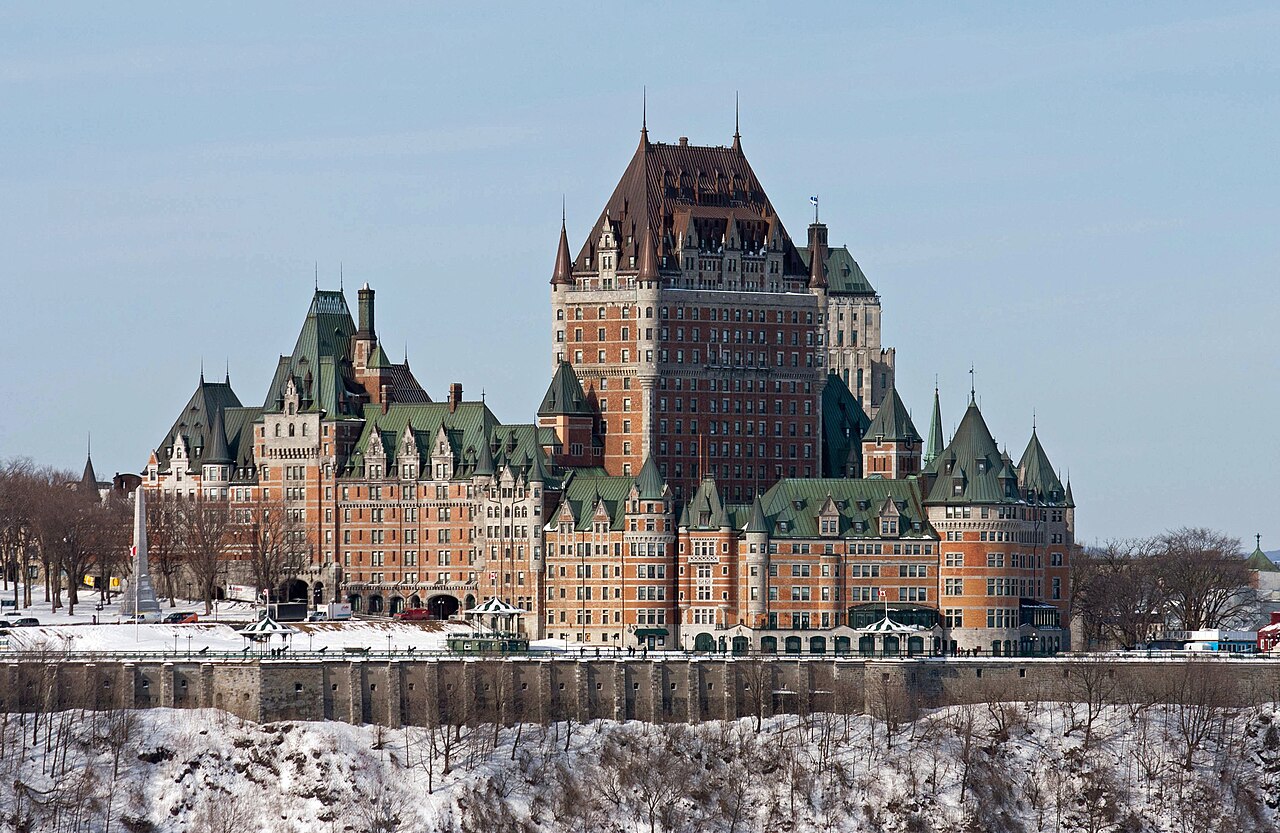
In the autumn of 1775, as the American Revolution gained momentum in the thirteen colonies, the Continental Congress authorized a military expedition against Quebec City. The objective was audacious: to capture the city from the British and bring Quebec into the fledgling American confederacy. The campaign, led by General Richard Montgomery and featuring a daring winter assault, represented one of the most dramatic military operations of the early Revolutionary War. Though ultimately unsuccessful, the invasion of Quebec revealed both the ambitions of the American patriots and the complexities of bringing French-speaking Catholics into a rebellion that had begun in the largely Protestant and English-speaking colonies to the south.
The context for the invasion was the rapid escalation of tensions between the thirteen colonies and Britain following the Battles of Lexington and Concord in April 1775. The Continental Congress, determined to fight for American independence, recognized that Quebec represented both a strategic prize and a potential threat. If Quebec remained in British hands, a British army could invade the northern colonies from Canada. Conversely, if Americans could capture Quebec, they would control the entire northern frontier and would have access to the valuable fur trade and resources of the Canadian interior. Moreover, capturing Quebec would demonstrate that the American cause had continental ambitions—that this was not merely a New England rebellion but a broader struggle for independence across North America.
What made the invasion particularly significant was that it challenged the notion that the American Revolution was primarily a conflict between English-speaking colonists and the British crown. By attempting to incorporate French-speaking Quebec, the Revolution revealed itself as something more: a struggle for a new political order that transcended language and ethnicity. The invasion of Quebec thus was not merely a military operation but also a political statement about the inclusive vision that American patriots hoped to achieve, even if historical circumstances would prevent that vision from being fully realized.
Why the Patriots Looked North
The American decision to invade Quebec stemmed from multiple strategic considerations. First and foremost, the Continental Congress recognized that Quebec, if left in British hands, could become a base for a British invasion of the northern colonies. During the French and Indian War (Seven Years' War), Quebec had been the strategic center of French colonial power in North America. Now, under British control, it could serve as the strategic center of British power. The Americans could not afford to allow Britain to use Quebec as a staging ground for operations against Massachusetts, New York, and the other northern colonies.
Additionally, American patriots had reason to believe that the people of Quebec, particularly the French-speaking population, might be sympathetic to the American cause. Quebec had been under British rule for only about a decade and a half at the time of the invasion. The French-speaking inhabitants still maintained distinct cultural, religious, and legal traditions. While the British had been generally tolerant of these differences, American patriots hoped that promises of religious freedom and protection of French-Canadian rights might persuade Quebec's inhabitants to support the Revolution. This represented a more sophisticated understanding of political persuasion than simply assuming that conquered territory would remain pacified by military force alone.
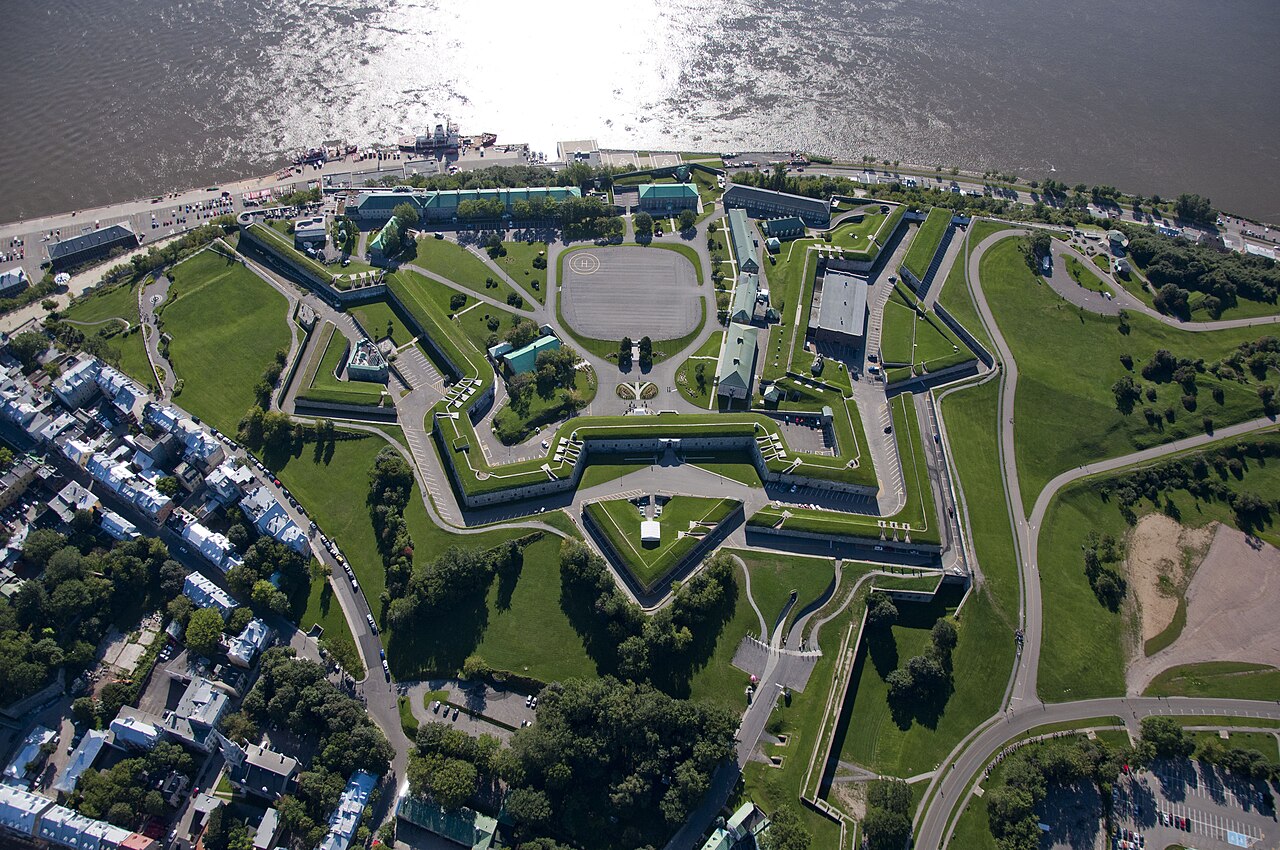
The practical strategy involved a two-pronged approach. One force, under General Richard Montgomery, would move northward from New York, following the traditional invasion route via the Hudson River and Lake Champlain. A second force, under Colonel Benedict Arnold (who would later become famous for his betrayal of the American cause), would undertake an even more daring expedition. Arnold would lead approximately 1,000 men through the wilderness of Maine, an unexplored and brutal route that would test the endurance of his soldiers to the limit. The two forces would coordinate their arrival at Quebec, with the intention of overwhelming the British garrison through a combined assault.
"We have nothing to fear but our own cowardice and inactivity. The cause of America is in some measure the cause of all mankind. We are fighting not for dominion, but for freedom." — Patriot rhetoric during the invasion campaign
The Long Roads to Quebec
General Richard Montgomery's campaign in the autumn of 1775 began with significant early successes. Moving northward from New York with a force of approximately 2,000 men, Montgomery captured Fort St. Jean (Saint-Jean-sur-Richelieu) and established control over the Richelieu River valley, the traditional invasion corridor from the south. By November, Montgomery's force had reached the outskirts of Quebec City itself. However, rather than finding an open and vulnerable city, Montgomery discovered that the British had strengthened Quebec's defenses and were prepared to mount a serious resistance.
Meanwhile, Benedict Arnold's expedition through Maine was proving to be a nightmare. Arnold had proposed what seemed like an audacious shortcut—moving through the Maine wilderness to approach Quebec from an unexpected direction. In theory, this would allow American forces to approach Quebec from the west while Montgomery attacked from the south, dividing British attention and creating overwhelming odds for the defenders. In practice, the expedition was a logistical catastrophe. Arnold's men faced starvation, disease, exposure to the harsh wilderness, and the complete breakdown of supply lines. What should have been a several-week journey stretched into months of brutal privation.
Despite the hardships, Arnold persevered. By early December 1775, the bedraggled remains of his force—reduced from 1,000 to perhaps 700 men—had reached Quebec and linked up with Montgomery. What should have been the climax of the American campaign now had to be mounted by an army exhausted from travel and bereft of the supplies necessary for a successful siege. The British commander, Guy Carleton, sensed that the American position was weak and that if he could hold Quebec long enough, American fortunes would decline as winter progressed and British reinforcements from Europe began to arrive.
Desperate Attack in Winter's Grip
On the last day of 1775, Montgomery made the decision to launch an immediate assault on Quebec. He recognized that time was against him. His men were exhausted, supplies were running low, and reports indicated that British reinforcements were on their way. Montgomery calculated that if the Americans did not capture Quebec quickly, they would be forced to abandon the siege. A final, desperate assault seemed preferable to a prolonged siege that the Americans could not win. The plan called for a coordinated attack on the fortified city, with Arnold attacking from one direction while Montgomery attacked from another, hoping to overwhelm British defenses through the sheer impact of a simultaneous assault.
The assault began in the pre-dawn hours of New Year's Day, 1776. American forces advanced through snowdrifts and bitter cold to reach the walls of Quebec. The British, well-prepared for the attack, opened fire with artillery and musketry from the fortifications. The battle that ensued was fierce but brief. The Americans, fighting with determination but lacking the supply and support necessary for a successful siege assault, found themselves pinned down by British fire. The turning point came when General Richard Montgomery was killed by cannon fire while leading an assault near the western gate of the city.
With Montgomery's death, the American assault collapsed. Arnold, who was himself wounded during the attack, attempted to maintain the siege, but it was clear that the American position was becoming untenable. Over the following weeks and months, American forces maintained a loose siege around Quebec, but without supplies, reinforcements, or the momentum of a quick victory, the campaign became increasingly futile. In May 1776, as British reinforcements arrived and American supplies became critically low, the Americans were forced to abandon the siege and retreat southward, ending the invasion of Quebec.
The failure of the American invasion had several significant consequences. First, it demonstrated that military success in the American Revolution would not come easily, even against apparently vulnerable targets. Second, it revealed the challenges of sustaining military operations in the harsh North American climate and terrain. Third, and perhaps most importantly, it demonstrated that French Canadians, despite the promises of the American patriots, were not eager to join the Revolution. The British had treated Quebec with relative tolerance, and French Canadians, having only recently become British subjects, were not enthusiastic about replacing British rule with American rule. The failure to win Quebec's support meant that the northern border of the new United States would remain a contested region, leading eventually to the War of 1812 and contributing to the emergence of a separate Canadian nation.
From Invasion to Separate Nations
The American invasion of Quebec was part of a larger pattern of Revolutionary military operations between 1775 and 1783. The Americans, despite initial setbacks, would eventually achieve independence through a combination of military perseverance, French assistance, and the strategic errors of the British. However, the failure to capture Quebec meant that Canada would remain a separate British possession, and the boundary between the United States and Canada would be established further south, along the line of the Great Lakes and the St. Lawrence River.
For Quebec specifically, the failed American invasion reinforced the existing alignment with Britain. French Canadians, having initially viewed the American Revolution with some ambivalence, became increasingly hostile to it as the invasion demonstrated that American "liberation" might be no more welcome than any other conquest. The Bishop of Quebec and other French-Canadian leaders actively encouraged resistance to the American invaders, recognizing that Quebec's religious and cultural distinctiveness might be better preserved under British rule (which had shown respect for French-Canadian institutions) than under American rule, which might have been more assimilationist in character.
The invasion also had ripple effects on American politics and strategy. The failure to capture Quebec contributed to a shift in American military strategy away from attempts to conquer Canadian territory and toward a focus on defending the established thirteen colonies. This reorientation of American military effort contributed to the eventual British decision to seek a negotiated peace rather than continue the costly war. By the Treaty of Paris (1783), Britain recognized American independence but retained Canada. The result was the emergence, over the subsequent decades, of a geographically defined North America divided between the United States and Canada—a division that originated, in part, with the failed American invasion of 1775.
For the people of Quebec, the failed invasion marked a moment of choice. The French-Canadian population chose, in effect, to remain aligned with Britain rather than join the American Revolution. This choice had profound consequences. It meant that Quebec would develop as a British colony with a French-speaking, Catholic majority rather than as an American state. It meant that the cultural and religious distinctiveness of Quebec would be preserved through the 18th and 19th centuries, eventually contributing to the emergence of Québécois identity as distinct from both American and English-Canadian identity. The patriotes of 1775 failed to conquer Quebec, but their very attempt had forced French Canadians to reflect on their identity and future in North America.
Walk the Streets Where History Turned
The invasion of Quebec left its mark on the city, and visitors can walk through the streets where American patriots attacked British defenses. The area around Sault-au-Matelot (where the most intense fighting occurred) is particularly significant. While the buildings and fortifications have changed dramatically since 1775, the general layout of the streets and the relationship between the lower town and the upper town remains recognizable from historical accounts and maps of the siege.
Revolutionary War Sites in Quebec
The Sault-au-Matelot area, despite centuries of development, still retains something of the character of the 18th-century lower town where the fighting was heaviest. The steep cobblestone streets and narrow passages that made the area difficult for American assailants are still present. Walking through the area, visitors can appreciate the challenges that American soldiers faced in attempting to navigate the difficult terrain while under fire from British defenders positioned on the walls above.
The Cathedral-Basilica of Quebec, mentioned in previous sections, also has significance for the Revolutionary War period. The cathedral stands as a testament to the religious and cultural distinctiveness of Quebec that ultimately prevented the American patriots from winning French-Canadian support. The building, with its magnificent baroque interior and historical artifacts, provides a window into the religious and cultural life of Quebec during the Revolutionary era.
The Musée de la Civilisation offers exhibits that contextualize the American invasion within the larger history of Quebec. Displays about the Revolutionary War period help visitors understand not only the military events but also the political choices that French Canadians faced during this pivotal moment. The museum provides interpretive materials that explain why Quebec chose to remain aligned with Britain rather than join the American Revolution, and how this choice shaped the subsequent development of both Canada and the United States.
For those interested in a more comprehensive understanding of the invasion, guided walking tours of Old Quebec City often include discussions of Revolutionary War sites and events. These tours, led by knowledgeable guides familiar with Quebec's history, provide context and interpretation that brings the events of 1775-1776 to life. Walking through the narrow streets of Old Quebec with a guide who can point out specific locations where the assault occurred creates a vivid and memorable understanding of this pivotal moment in North American history.
Sources & References
- Lanctot, Gustave. "The Canadian Campaigns of the American Revolutionary War." Doubleday, 1967.
- Gagnon, Serge. "Quebec and the American Revolution." Quebec Heritage Publications, 2001.
- McArthur, Duncan. "History of the War of 1812." Heritage Press, 1995.
- Fregault, Guy. "Canada: The War of the Conquest." Oxford University Press, 1969.
- Eccles, W. J. "Essays on New France." Oxford University Press, 1987.
- Marston, Daniel. "The American Revolutionary War." Osprey Publishing, 2002.
- Parks Canada. "The American Invasion of Quebec, 1775-1776." Historical Documentation, 2024.
Continue Exploring