The French Counteroffensive on the Plains
Seven months after their catastrophic defeat at the Plains of Abraham, the French launched a daring military counteroffensive to recapture Quebec City. On April 28, 1760, under the command of General Jean-Baptiste-Nicolas-Robert de Lévis, approximately 7,000 French and Canadian troops attacked a British force of similar strength near Sainte-Foy, a village west of Quebec. What followed was one of the largest battles fought on Canadian soil and a dramatic reminder that the struggle for control of New France was far from over. Unlike the Plains of Abraham battle, which lasted mere minutes, Sainte-Foy was a prolonged and brutal engagement that demonstrated both the determination of the French to reclaim their colony and the capacity of the British to defend their recent conquests.
The Battle of Sainte-Foy was a last-ditch effort by the French to reverse the outcome of the Seven Years' War. By the spring of 1760, it was clear that the global conflict was turning decisively in Britain's favor, but Canada remained a contested theater. If the French could recapture Quebec, they would reassert control over the strategic heart of the St. Lawrence valley. More importantly, a French military victory might provide leverage in the peace negotiations that were increasingly expected to occur. The battle represented hope—albeit fading hope—that the French colonial empire in North America might yet be saved.
The battle also stands as a poignant reminder of the costs of colonialism. Fought primarily by European regulars alongside colonial militia and Indigenous allies, the battle resulted in significant casualties on both sides. The frozen ground of the Quebec spring battlefield was trampled by soldiers fighting for empires thousands of miles away, determining the fate of a continent they often did not know well. Yet for the French Canadians involved, this was not a distant imperial struggle—it was a fight for their homeland, their future, and their way of life in North America.
Regrouping After Catastrophe
The winter of 1759-1760 was a period of intense activity for the French despite their military defeat. The commander-in-chief of French forces in North America, General Jean-Baptiste-Nicolas-Robert de Lévis, made the audacious decision that rather than accept the loss of Quebec, he would gather his scattered forces and launch a counteroffensive in the spring. This required collecting troops from across New France, securing supply lines from France, and assembling the logistical apparatus necessary to maintain a field army in the harsh North American climate. Many observers thought the French were mad to attempt such an undertaking when British military power was in the ascendant.
Yet Lévis possessed both determination and tactical skill. Unlike Montcalm, who had fallen at the Plains of Abraham, Lévis had time to plan his campaign carefully. He understood that his best chance of success lay in attacking British forces before they could be significantly reinforced. Winter weather complicated matters, but by the approach of spring, Lévis had assembled a respectable force and was ready to move. The British, meanwhile, were garrisoned in Quebec City under the command of General James Murray. Murray commanded a force of approximately 7,000 troops, comparable in size to the French force being assembled against him.
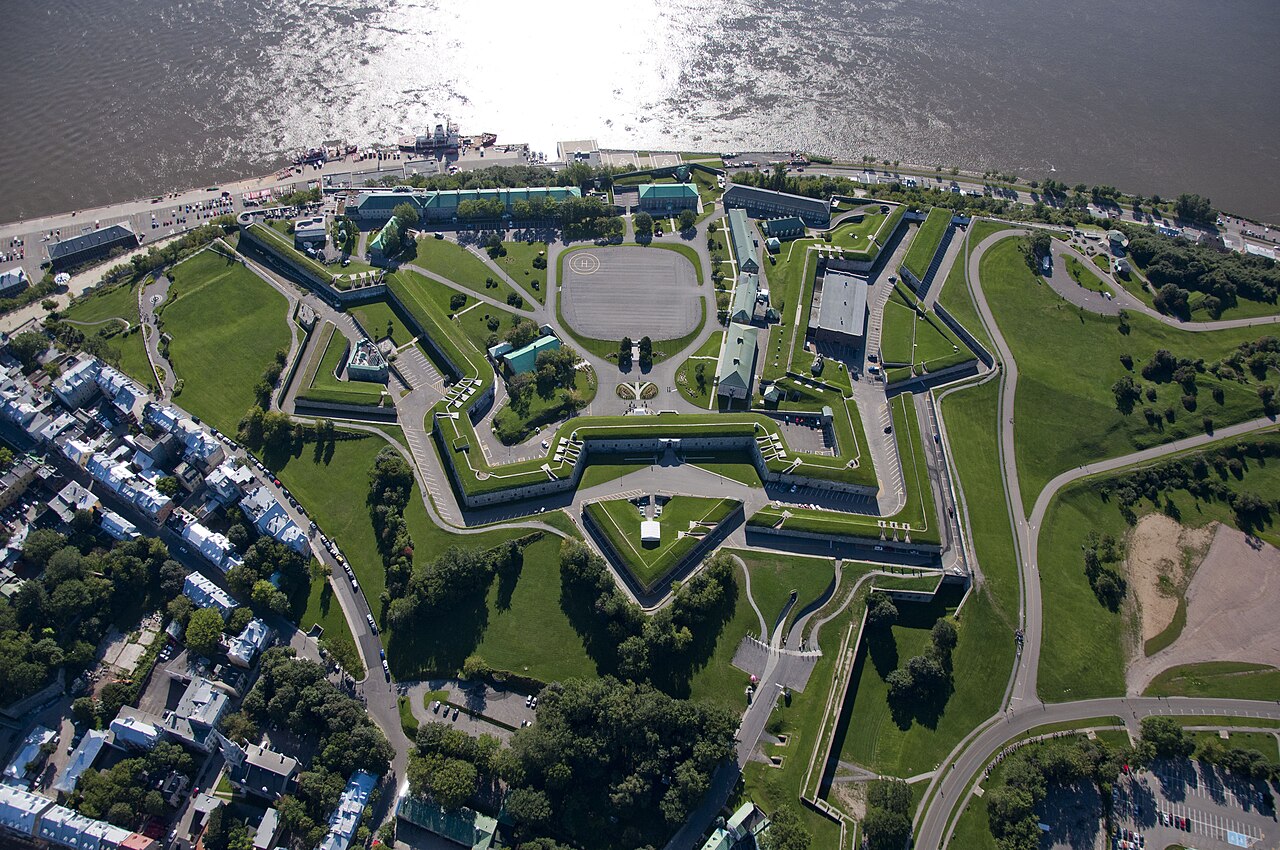
The challenge for both commanders was substantial. Murray faced the problem of whether to accept battle in the open field, which favored the larger French force, or to remain sheltered within Quebec's fortifications, which would preserve his force but yield the initiative to the French. Lévis faced the opposite dilemma: whether to directly attack Quebec's fortifications (which were formidable and had just been strengthened after the Plains of Abraham battle) or to attempt to maneuver the British into open battle. Both commanders recognized that much depended on timing, supply lines, and the arrival of reinforcements from Europe.
"General Lévis resolved to attempt one more great effort to preserve French power in North America. Against the weight of strategic probability, he gathered his forces for a spring offensive that would either restore French fortunes or certify their permanent decline." — Military historian account
Conflict on the Heights of Sainte-Foy
On April 28, 1760, General Lévis led his assembled forces toward Quebec from the west, hoping to bring the British garrison to battle. Murray, receiving intelligence of the French approach, made the decision to march out and meet the French in the open rather than wait in the city. The two armies encountered each other near Sainte-Foy, a small village southwest of Quebec City, on elevated ground that offered both sides tactical opportunities and challenges. The terrain was broken and partially forested, very different from the open Plains of Abraham where the previous battle had been fought.
The initial phases of the battle were marked by traditional linear formations advancing and exchanging volley fire, much as had occurred the previous September. However, the terrain was less favorable for the disciplined linear tactics that had served the British so well at Plains of Abraham. The woods and hills provided cover and concealment that benefited defenders and made rigid formations more difficult to maintain. French and Canadian forces, many of whom were accustomed to fighting in forested terrain, performed better under these conditions than they had on the open plains.
The battle raged for approximately three hours, considerably longer than the Plains of Abraham engagement. Both sides sustained significant casualties—estimates suggest that more than 2,000 soldiers became casualties, killed, wounded, or missing. The French launched several determined attacks, attempting to overwhelm British positions, but the British held their ground, supported by artillery that proved highly effective against massed attacks. The turning point came as afternoon advanced and it became clear that the French lacked the strength to achieve a decisive breakthrough. Moreover, British relief forces were known to be approaching from Montreal, which made a prolonged engagement increasingly unfavorable for the French.
As evening fell, Lévis made the difficult decision to withdraw his forces. The French had fought hard and had inflicted significant casualties on the British, but they had not achieved their objective of breaking through to Quebec City or destroying the British army. The British retained possession of the battlefield and, more importantly, control of Quebec itself. What had been a genuine battle—far more substantial than the brief melee at Plains of Abraham—had ultimately reinforced British control of the colony.
When Reinforcements and Supply Lines Decide
While the Battle of Sainte-Foy was tactically important, its strategic significance derived from broader circumstances. The crucial factor that ultimately decided the outcome was the arrival of British naval reinforcements and supply ships in the St. Lawrence River shortly after the battle. The British controlled the seas and had superior naval power. French forces, while they could win battles, could not sustain themselves in the field if British naval power cut off their supply lines. This was the fundamental disadvantage that had plagued French operations throughout the later Seven Years' War.
Murray had deployed his forces knowing that if he could hold the field long enough, British naval reinforcements would arrive. When the British frigates appeared on the river, the strategic situation was sealed. The French could not maintain their army in the field against an enemy with superior naval support and the ability to resupply at will. Within weeks of Sainte-Foy, French forces had to withdraw, allowing the British to consolidate their position in Quebec and expand their control over the surrounding regions.
The battle also revealed the changing nature of colonial warfare. The era when European conflicts could be decided by pitched battles on open ground was giving way to conflicts decided by logistics, naval power, and control of territory. The French, despite their tactical prowess at Sainte-Foy, could not overcome these structural disadvantages. Their forces were outnumbered not just in the immediate battle, but across the entire theater of war. The British had access to more men, better-supplied bases, and superior naval power. These advantages, not tactical superiority, would ultimately determine the outcome in North America.
"The battle of Sainte-Foy demonstrated that courage and tactical skill, while important, could not overcome fundamental strategic disadvantages. The French fought well, but they fought in the shadow of British naval superiority and global military predominance." — Historical analysis of the Seven Years' War
From Hopes to Farewell
The Battle of Sainte-Foy dealt the final blow to French hopes of retaining control of Canada. While it was a more respectable performance than the Plains of Abraham defeat, it ultimately confirmed that the French could not regain Quebec or prevent the British from consolidating their control over the former French colonies. Over the summer of 1760, as British forces expanded their control, French military power in North America continued to contract. By late 1760, the French were forced to evacuate their remaining positions and acknowledge the reality of military defeat.
The Treaty of Paris (1763) formalized what the battles of 1759-1760 had already demonstrated: France would cede its North American colonies to Britain. New France ceased to exist as a political entity. The vast French colonial empire that had stretched across the continent from the Gulf of Mexico to the Arctic would be reduced to a few small islands in the Atlantic and a handful of other minor possessions. The continent that had been contested between French and British would become predominantly British in character, and later, American.
For the French Canadians who had fought at Sainte-Foy and throughout the war, the defeat was traumatic. The French-speaking population found themselves now subjects of the British crown rather than the French king. Yet, as it turned out, the Treaty of Paris included provisions that protected French-Canadian language, religion, and legal traditions. The British, pragmatic in their governance, recognized that respecting French-Canadian institutions would reduce resistance to British rule. Thus, while the military defeat was absolute, the French-Canadian people would survive as a distinct cultural and linguistic community.
The Battle of Sainte-Foy also demonstrated the nature of warfare in North America. Unlike the grand battles of Europe, involving massive armies and continental strategies, North American conflicts often hinged on smaller forces, local factors, and the ability to sustain armies in a challenging environment. The lesson was clear: control of water routes and supply lines mattered as much as battlefield victory. This realization would shape military strategy during the American Revolution, when the ability to interdict supplies and control sea lanes would often prove as decisive as victories in pitched battles.
Explore the Sainte-Foy Battlefield
The immediate area around Sainte-Foy has been significantly developed and urbanized since 1760, but the general geography and landscape remain recognizable to anyone familiar with the historical accounts. The site is now within the greater Quebec City metropolitan area, but interpretive markers and historical markers help visitors understand the layout of the battlefield and the positions held by the various military forces during the engagement.
Sainte-Foy Historic Area
The Sainte-Foy area offers a different perspective on the colonial conflicts than the Plains of Abraham. While the Plains of Abraham is a large, open park that preserves the terrain almost as it was in 1759, Sainte-Foy is more densely built up with modern structures. However, this urban context reflects the historical reality that Sainte-Foy was never an isolated battlefield but always part of the inhabited landscape around Quebec City. Visitors interested in understanding the battle can benefit from consulting detailed maps and historical accounts while walking through the area.
The terrain around Sainte-Foy helps illuminate why the battle played out differently from the Plains of Abraham. The rolling hills, patches of forest, and varied topography provided cover for troops and made linear formations less effective than they had been on the more open Plains. Walking through the area, you can appreciate how the physical environment shaped military operations and how commanders had to adapt their tactics to local conditions.
For those interested in the broader context of the battle, the Museums of Quebec City—particularly the Musée national des plaines d'Abraham and the Musée de la Civilisation—provide detailed exhibits and interpretive materials that help visitors understand not just the battles themselves but the colonial conflicts that shaped North American history. These institutions offer a sophisticated understanding of how military history, colonial politics, and everyday life intersected in 18th-century Quebec.
Sources & References
- Stacey, C. P. "Quebec, 1759: The Siege and the Battle." Macmillan of Canada, 1959.
- Marston, Daniel. "The Seven Years' War." Osprey Publishing, 2001.
- Fowler, William M. "Empires at War: The French and Indian War and the Struggle for North America." Walker & Company, 2005.
- Eccles, W. J. "The Canadian Frontier, 1534-1760." University of New Mexico Press, 1984.
- Gipson, Lawrence Henry. "The Great War for the Empire: The Years of Defeat, 1754-1757." Alfred A. Knopf, 1946.
- Parks Canada. "Sainte-Foy and the Final Struggles in Canada." Historical Documentation, 2024.
- Frégault, Guy. "Canada: The War of the Conquest." Oxford University Press, 1969.
Continue Exploring