Origins & the Canadian Pacific Railway
In the late nineteenth century, the Canadian Pacific Railway envisioned something revolutionary: not merely a hotel, but an architectural masterpiece that would become a destination in itself. The completion of Canada's transcontinental railway in 1886 opened unprecedented opportunities for luxury travel and grand hospitality. The CPR's leadership recognized that wealthy travelers needed somewhere equally magnificent to stay—and Quebec City, Canada's oldest European settlement, presented the perfect location.
The strategic choice of Quebec City reflected deep understanding of its significance: as provincial capital, historical treasure, and gateway to the St. Lawrence River, the city possessed natural beauty and cultural prestige unmatched in Canada. The CPR envisioned a château-style hotel that would rival the great establishments of Europe while celebrating distinctly Canadian character and landscape. This was not merely commerce—it was a statement about Canada's place in the world.
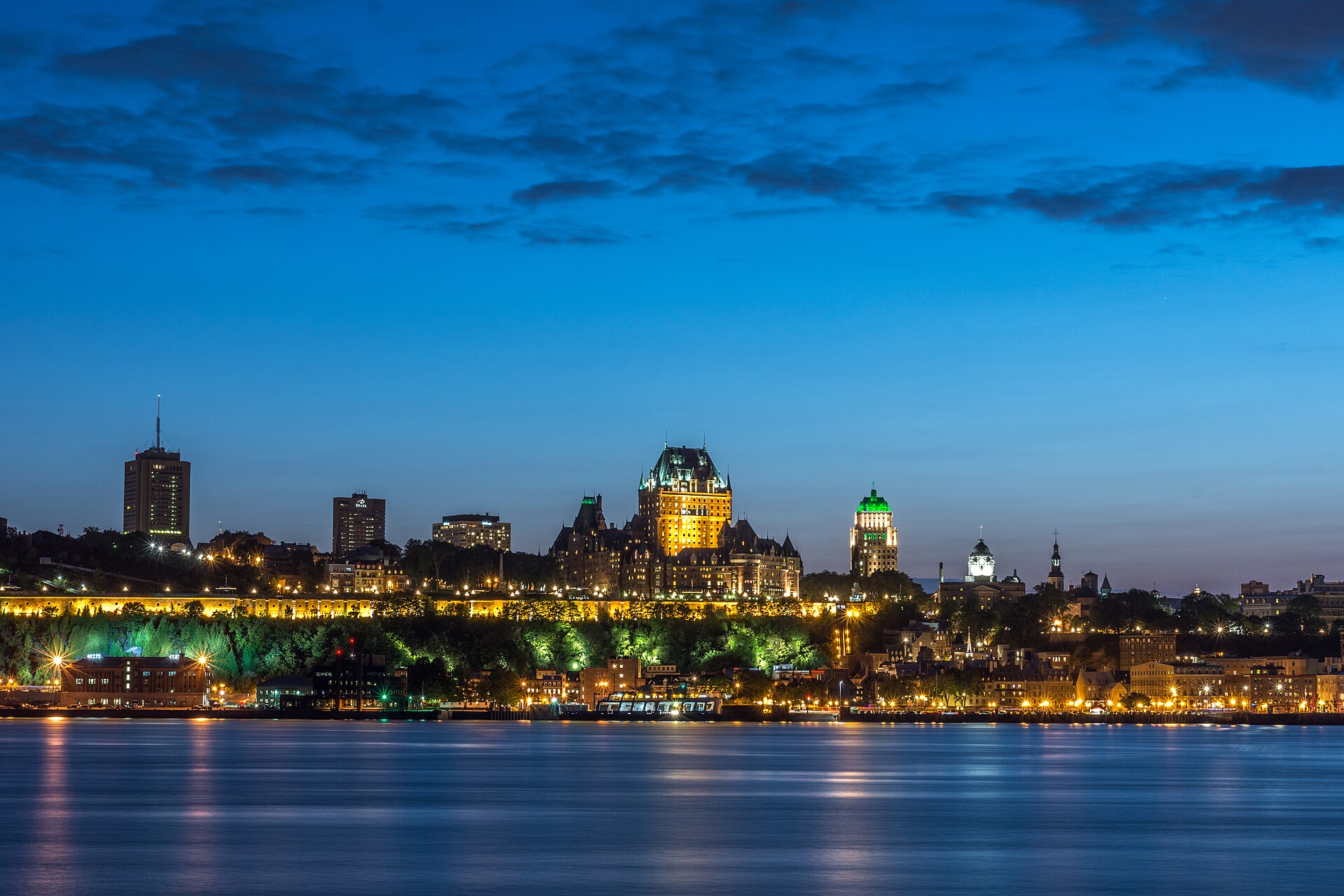
"The CPR did not build a mere hotel—they created a symbol of Canadian ambition and architectural excellence that would define Quebec City for generations to come."
Bruce Price: The Architect's Vision
Bruce Price, born in Cumberland, Maryland in 1845, emerged as one of North America's most accomplished architects by the 1890s. His versatility—spanning residential estates, commercial buildings, and institutional projects—made him the perfect choice for the CPR's ambitious vision. Price's genius lay in his ability to synthesize historical references with modern hotel function, creating something entirely new yet deeply rooted in tradition.
Price drew inspiration from the Renaissance châteaux of France's Loire Valley—buildings like Chambord and Chenonceau—but reimagined them for the nineteenth-century railway age. He incorporated Medieval elements, Victorian detail, and North American sensibilities, creating a distinctive vocabulary that felt both European and authentically Canadian. The steeply pitched roofs, dormers, and decorative detailing referenced Old World grandeur, while the scale and rational planning served modern hotel operations.
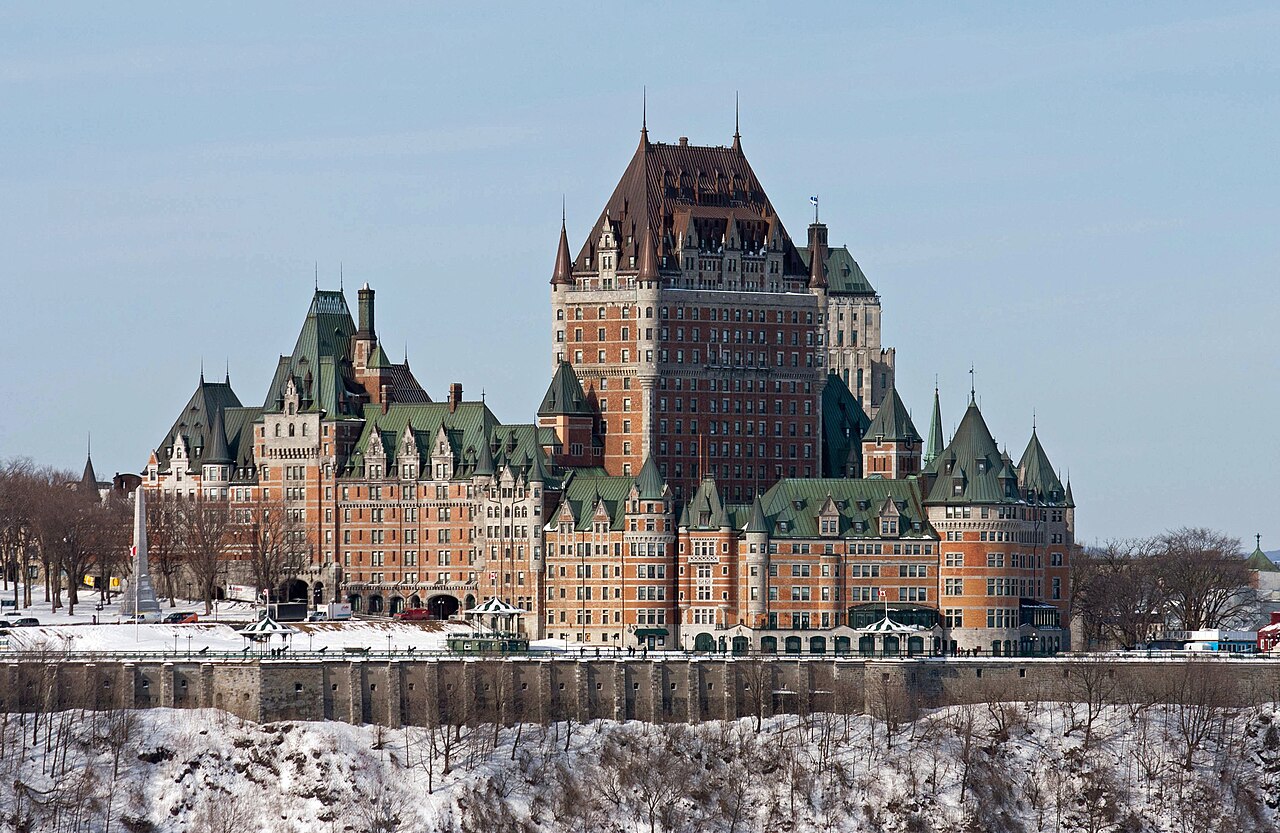
Design Elements That Define the Building
- Green Copper Roofs: Distinctive patinated copper cladding that becomes the building's signature feature
- Central Pavilion: Prominent vertical element emphasizing height and prominence on the skyline
- Beauport Limestone: Local stone material that harmonizes with Quebec City's existing heritage
- Renaissance Fenestration: Carefully proportioned windows providing visual interest and natural light
- Romantic Towers: Medieval-inspired turrets suggesting château ancestry
The material choice—local Beauport limestone—demonstrated Price's sensitivity to place and context. This stone, quarried near Quebec City, gave the building visual continuity with the city's existing architecture while establishing its own distinguished presence. The distinctive green copper roofs, initially bright and shining, gradually developed the characteristic patina that would become the building's most recognizable feature, aging gracefully into a visual icon instantly recognizable across the world.
The Original Construction Era: 1892-1897
Construction began in 1892 on the steep slopes of Cap Diamant, the highest point in Quebec City's Old Town. The location's dramatic topography posed extraordinary challenges: massive quantities of materials had to be transported uphill, specialized construction techniques developed to address the challenging site conditions, and workers labored with period equipment to realize Price's ambitious vision. The engineering accomplishment matched the architectural one—a feat of nineteenth-century construction mastery.
The hotel opened its doors to its first guests on December 10, 1893, a date that remains celebrated in Quebec City today. The original structure featured 178 guest rooms, grand dining halls, reading rooms, billiards rooms, and extensive public spaces designed to cater to the wealthiest travelers of the Gilded Age. Every detail reflected luxury: marble staircases, ornamental plasterwork, polished woodwork, and furnishings selected by recognized interior designers of the era.
🏛 Architectural Achievements
The Grand Opening Experience
The hotel's opening generated international attention. Journalists marveled at the construction achievement, the luxury of the interior appointments, and the romance of the location. Wealthy travelers from New York, Philadelphia, and Europe quickly learned of this magnificent new destination. The Château Frontenac rapidly established itself as the address for discerning travelers visiting Quebec City—a reputation it has never relinquished in over 130 years of continuous operation.
Expansion & Evolution: 1897-1924
The hotel's immediate success prompted rapid expansion. In 1897, merely four years after opening, the CPR authorized the western wing addition, nearly doubling guest room capacity to 350 rooms. This careful expansion, designed under Bruce Price's continued supervision, harmonized seamlessly with the original architecture while extending the building's presence toward the St. Lawrence River.
By 1908, another significant expansion added the southern wing, bringing capacity to nearly 400 rooms. These early twentieth-century additions followed Price's design philosophy closely, maintaining architectural coherence while accommodating the growing demand from international travelers. However, the most dramatic transformation occurred between 1920 and 1924, when the distinguished Montreal architectural firm of Edward Maxwell and W.S. Maxwell designed a revolutionary central tower—a twenty-story structure that would fundamentally alter the building's silhouette and establish it as an even more prominent landmark visible from greater distances across Quebec City.
The Maxwell Brothers' Central Tower: A Masterful Addition
The central tower addition represents one of architecture's finest examples of respectful innovation. Rather than overwhelming Price's original design, the tower rose prominently with sophisticated proportioning that created visual hierarchy and interest. Art Deco elements introduced by the Maxwell brothers complemented the existing Renaissance Revival vocabulary. The distinctive spire and copper roof of the tower became a new focal point visible across even greater distances, doubling the hotel's guest room capacity while maintaining architectural integrity.
Historic Legacy & the Quebec Conferences
The Château Frontenac transcended its role as a luxury hotel to become a stage for twentieth-century history. In 1943, the hotel hosted the first Quebec Conference, where American President Franklin D. Roosevelt, British Prime Minister Winston Churchill, and Canadian Prime Minister William Lyon Mackenzie King met to discuss World War II strategy. Churchill famously remarked on the hotel's architectural beauty and the elegance of its accommodations. The second Quebec Conference followed in 1944 with the same principals meeting to discuss final war strategy and post-war European reconstruction.
These conferences elevated the Château Frontenac's status from celebrated hotel to venue for matters of international significance. Security was extraordinary, and the participating leaders occupied specially prepared suites within the hotel. The conferences represented pivotal moments in world history, and the hotel's role in hosting them enhanced its already substantial prestige.
Notable Guests & Cultural Significance
Beyond political conferences, the Château Frontenac's guest register reads like a who's who of twentieth-century society. Royalty including the Duke and Duchess of Windsor, members of European royal families, and British royal family members stayed at the hotel. Prominent industrialists, artists, writers, and actors sought accommodations at this celebrated venue. The hotel became synonymous with luxury, prestige, and Quebec City's cultural significance on the international stage.
🌍 International Recognition
Modern Restoration & Preservation
In the 1990s, the Château Frontenac became part of the Fairmont Hotels and Resorts collection, a transformation that reflected the hotel's enduring prestige and the substantial investment required to maintain such a historic property to contemporary luxury standards. Fairmont's expertise in heritage hotel management brought sophisticated preservation practices, international marketing reach, and significant capital investment.
The most significant restoration project occurred between 2012 and 2014, when Fairmont invested approximately $50 million in comprehensive renovation. Rather than applying generic contemporary design, the restoration team engaged in meticulous historical research to understand original design intentions, carefully documenting existing conditions, and respectfully replicating historic materials and detailing. New mechanical, electrical, and plumbing systems were installed discreetly behind walls and ceilings, preserving the appearance of historic spaces while providing contemporary infrastructure essential for guest comfort and safety.
Restoration Highlights
The central tower received particular attention, with careful restoration of exterior copper cladding—including complete replacement where necessary using techniques matching original craftsmanship. Windows were restored or replaced with historically appropriate designs. Interior public spaces were carefully researched and restored to their original appearance, with decorative plasterwork, marble surfaces, and ornamental metalwork preserved or reproduced according to archival documentation.
Visiting the Château Frontenac Today
Today, the Château Frontenac welcomes approximately one million visitors annually, either as overnight guests or as visitors exploring its iconic public spaces. The hotel offers accommodation ranging from standard rooms to luxurious suites, with prices reflecting its premium positioning in the international luxury hotel market. Multiple dining venues serve diverse needs, from fine dining establishments to casual breakfast and lunch facilities. Extensive conference facilities accommodate everything from intimate business meetings to major international conventions.
Even visitors not staying overnight can explore the hotel's public spaces, experiencing the architectural grandeur and appreciating the craftsmanship evident in the restoration and ongoing maintenance. The hotel's location at the summit of Cap Diamant makes it an essential stop in any exploration of Quebec City's Old Town. Views from the hotel's terraces encompass the St. Lawrence River, the Île d'Orléans, and the surrounding landscape, providing visual and historical context for understanding Quebec City's strategic importance.
Planning Your Visit
🎫 Visitor Information
The Château Frontenac's status as the world's most photographed hotel reflects genuine architectural achievement combined with exceptional setting. Photographers from around the world seek the perfect angle—from the Dufferin Terrace directly in front of the building, from across the St. Lawrence River, from surrounding streets, and from elevated vantage points throughout Old Quebec. In the age of social media and digital photography, the hotel's photogenic qualities have made it one of the most frequently captured buildings in the world.
Sources & References
- Gagnon Pratte, France. "The Château Frontenac: A Castle in the City." Canadian Heritage Press, 2001.
- MacKay, Donald. "The People's Railway: A History of Canadian National Railways." Dundurn Press, 2006.
- Canadian Register of Historic Places. "Château Frontenac." Parks Canada, accessed April 2026. historicplaces.ca
- Noppen, Luc. "Québec, Trois Siècles d'Architecture." Éditions du Méridien, 1989.
- Fairmont Hotels and Resorts. "Château Frontenac Hotel History and Conservation." Corporate documentation, 2014.
- UNESCO World Heritage Centre. "Historic District of Old Québec." World Heritage List designation, 1985.
- Kalman, Harold. "A History of Canadian Architecture." Oxford University Press, 1994.
- Archives de la Ville de Quebec. "Hotel Development and Tourism in Quebec City." Municipal records.
- Stevenson, Sandra. "Bruce Price: Architect of the American Country House." Yale University Press, 2009.
- Lemoine, Réjean. "Patrimoine Architectural du Vieux-Quebec." Commission de la Capitale Nationale, 2002.
- Commission de la Capitale Nationale. "Historical Conservation and Modern Stewardship in Quebec City." Technical reports, 2010-2020.
- Riley, Robert B. "The Character of Canadian Architecture." Oxford University Press, 1992.
Related Architecture Articles