The Ancient Inhabitants of the St. Lawrence
Long before Samuel de Champlain arrived at the Saint Lawrence River in 1608, the region that would become Quebec City was home to thriving Indigenous nations with sophisticated cultures, complex political systems, and established trade networks spanning thousands of kilometers. The history of First Nations in the Quebec region extends back thousands of years, with evidence of human habitation dating to at least 13,000 years ago, following the retreat of the last Ice Age. Archaeological evidence suggests that the earliest peoples of the region were hunter-gatherers who exploited the abundant resources of the river valleys and forests.
The pre-contact Indigenous peoples of the Saint Lawrence region developed distinct cultural patterns adapted to the northern forest environment. By the time of European contact, the region was inhabited by multiple Indigenous nations, each with its own territory, cultural practices, political organization, and trade relationships. The most prominent of these nations in the immediate Quebec region were the Stadaconans, an Iroquoian-speaking people who lived in the area that would become Quebec City and had close relationships with other Iroquoian nations farther up the Saint Lawrence River. Beyond the Iroquoian nations, the broader region was inhabited by Algonquian-speaking peoples, Innu peoples, and others, each occupying specific territories and exploiting specific resources.

The ecological foundation of Indigenous life in the Quebec region was the Saint Lawrence River and its tributaries. The river provided abundant fish, including salmon and sturgeon. The surrounding forests provided game—moose, deer, beaver, and smaller mammals—as well as plant foods including nuts, berries, and roots. This abundance allowed Indigenous peoples to develop relatively sedentary settlements, cultivated agriculture, and complex social organizations. Archaeological evidence shows that by the time of European contact, the region supported a population that was far larger and more sophisticated than early European observers often acknowledged. The Indigenous peoples of Quebec were not simply nomadic hunters; they were farmers, traders, craftspeople, and political actors with well-established systems of governance and diplomacy.
Stadacona: The City at the Narrows
When European explorers first arrived in the Saint Lawrence River valley in the 1530s, the most important Indigenous settlement in the immediate region was Stadacona, home to the Stadaconans. Stadacona was located at the narrows of the Saint Lawrence River, precisely where Quebec City would later be founded. The name "Stadacona" likely derived from the Iroquoian word for "the place where the river narrows," a geographic feature that made the location strategically and commercially important. The settlement served as a major hub of Indigenous trade and politics in the region, and its leaders wielded significant authority over the surrounding peoples.
Stadacona was not a small village but a substantial settlement that hosted a diverse population. Estimates suggest that at its peak, Stadacona housed perhaps 2,000 to 3,000 people, making it one of the largest Indigenous settlements in the northeastern regions of North America. The settlement was organized around a central area where the most important structures were located, surrounded by the residences of the community members. The people of Stadacona cultivated corn, beans, and squash in the fertile lands surrounding the settlement, a agricultural complex that had been adopted from more southern Indigenous nations and adapted to the Quebec climate. In addition to agriculture, the Stadaconans hunted and fished, exploiting the abundant resources of the river and forests.
Stadacona was located on a elevated area near the river, possibly providing some natural defensive advantages. The settlement was organized into a dense community of longhouses, the traditional dwelling of Iroquoian peoples. These structures, which could be 30 meters or more in length, housed multiple families and were covered with bark or wooden boards. The settlements' political life was organized around clan groups and likely included a council of elders and other leaders who made decisions affecting the community. Archaeological evidence, supplemented by early European accounts, suggests that the Stadaconans had a rich cultural and spiritual life that included elaborate ceremonies and rituals.
Stadacona under the leadership of Chief Donnaconna, who was the most prominent Indigenous leader in the region during the period of Jacques Cartier's early expeditions, wielded considerable power in the region. Donnaconna and his family dominated not only Stadacona but also influenced surrounding settlements and trade relationships. The Stadaconans controlled access to the interior of the Saint Lawrence River and the trade goods from the interior, giving them significant leverage in dealings with foreign traders. When European ships arrived, the Stadaconans were among the first to engage in trade, and their leaders quickly recognized the potential value of European goods, particularly metal tools and weapons.
The decline of Stadacona was dramatic and remains one of the most puzzling aspects of early colonial history. By the time Samuel de Champlain arrived at the site in 1608, nearly a century after Jacques Cartier's first visit, Stadacona appears to have been abandoned or drastically reduced in population. The reasons for Stadacona's decline are debated among historians. Some have suggested that the settlement was devastated by European diseases introduced by early traders. Others have proposed that changes in the fur trade, particularly the shift to trading for beaver pelts rather than other furs, shifted the advantages to nations located farther north and west, away from the Saint Lawrence. Political conflicts with neighboring nations, particularly the expanding Haudenosaunee Confederacy, may also have contributed to Stadacona's decline. Whatever the cause, the disappearance of Stadacona was a profound transformation in the Saint Lawrence valley, leaving the site largely vacant when European colonization began.
Then Now The Continental Trade Networks
Perhaps the most important characteristic of pre-contact Indigenous peoples in the Quebec region was their participation in extensive trade networks that connected the Atlantic coast with the interior of North America. These trade networks were not simple pathways along which goods moved; they were complex systems of relationships, diplomatic agreements, and established trade protocols that linked diverse peoples across vast distances. The Saint Lawrence River and its tributaries served as the primary corridors for this trade, with the river providing an efficient and relatively safe route for canoe transportation of goods between coastal and interior regions.
The primary goods moving through these networks included furs from the interior (beaver, marten, otter), shell items from coastal areas, copper from the interior, and other prestige items. Archaeological evidence shows that exotic items from distant regions appear in archaeological sites throughout the Northeast, suggesting that trade was extensive and well-established. Shells from coastal areas appear in archaeological sites hundreds of kilometers inland, while copper from the Great Lakes region has been found in coastal sites. These long-distance connections indicate that Indigenous peoples understood the value of exotic goods and maintained the relationships necessary to obtain them.
The Saint Lawrence valley occupants, including the Stadaconans, occupied a particularly advantageous position in these trade networks. They controlled the flow of goods moving downstream from the interior and could regulate access to these goods. Upstream on the Saint Lawrence, the Iroquoian nations like those living in the Hochelaga region near modern Montreal also engaged in trade and agriculture. Even farther up the river, the lands of the Great Lakes were populated by different peoples including the Huron Confederacy, who became major suppliers of furs to the trade networks. All of these peoples benefited from the established trade relationships, but the Stadaconans' position at a strategic narrows gave them particular advantages.
The trade networks were more than economic systems; they were based on kinship ties, diplomatic relationships, and established protocols. When traders traveled to distant locations, they were often doing so as part of established relationships that included intermarriage, adoption of individuals into families and clans, and ritual exchanges of gifts and prestige items. These relationships created bonds that transcended simple economic exchange and bound together diverse peoples into a broader regional system. The protocols governing trade were well understood: traders would arrive at a community and be received according to established customs, would exchange goods according to agreed-upon ratios, and would often spend extended periods in the community, participating in social and ceremonial activities.
Indigenous Culture, Society, and Spirituality
The Indigenous peoples of the Quebec region before European contact maintained rich cultural traditions that expressed themselves through art, music, ceremony, oral literature, and spiritual practices. While the absence of written records means that we know less about pre-contact Indigenous culture than we do about European societies of the same period, archaeological evidence and early European accounts provide insights into the complexity and sophistication of Indigenous society. The Iroquoian peoples of the Saint Lawrence region, like other Indigenous nations, organized their societies around kinship and clan relationships, with a particular emphasis on matrilineal descent—tracing family and inheritance through the mother's line. This system meant that women held significant social and economic power, controlling land and food production and often having important voices in community decisions.
The spiritual life of the Indigenous peoples was closely connected to the natural world. The rivers, forests, animals, and plants were understood as sacred beings that had to be respected and maintained proper relationships with. Ceremonies and rituals marked the seasonal cycles and thanked the spirits for the resources provided. The most important of these ceremonies was likely the thanksgiving ceremony that acknowledged the gifts of the natural world and ensured continued fertility and abundance. Dreams were understood as forms of communication from spiritual beings and were taken seriously as guides for decision-making and behavior. Shamans and spiritual specialists maintained the relationship between human and spiritual realms through healing practices, divination, and ceremonial leadership.
The artistic traditions of the pre-contact period are evidenced in archaeological finds of decorated pottery, carved bones, and evidence of artistic expression in dwelling decoration and personal adornment. The Iroquoian peoples created pottery decorated with incised designs that were both aesthetically beautiful and served to identify the maker. They carved bone and wood into implements and decorative objects. Archaeological sites preserve evidence of carved pipes, worked shell brooches, and other indicators of an artistic tradition. The people wore clothing made from animal hides and plant fibers, decorated with dyes and embellishments. They adorned themselves with jewelry made from bone, shell, and other materials. These artistic traditions expressed cultural identity and spiritual beliefs.
The social structure of Iroquoian communities was complex, with distinctions of rank and prestige, though not to the degree of rigid class systems. Successful traders, skilled hunters, war leaders, and other individuals of demonstrated ability gained prestige and influence. The accumulation and distribution of prestige goods was one way that individuals demonstrated their status and generosity. In many societies, a leader's power was based on his or her ability to attract followers through generosity and leadership ability rather than through the ability to force obedience. This system required that leaders be responsive to community needs and maintain the respect of their followers. When Jacques Cartier encountered Chief Donnaconna, he was meeting one of the most prestigious and powerful leaders in the region, an individual of considerable authority and influence.
The family and household structures that characterized Indigenous societies provided the foundation for social organization. The longhouse, which housed multiple families related through maternal descent, was the basic residential unit. Within the longhouse, specific areas were assigned to different families, and shared central spaces served community functions. The longhouse was a technology well-adapted to the climate and resources of the northeastern region and persisted as the primary dwelling type until the period of European colonization forced changes in Indigenous settlement patterns. The relatives living in the same longhouse had specific roles and responsibilities related to the production and distribution of food, the care of children, and the maintenance of clan and family relationships.
The Haudenosaunee Confederacy and Regional Conflict
To understand the political situation in the Saint Lawrence valley at the time of European contact, one must understand the relationship between the peoples of the Saint Lawrence region and the Haudenosaunee Confederacy, also known as the Iroquois Confederacy. The Haudenosaunee Confederacy, composed of five nations (the Mohawk, Oneida, Onondaga, Cayuga, and Seneca), was located to the south and west of the Saint Lawrence, primarily in what is now New York. The Confederacy represented one of the most sophisticated political achievements of pre-contact North America—a union of distinct nations that maintained separate identities while cooperating in military, political, and economic matters. The Confederacy was governed by a sophisticated system of councils and represented an early experiment in democratic federation.
The relationship between the Saint Lawrence valley peoples and the Haudenosaunee was complex and dynamic. Archaeological evidence suggests that the two groups were linguistically related—both spoke Iroquoian languages—but had different cultural trajectories and competitive interests. In the period before European contact, tensions between the groups appear to have been increasing. Some historians have proposed that the Haudenosaunee expansion was driven by desire to control territory and trade routes. The rising power of the Haudenosaunee posed a threat to the traditional dominance of the Saint Lawrence valley Iroquoians, whose settlement and political organization appears to have been disrupted during the late pre-contact period.
When European trade goods began to arrive in the region in the early 16th century, they became yet another factor in the competition between regional groups. The Haudenosaunee, strategically positioned relative to early European activities and eventually establishing relationships with Dutch traders, gained access to European goods including metal implements and firearms. These goods conveyed significant advantages in regional competition. The Saint Lawrence valley peoples, initially more isolated from sustained European trade, found themselves at a disadvantage. This situation would change dramatically when Samuel de Champlain arrived and chose to establish French settlement at Quebec. By doing so, Champlain inserted himself directly into pre-existing regional conflicts and transformed their nature and scale.
The broader context of European arrival was therefore not a situation of isolated Indigenous nations with no prior history of competition and alliance. Rather, it was a complex political landscape with deep historical roots, established trade relationships, and existing conflicts. The arrival of Europeans would dramatically amplify and transform these conflicts, but did not create them. The Indigenous peoples of the region were not blank slates waiting for European contact to transform them; they were active political actors with their own agendas, conflicts, and strategic visions for their futures. Understanding pre-contact Indigenous history is essential for comprehending why European colonization took the forms it did and why certain alliances and conflicts emerged in the early colonial period.
Visit These Indigenous Historic Sites Today
📍 Visitor Information
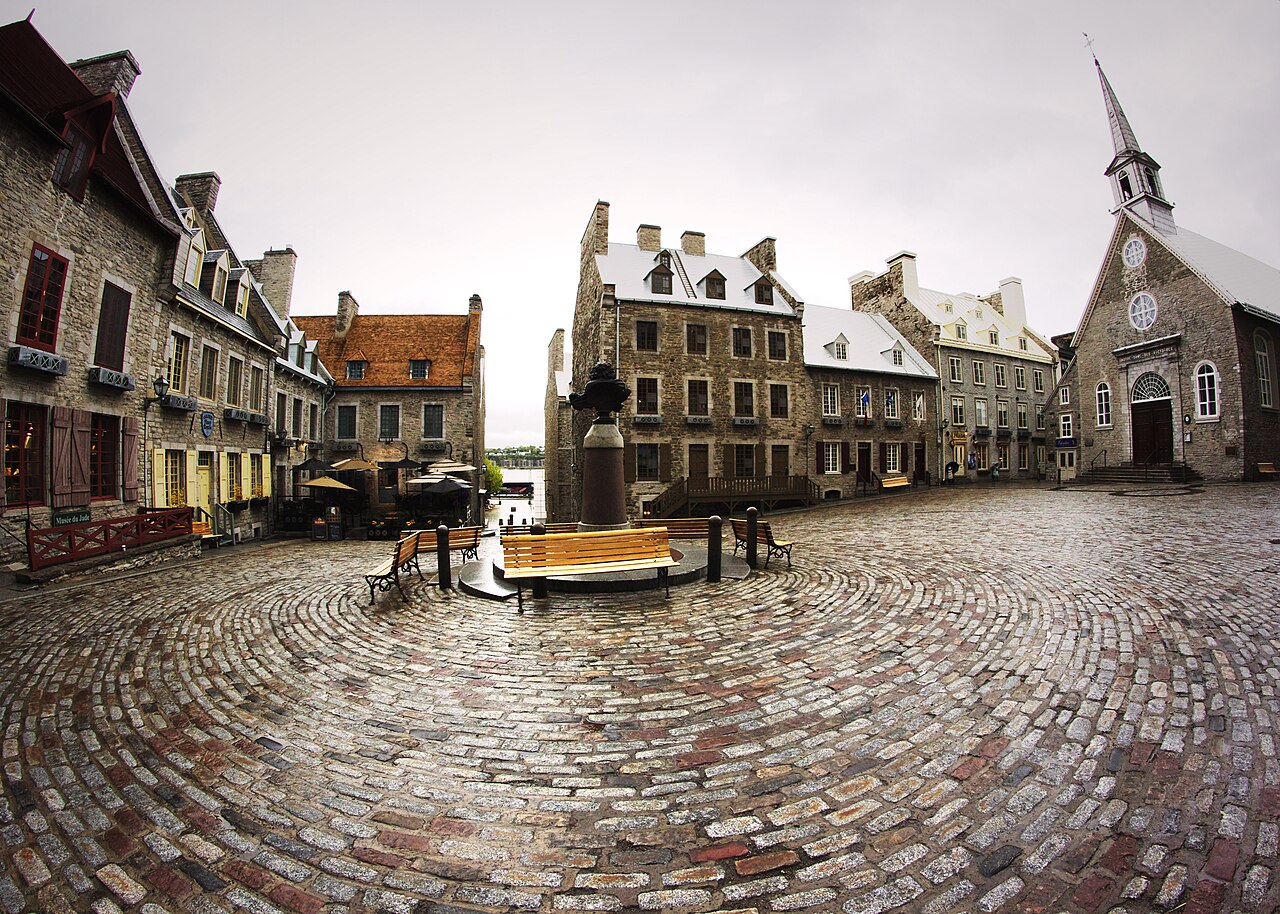
Visiting Place-Royale: This historic square in the heart of Old Quebec marks the traditional location of Stadacona. Walk the cobblestone streets and imagine the bustling Indigenous settlement that once stood here. Interpretive plaques provide context about the Indigenous peoples who lived at this location for centuries. The area offers museums, galleries, and restaurants housed in historically significant buildings.
Sources & References
- Sagard, Gabriel. "The Long Journey to the Country of the Hurons." Champlain Society, 1939.
- Trigger, Bruce G. "The Huron: Farmers of the North." Holt, Rinehart & Winston, 1969.
- DeLucia, Robin M. "The Memory Lands: King Philip's War and the Place of Violence in the Northeast." Yale University Press, 2018.
- Boyd, Robert (ed.). "The Coming of the Spirit of Pestilence." University of Chicago Press, 1999.
- Harmon, Alexandra. "Rich Indians: Native People and the Problem of Wealth in American History." UNC Press, 2010.
- White, Richard. "The Middle Ground: Indians, Empires, and Republics in the Great Lakes Region." Cambridge University Press, 1991.
- Parks Canada. "First Nations of the Saint Lawrence Valley." Historical Documentation, Government of Canada.