Medieval Origins & the First Walls
The fortifications of Quebec City represent one of North America's most remarkable examples of medieval defensive architecture adapted to a New World context. These ramparts, walls, and gates have protected the city for over three centuries, evolving from simple wooden palisades to sophisticated stone fortifications that remain largely intact today. The fortification system reflects centuries of warfare, technological development, military strategy, and colonial ambition.
Quebec City's position on Cap Diamant, the dramatic promontory overlooking the St. Lawrence River, provided natural advantages for defense. The high ground, steep cliffs on the riverside, and strategic location controlling river traffic made the location ideal for military fortification. From the earliest French settlement in 1608, defensive structures protected the vulnerable colonial outpost from Iroquois raids, rival European powers, and the inherent dangers of frontier settlement.
The earliest defensive structures were simple: wooden palisades surrounding the main settlement, reinforced with earth and stone where possible. As the colony grew and threats increased, these primitive defenses proved inadequate. French military engineers developed more sophisticated systems, inspired by contemporary European fortification theory but adapted to the specific topography and strategic requirements of Quebec City.
"The ramparts of Quebec City stand as physical testament to the French colonists' determination to establish a permanent European presence in North America, and their willingness to invest substantial resources in protecting that presence."
The French Colonial Fortification System
Under French colonial governance, Quebec City's fortifications evolved significantly. Military engineers, including renowned fortification specialists, designed systems incorporating the latest European defensive principles adapted to North American conditions. The French understood that Quebec represented their North American capital and required defensive infrastructure appropriate to that status. Investment in fortifications reflected Quebec City's importance to New France's security and economic interests.
The fortification strategy centered on the principle of defending Cap Diamant through a series of interconnected walls, bastions, and gates that controlled access to the city. The natural topography—steep cliffs on the riverside, elevated plateau on the landward side—meant that fortifications focused on the approaches accessible from the land. The river itself, particularly the rapids below Quebec City, provided significant natural defense against waterborne attacks.

Military Engineering Principles
The fortifications incorporated sophisticated European defensive principles adapted to the colonial context. Bastions—angular projections from the main walls—provided flanking fire that prevented attackers from sheltering against walls. The stone construction, including casemates (protected gun positions) and embrasures (openings for cannon fire), reflected detailed military thinking about how to defend the city against contemporary weapons and tactics.
Multiple gates controlled access to the city. Each gate represented a potential weak point that required careful design and fortification. The gates served both defensive and commercial functions—they controlled traffic while providing military advantage. As Quebec City developed commercially, the gates became increasingly important as symbols of civic authority and architectural landmarks that expressed the city's importance and permanence.
The Iconic Gates & Gateway Architecture
The gates of Quebec City represent some of the most recognizable architectural elements of the fortification system. These monumental structures served practical defensive functions while expressing the city's importance and architectural sophistication. The gates controlled movement into and out of the city, regulated commerce, provided last-resort defensive positions, and functioned as powerful symbols of civic authority and permanence.
The most celebrated gate is the Porte Saint-Louis (St. Louis Gate), located on the western side of the old city. This magnificent structure, rebuilt multiple times to reflect contemporary architectural styles and military requirements, represents the culmination of three centuries of gateway design evolution. The gate's design incorporates both practical defensive features and architectural sophistication, making it simultaneously fortress and monument.
The Five Historic Gates
Quebec City's fortification system originally included five major gates, each controlling access to a different part of the city and serving specific defensive and commercial functions. The Porte Saint-Louis controlled access from the west. The Porte Saint-Jean provided access from the north and played crucial roles in defense and commerce. The Porte du Palais controlled traffic from the lower town. The Porte d'Auteuil served the southern approaches. Each gate evolved architecturally to reflect changing defensive requirements and stylistic preferences across centuries.
🏰 The Historic Gates
The Porte Saint-Louis, rebuilt in 1878 in Victorian Gothic style, represents one of Quebec City's most iconic structures. The ornate design, featuring towers, crenellations, and decorative stonework, expresses civic pride and architectural sophistication while maintaining practical defensive functionality. The gate's Victorian character reflects nineteenth-century aesthetics while honoring the historical significance of the site it occupies.
British Period & Confederation: Evolution of Defenses
The fall of Quebec City to British forces in 1759 marked a fundamental transition in the city's history and its fortifications. The Seven Years' War tested Quebec's defensive systems, and the British defeat of the French garrison demonstrated both the strength of the fortifications and the limitations of medieval-era walls against modern siege artillery. British occupation introduced new military perspectives and defense requirements.
Following the conquest, the British garrison undertook significant fortification improvements. The Citadelle, a star-shaped fortress of advanced design, was constructed between 1820 and 1832 adjacent to the existing walls. This fortress represented the most sophisticated military engineering of its era, incorporating principles developed by the great fortification specialists of European military science. The Citadelle stood as testament to British determination to maintain secure control of Quebec City and the St. Lawrence River.
During the nineteenth century, as military technology advanced, Quebec's fortifications became less critical to the city's defense. The development of long-range artillery made medieval walls increasingly vulnerable. However, the British maintained the fortifications for symbolic reasons and because they remained useful for controlling access to the city and the river. Confederation in 1867 represented another turning point—the ramparts now symbolized Canadian national heritage rather than active military defense.
The transformation of the fortifications from active military defense to heritage site reflected broader historical changes. As Canada developed into a peaceful nation and American-Canadian relations improved, the old walls became increasingly symbolic rather than strategic. Yet their preservation reflected recognition of their historical significance and architectural value.
Modern Restoration & Heritage Conservation
The ramparts of Quebec City represent one of North America's finest surviving examples of historic fortification systems. However, three centuries of exposure to weather, use, and occasional neglect created significant preservation challenges. Modern conservation efforts have focused on stabilizing the structures, repairing deteriorated stone, and making the walls safely accessible to visitors while preserving their historical and architectural integrity.
The ramparts project, initiated in the late twentieth century, represented a comprehensive approach to heritage conservation. Specialized masons worked to replace deteriorated stones using materials and techniques compatible with original construction. Structural engineers addressed underlying problems that threatened long-term stability. Archaeologists conducted investigations to understand original construction methods and materials. The result has been the successful restoration of approximately 4.6 kilometers of ramparts, making Quebec City unique among North American cities.
Conservation Challenges & Solutions
Stone deterioration, particularly on exposed surfaces, required constant attention. Original mortar in the stone joints had deteriorated, requiring careful repointing with compatible materials. Some sections required substantial reconstruction where original stone had been damaged or removed. Modern conservation approaches prioritized reversibility—interventions were designed to be removable if future conservators developed superior techniques.
🔨 Conservation Work
The inclusion of Quebec City's historic district, including the ramparts, in UNESCO's World Heritage list in 1985 provided formal international recognition of their significance. This designation elevated conservation priorities and brought both prestige and resources to preservation efforts. The UNESCO recognition reflected consensus that these fortifications represent exceptional universal value and must be preserved for future generations.
Fortification Features & Military Architecture
The ramparts of Quebec City incorporate numerous architectural and military features developed across centuries of evolution. Understanding these elements provides insight into how medieval military engineers addressed the problems of defense, and how those principles evolved with changing military technology and strategic requirements.
The bastions—angular projections from the main wall—represent fundamental fortification design principles. By extending from the walls at angles, bastions allowed defenders to fire along the wall face, preventing attackers from sheltering directly against the walls. The stone construction, often incorporating casemates (protected gun emplacements), allowed defenders to concentrate firepower where attackers attempted to breach the defenses.
Key Defensive Features
- Bastions: Angular projections enabling flanking fire along walls
- Casemates: Protected gun emplacements within wall structures
- Embrasures: Openings cut into walls for cannon and musket fire
- Ramparts: Elevated walkways behind defensive walls for troop deployment
- Curtain Walls: Main defensive walls connecting fortification elements
- Gates & Barbicans: Fortified gateways with defensive towers
"The fortifications of Quebec represent a textbook example of medieval military architecture adapted to North American conditions—where French colonial military engineers demonstrated sophisticated understanding of defensive principles and their practical application."
The casemates were particularly important in the later evolution of Quebec's fortifications. These protective stone structures incorporated carefully designed gun emplacements that allowed artillery to defend against attacks. The embrasures were designed with specific angles and dimensions to optimize cannon fire while limiting enemy ability to return fire into the casemate. This engineering sophistication reflected the fact that Quebec's defenders included some of Europe's most accomplished military engineers.
Walking the Ramparts: Visiting Today
Today, the ramparts of Quebec City remain fully accessible to visitors, offering a remarkable historical experience and spectacular views of the city, the St. Lawrence River, and the surrounding landscape. The rampart walk, totaling approximately 4.6 kilometers, can be traversed in sections or as a complete circuit, depending on visitor time and inclination. Walking the walls provides physical and visual connection to Quebec City's military and colonial history in ways that no museum exhibit can replicate.
The rampart walk begins at various points around the old city. The Porte Saint-Louis provides a natural starting point, with its Victorian architecture and prominent location. From the gate, visitors can walk along well-maintained paths following the top of the walls, descending occasionally to navigate sections where the fortifications have adapted to the city's topography. The walk offers constantly changing perspectives on Old Quebec, the Lower Town, and the St. Lawrence River beyond.
Walking Route Highlights
🚶 Rampart Walk Guide
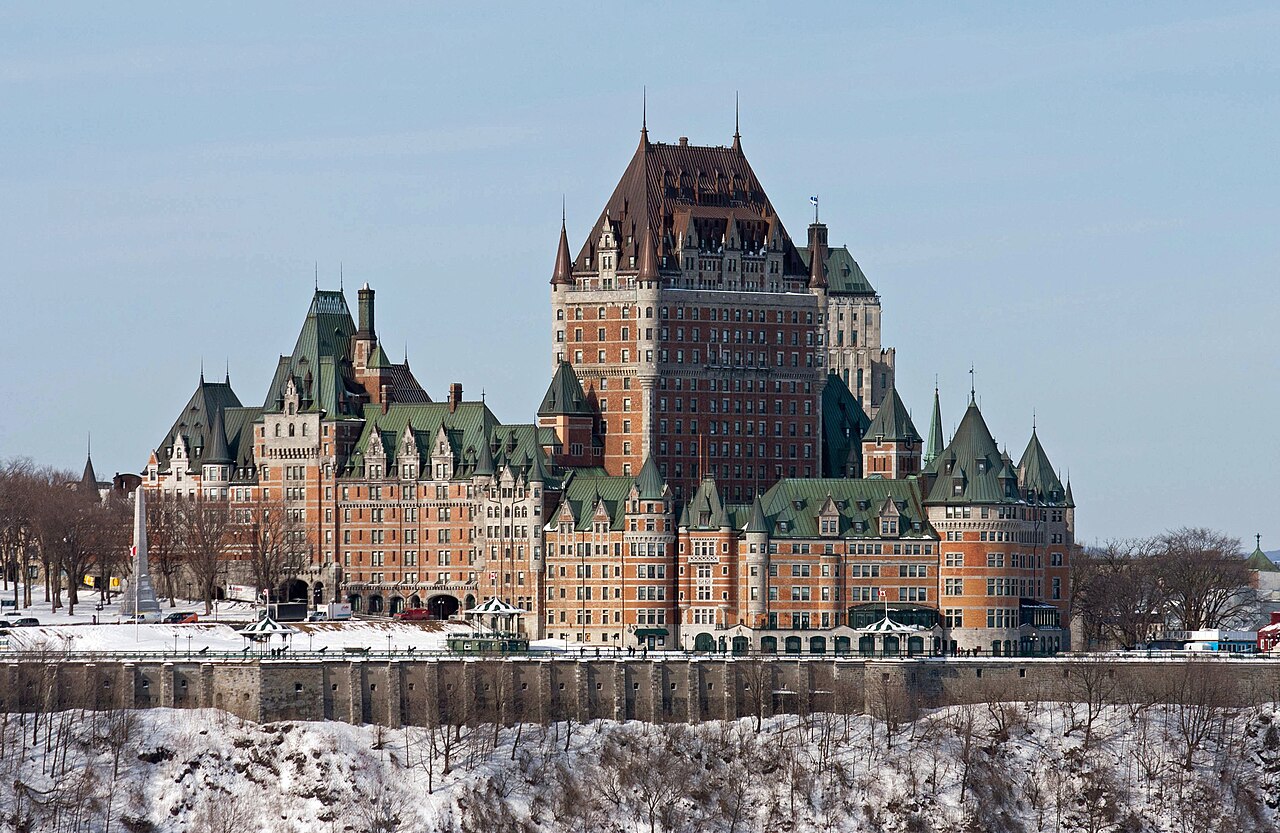
The rampart walk provides multiple perspectives on Quebec City's architectural heritage. From the walls, visitors can see the Château Frontenac rising majestically above, understand the relationship between Old Town and Lower Town, appreciate the St. Lawrence River's role in the city's history, and comprehend how medieval military thinking about defense shaped the city's urban form.
Interpretive signage along the ramparts explains the fortification's history, identifies remaining gates and defensive features, and contextualizes what visitors are experiencing within the broader history of Quebec and North America. The ramparts at night, illuminated for safety and aesthetic effect, create a magical atmosphere that enhances the sense of walking through history. The walls remain accessible year-round, though winter ice and snow may require care when traversing some sections.
Guided tours with knowledgeable interpreters provide deeper historical context, explaining military tactics, identifying architectural features, and sharing stories of the people who defended or attacked the walls. These tours offer invaluable insights that enhance the physical experience of walking the ramparts themselves.
Sources & References
- Noppen, Luc. "Québec, Trois Siècles d'Architecture." Éditions du Méridien, 1989.
- UNESCO World Heritage Centre. "Historic District of Old Québec." World Heritage List designation, 1985.
- Parks Canada. "Fortifications of Quebec National Historic Site." Official documentation.
- Commission de la Capitale Nationale. "Les Fortifications de Québec." Technical heritage reports, 1990-2020.
- Lemoine, Réjean. "Patrimoine Architectural du Vieux-Quebec." Commission de la Capitale Nationale, 2002.
- Kalman, Harold. "A History of Canadian Architecture." Oxford University Press, 1994.
- Archives de la Ville de Quebec. "Military Fortifications and Colonial Defense." Municipal records and documents.
- Trudel, Marcel. "Histoire de la Nouvelle-France." Éditions Fides, 1979.
- Eccles, William John. "The Canadian Frontier, 1534-1760." Oxford University Press, 1969.
- Demers, John & Veillette, Rodney. "The Fortifications of Quebec City." Historical Society of Quebec, 2005.
- Gagnon-Pratte, France. "Quebec: Three Centuries of Architecture." Canadian Heritage Press, 2001.
- Charbonneau, André. "The Fortified Settlements of New France." Parks Canada, 1990.
Related Architecture Articles