Quebec City's Rise as the Center of New France
Within decades of Champlain's founding in 1608, Quebec City had transformed from a small defensive outpost into the administrative, commercial, and cultural center of New France, the vast French colonial empire spanning the Saint Lawrence valley, the Great Lakes region, and the Mississippi valley. The settlement's growth was driven by its location at the intersection of multiple commercial networks—the Atlantic trade, the fur trade from the interior, and the important supply routes that connected Quebec to other French colonies and the metropole. By the mid-17th century, Quebec had grown to a population of several hundred residents and was the seat of colonial government, the base of the fur trade industry, and the center of missionary activities aimed at converting Indigenous peoples to Christianity.
The transformation of Quebec from a precarious frontier settlement to a thriving colonial capital was not inevitable. The settlement's survival depended on a combination of factors: Champlain's visionary leadership, the willingness of Indigenous nations to establish trade relationships with the French, the arrival of more colonists and supplies from France, and the discovery that the interior fur trade—particularly beaver pelts—was enormously profitable. The fur trade became the economic engine that drove the expansion of New France and transformed Quebec into a trading empire. Merchants and traders in Quebec purchased furs from Indigenous trappers and traders, processed them in Quebec, and shipped them to France, where they were manufactured into beaver hats—one of the most fashionable and valuable consumer goods in 17th-century Europe.

The French Crown, initially focused on the search for a northwest passage to Asia, gradually recognized that New France represented valuable colonial territory and a profitable commercial enterprise. Royal support increased, and the Crown established more formal institutions of governance. The Crown also granted monopolies on the fur trade to companies and individuals who were expected to finance exploration and settlement in exchange for trading rights. This system created incentives for fur traders to penetrate ever deeper into the interior, establishing trading posts and alliances with Indigenous nations across a vast territory.
Colonial Governance and Royal Administration
New France was governed under a complex system of royal administration that balanced the authority of the Crown with the practical realities of colonial conditions. At the head of the colonial government was the Governor General, who served as the principal representative of royal authority in New France. The Governor General was responsible for military defense, diplomatic relations with Indigenous nations, and the overall administration of the colony. Subordinate to the Governor General were other officials including the Intendant, who handled financial and economic matters, and local governors or military commanders who administered particular regions of the colony.
The governance structure of New France reflected French administrative practices of the 17th and 18th centuries, with authority distributed among multiple officials who reported separately to the Crown. This system sometimes created conflicts and rivalries among officials, but it also ensured that no single individual in the colony could exercise absolute power independent of the Crown's authority. The Crown maintained tight control over the colony through direct correspondence with colonial officials, inspections by royal officials, and the regular replacement of governors and administrators. Officials were expected to report regularly on colonial conditions, trade, military threats, and other matters of importance.
The colonial government was supported by military forces and by a system of law based on French legal traditions. Quebec developed an urban government structure with a governor, military officers, and various officials responsible for administration, justice, and regulation of commerce. The city became the seat of episcopal authority (the bishop of Quebec) and later the location of colonial courts and administrative offices. As the capital, Quebec attracted merchants, officials, clergy, and military personnel, creating an urban society with considerable complexity and diversity.
The Fur Trade: Economic Engine of New France
The fur trade was the primary economic activity that sustained New France and made Quebec a prosperous colonial center. French traders and merchants purchased beaver pelts and other furs from Indigenous trappers and from the network of French fur traders (known as voyageurs and coureurs de bois) who operated throughout the interior. These furs were gathered, processed in Quebec, packed into barrels, and shipped to France, where they were manufactured into hats and other goods for the European market. Beaver hats were fashionable among European elites and commanded high prices, making the fur trade enormously profitable for merchants and the Crown, which received taxes on the trade.
The fur trade expanded French control and influence throughout North America. French traders established trading posts throughout the Great Lakes region, the Mississippi valley, and the Canadian interior. These posts served as bases for trade with Indigenous nations, as centers for the French presence, and as sources of information about the geography and resources of the continent. The fur trade created a web of relationships and dependencies that linked Quebec with distant regions and with Indigenous nations throughout North America. Indigenous peoples in regions remote from Quebec had access to French goods—metal tools, weapons, cloth, and beads—through networks of trade. In exchange, the French received furs and information about geography and other Indigenous nations.
The fur trade was marked by intense competition. French merchants competed with Dutch and English traders for access to the richest fur regions and for relationships with Indigenous trading partners. Wars between European nations, such as the King William's War (1688-1697) and Queen Anne's War (1702-1713), extended into North America and involved French, English, and Indigenous combatants competing for control of trading territories. Despite this competition and the various military conflicts, the French fur trade remained profitable and continued to drive the expansion of New France for more than a century and a half.
Religion, Society, and Daily Life in the Colonial Capital
Religion played a central role in the colonization of New France and in the daily life of Quebec. The Catholic Church, supported by the Crown and funded through royal grants and tithes, established itself as the dominant institution in colonial society. The Bishop of Quebec, a representative of the Church and one of the most influential figures in the colony, oversaw the spiritual life of the colony and the missionary activities aimed at converting Indigenous peoples. Quebec became the seat of a large Catholic diocese that extended throughout New France, with churches, monasteries, and other religious buildings serving as centers of religious life and community activity.
The Catholic Church in New France established schools, hospitals, orphanages, and other social institutions that provided services to colonists and Indigenous peoples. The Church also dominated intellectual and cultural life. Priests were among the few educated people in the colony, and the Church maintained libraries, ran schools, and produced the colony's most sophisticated intellectual work. The interaction between religion, colonization, and Indigenous peoples was complex and often troubling. While the Church genuinely sought to convert Indigenous peoples to Christianity and to provide them with education and social services, the missionary activities were also part of the broader colonial project that ultimately displaced Indigenous peoples and disrupted their societies.
Aside from religion, the society of Quebec was structured by class and occupation. At the top were the royal officials, the military officers, and the wealthiest merchants. Below them were the skilled workers, shopkeepers, artisans, and traders. At the bottom were laborers, servants, enslaved people (both African and Indigenous), and soldiers. The composition of Quebec's population changed over time. Initially, the colony had a severe gender imbalance, with men greatly outnumbering women. This created opportunities for unmarried women and widows who could own property and businesses, but it also led to forced marriages and migration programs that brought women from France to the colony.
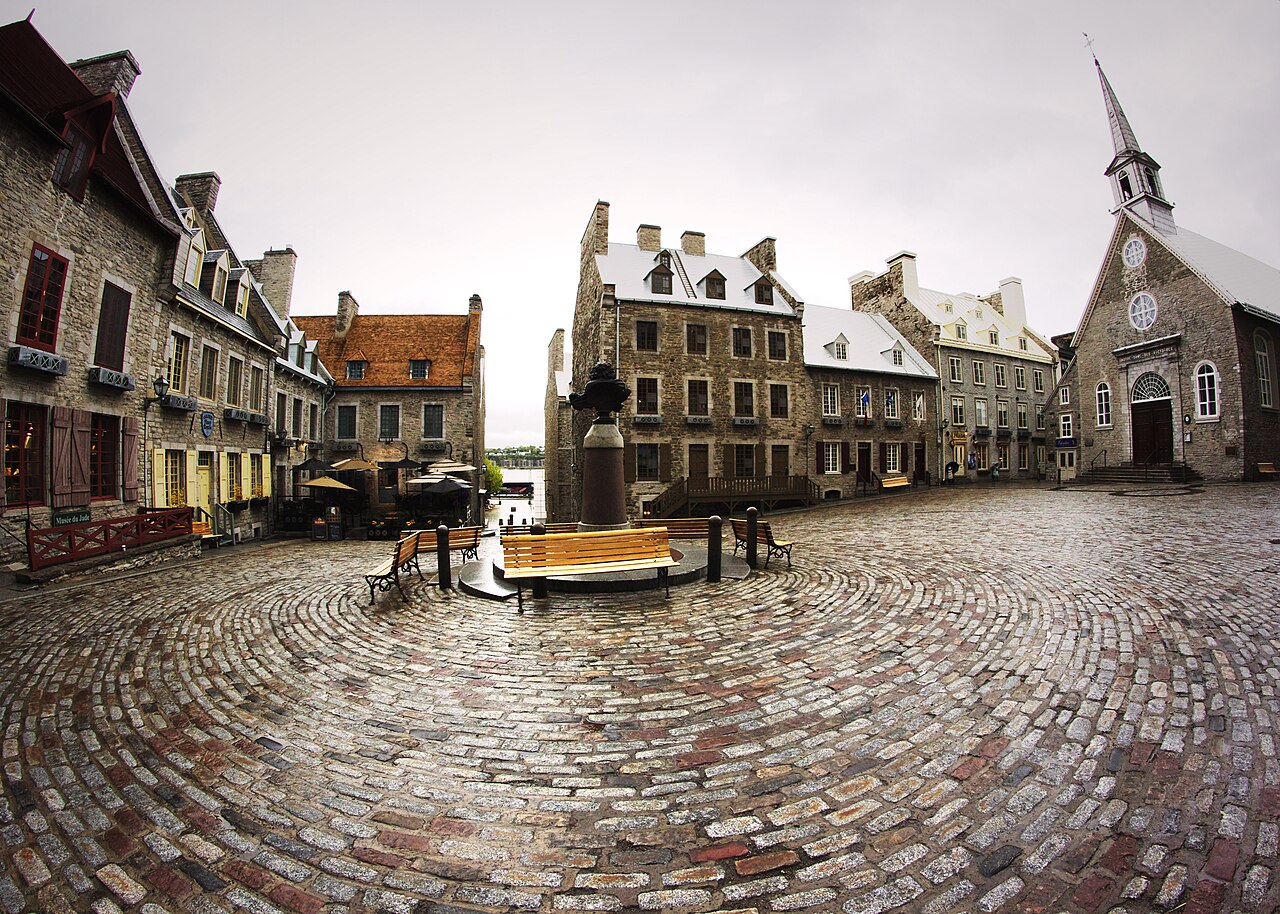
Food, clothing, and housing reflected the settlers' attempt to adapt European ways to North American conditions. Colonists brought European agricultural practices but found that the climate and soils required adaptations. They adopted Indigenous crops like corn and squash, which became important food sources. They hunted game and fished the rivers, making wildlife products a significant part of the diet. Clothing was imported from France or made locally, though the harsh winters required heavy clothing adapted to the climate. Housing in the early period was crude, but as the colony developed, substantial wooden and stone buildings replaced temporary structures, and the city took on a more established appearance.
The Seigneurial System: Land and Society
One of the most important institutions that structured colonial society in New France was the seigneurial system, a form of land tenure that adapted French feudal traditions to the colonial context. Under this system, the Crown granted large parcels of land (seigneuries) to French nobles, military officers, merchants, and religious institutions. These seigneurs were expected to develop their lands by attracting settlers, establishing farming communities, and maintaining order within their territories. In return, seigneurs had certain rights over the land and received payments from settlers (called censitaires) who occupied the land.
The seigneurial system created a hierarchical rural society distinct from the urban merchant and administrative elite of Quebec City. Seigneurs occupied a position of local authority and prestige, though they often resided in the city rather than on their seigneuries. Habitants (settler farmers) occupied the lower end of the rural social hierarchy, paying rents and dues to seigneurs in exchange for the right to farm the land. The system created incentives for seigneurs to attract settlers and establish farming communities, which led to the gradual expansion of agriculture and settlement throughout the Saint Lawrence valley and beyond.
The seigneurial system also affected the relationship between French colonists and Indigenous peoples. The granting of seigneuries to French individuals claimed lands that Indigenous peoples had traditionally occupied and used. While some seigneurs employed Indigenous labor or maintained trading relationships with Indigenous nations, the system fundamentally represented a French claim to sovereignty over territory that Indigenous peoples occupied and used. Over time, the expansion of seigneurial lands and settlement pushed Indigenous peoples out of the Saint Lawrence valley and adjacent regions, contributing to the displacement and dispossession that characterized the colonial experience.
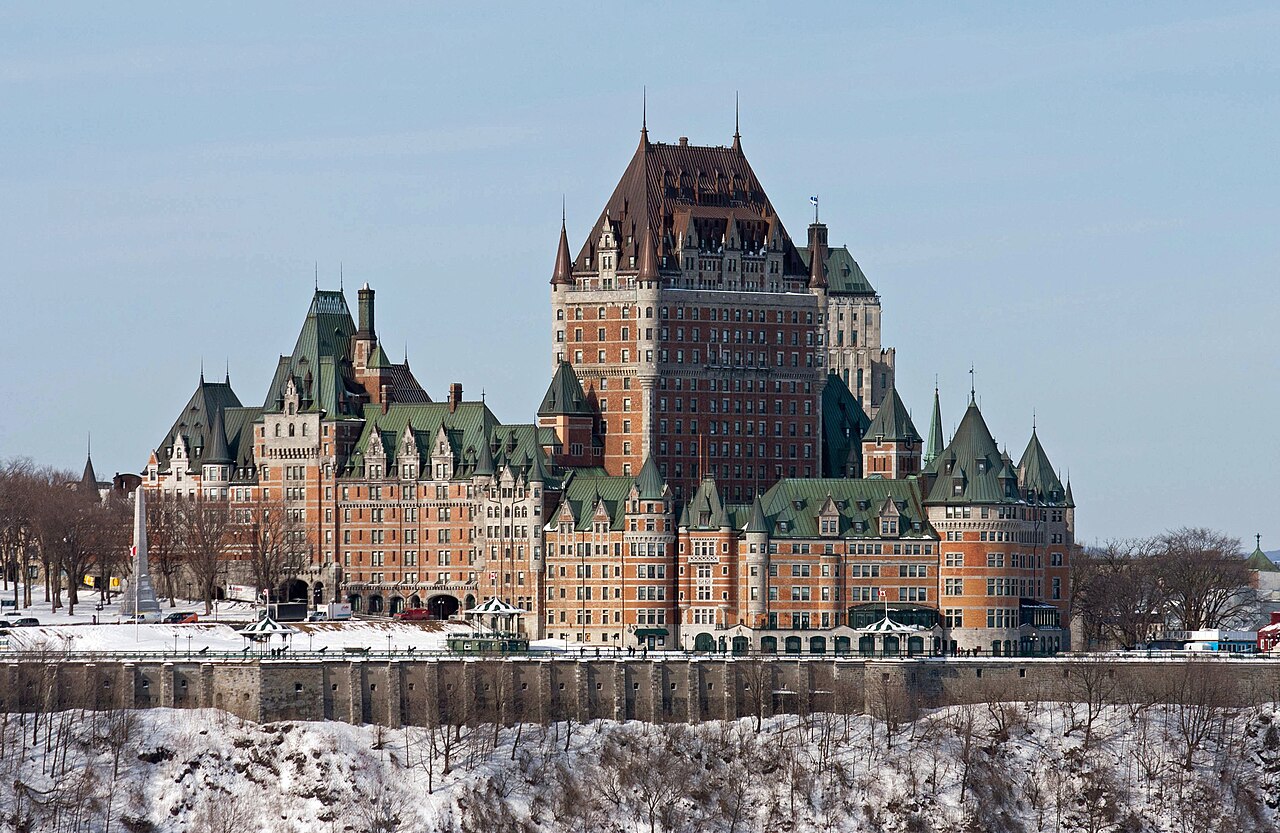
Quebec City remained the commercial and administrative center of this hierarchical colonial society. Merchants based in Quebec financed the fur trade, purchased agricultural products from seigneurial lands, and sold imported goods throughout the colony. The Bishop of Quebec and the clergy maintained authority over religious matters and moral standards. The Governor and Intendant administered the colony and represented royal authority. This concentration of power and influence in Quebec made the city the inevitable center of New France's political, economic, and cultural life. By the early 18th century, Quebec had grown to perhaps 6,000 to 8,000 residents and had become one of the most important cities in North America, rivaled in size and importance only by Boston and perhaps one or two other North American cities.
Experience Colonial Quebec City Today
📍 Visitor Information
Exploring Colonial Quebec: Walk the cobblestone streets of the Old City, where buildings dating to the colonial period still stand. Visit the Cathedral-Basilica of Sainte-Anne-de-Québec, which served the colonial spiritual community. Explore the Museum of Civilization to learn about colonial society and the seigneurial system. Visit historic sites like the old jail, convents, and churches that shaped colonial life. Take a guided tour with a historian to understand the colonial governance structure and the daily experiences of colonists. Walk along the river to see the location where fur trade ships arrived and departed.
Sources & References
- Greer, Allan. "The People of New France." University of Toronto Press, 1997.
- Eccles, William John. "The Canadian Frontier: 1534-1760." Revised edition, University of New Mexico Press, 1983.
- Harris, Richard Colebrook. "The Seigneurial System in Early Canada." University of Wisconsin Press, 1966.
- DeLucia, Robin M. "The Memory Lands: King Philip's War and the Place of Violence in the Northeast." Yale University Press, 2018.
- Trigger, Bruce G. "The Huron: Farmers of the North." Holt, Rinehart & Winston, 1969.
- White, Richard. "The Middle Ground: Indians, Empires, and Republics in the Great Lakes Region." Cambridge University Press, 1991.
- Bosher, John Francis. "The Canada Merchants, 1713-1763." Clarendon Press, 1987.